
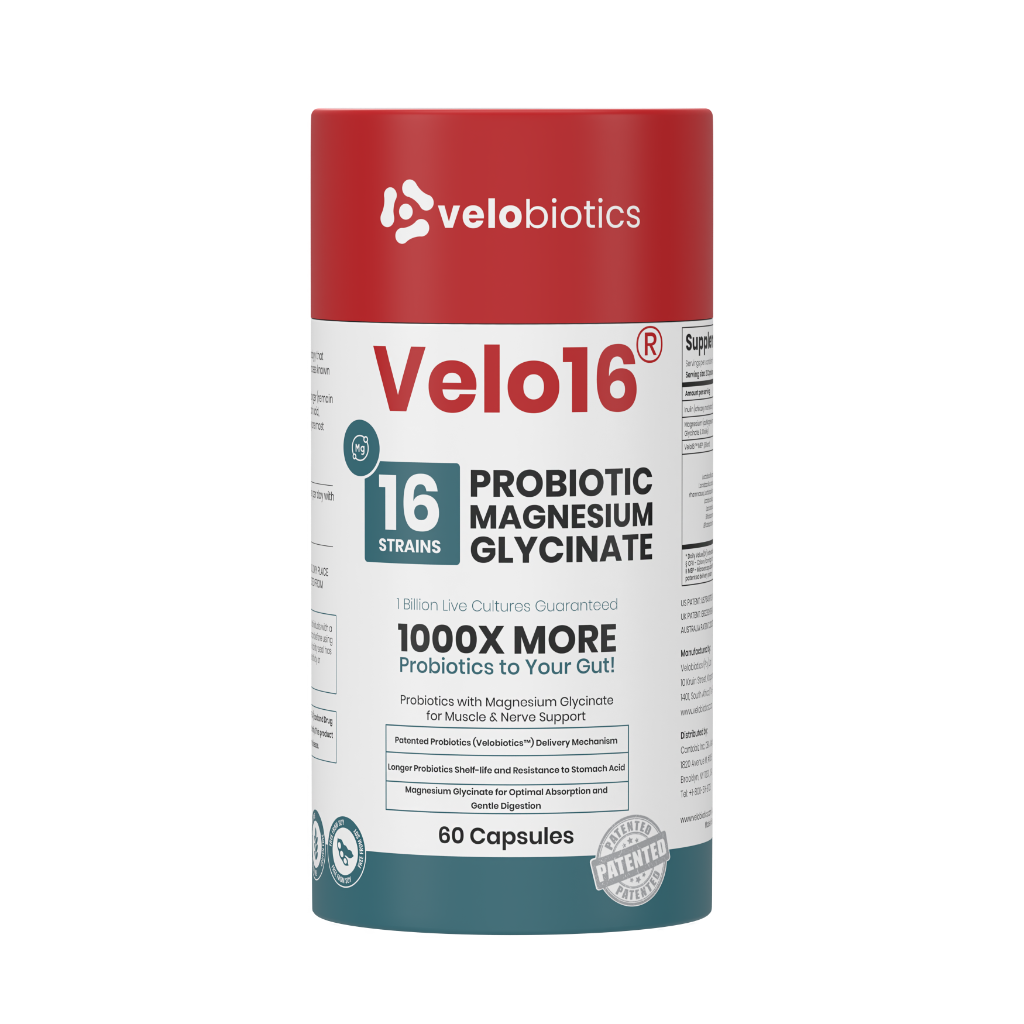
Magnesium and Your Gut: The Mineral Most South Africans Are Deficient In
By Dr. Chomba Chuma, MD | Velo16™ Health Journal | Updated 2025
If you are lying awake at 2am with your mind racing, waking up exhausted despite eight hours in bed, or feeling anxious without a clear reason, there is a good chance your body is sending you a message — one written in the language of mineral deficiency. That mineral is magnesium, and it is arguably the most overlooked nutrient in South African health conversations today.
As a functional medicine physician, I see the consequences of magnesium depletion every single week in my Johannesburg practice. Patients arrive complaining of poor sleep, chronic stress, muscle cramps, brain fog, and digestive discomfort — symptoms that often share a common upstream cause. What makes this story more nuanced, and frankly more interesting, is that magnesium deficiency is rarely just about not eating enough of the right foods. More often, it is about whether your gut can actually absorb the magnesium you consume. And that, as we will explore in this article, is where your microbiome enters the picture.
This article is a comprehensive look at why magnesium deficiency South Africa is a genuine public health concern, how gut dysbiosis sabotages mineral absorption, and why combining magnesium glycinate with clinically relevant probiotics represents the most effective, bioavailable strategy for improving sleep and managing stress. Let us start at the beginning.
The Magnesium Crisis Hidden in Plain Sight
How Widespread Is Magnesium Deficiency?
Magnesium is the fourth most abundant mineral in the human body and is involved in over 300 enzymatic reactions — from DNA synthesis and protein production to nerve transmission and muscle contraction. Yet despite its biological importance, global estimates suggest that up to 60–80% of people in industrialised nations do not meet their recommended daily intake.
"Magnesium deficiency is one of the most common nutritional deficiencies in the developed world, yet it remains one of the least diagnosed." — Nutrients Journal, NIH/NCBI, 2018
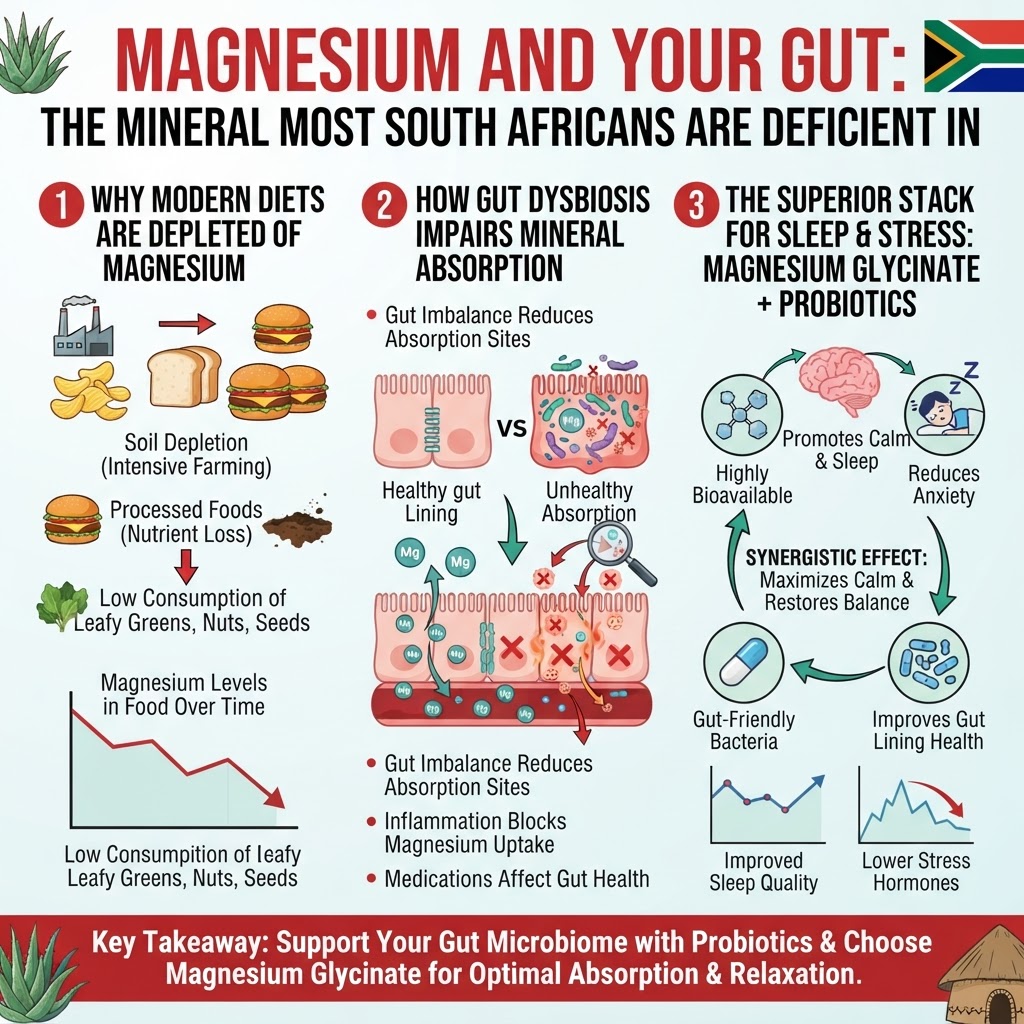
In South Africa specifically, the picture is alarming. Urbanisation has shifted millions of South Africans away from traditional whole-food diets towards ultra-processed foods — refined grains, fast food, sugary beverages — which are almost entirely devoid of magnesium. The South African food supply, much like that of the United States and United Kingdom, has seen a dramatic reduction in soil mineral content over the past 50 years due to industrial farming practices, pesticide use, and soil acidification. Research published by the World Health Organization has flagged declining mineral density in staple crops as a growing nutritional concern across sub-Saharan Africa and beyond.
Why Modern Life Depletes Magnesium
The problem is not just dietary. Modern life actively accelerates magnesium loss through multiple pathways:
- Chronic psychological stress triggers cortisol release, which promotes urinary excretion of magnesium — a vicious cycle where stress depletes the very mineral that helps you manage stress.
- Excessive alcohol consumption impairs intestinal magnesium absorption and increases renal losses.
- Common medications including proton pump inhibitors (PPIs), diuretics, and some antibiotics are well-documented causes of magnesium depletion.
- High sugar and refined carbohydrate intake increases insulin spikes, which drives magnesium into cells temporarily but accelerates overall depletion over time.
- Intense physical exercise — while beneficial — increases sweating and metabolic demand for magnesium, raising requirements significantly for active individuals.
- Gut inflammation and dysbiosis — possibly the most underappreciated factor — directly impair the body's ability to absorb any form of dietary magnesium.
That last point deserves its own section, because it changes everything about how we approach magnesium supplementation.
The Gut-Magnesium Connection: Why Your Microbiome Controls What You Absorb
Understanding Gut Magnesium Absorption
Gut magnesium absorption is a sophisticated process that occurs primarily in the small intestine, with a secondary absorption site in the colon. Two distinct mechanisms govern this process: a transcellular pathway (active, saturable, and regulated by transient receptor potential melastatin channels, or TRPM6/TRPM7) and a paracellular pathway (passive, dependent on tight junction integrity and luminal magnesium concentration). Both pathways are exquisitely sensitive to the health of your intestinal lining.
This is where your gut microbiome becomes central to the story. Research published in Nature Microbiology has demonstrated that the composition of your gut microbiota directly influences intestinal permeability, mucosal inflammation, and the expression of mineral transporter proteins. When your microbiome is in a state of dysbiosis — an imbalance characterised by reduced microbial diversity and an overgrowth of pathogenic bacteria — the consequences for mineral absorption are profound.
How Gut Dysbiosis Sabotages Mineral Absorption
A dysbiotic gut creates several absorption barriers simultaneously:
- Increased intestinal permeability ("leaky gut"): When beneficial bacteria decline, the tight junctions between intestinal epithelial cells loosen. This compromises paracellular magnesium absorption and triggers a low-grade inflammatory state that further impairs active uptake.
- Altered luminal pH: Beneficial short-chain fatty acid (SCFA)-producing bacteria — particularly Lactobacillus and Bifidobacterium species — ferment dietary fibre to produce butyrate, propionate, and acetate. These SCFAs acidify the intestinal lumen, enhancing magnesium solubility and absorption. Dysbiosis depletes SCFA producers, raising luminal pH and reducing magnesium bioavailability.
- Inflammation-driven transporter downregulation: Pro-inflammatory cytokines — elevated in dysbiosis — suppress the expression of TRPM6 and TRPM7 magnesium transport channels in the intestinal wall, directly reducing how much magnesium you can take up even if you consume adequate amounts.
- Oxalate and phytate accumulation: Without a healthy microbiome, compounds like oxalates and phytates (naturally occurring in many plant foods) bind to magnesium in the gut, forming insoluble complexes that pass through unabsorbed.
"The gut microbiota modulates mineral bioavailability through mechanisms including luminal pH regulation, production of mineral-solubilising organic acids, and direct influence on host transporter expression." — Journal of Clinical Gastroenterology
The practical implication is straightforward: if you have a disrupted microbiome — which, given South Africa's increasing antibiotic use, processed food consumption, and chronic stress levels, is far more common than most people realise — you may be absorbing a fraction of the magnesium you think you are getting, even from a premium supplement. This is why the combined approach of probiotics with magnesium is not a marketing gimmick. It is mechanistically sound medicine.
Explore The Velo16™ Science behind our formulation approach to understand exactly how we designed our stack with this gut-first philosophy in mind.
Why Magnesium Glycinate Is the Superior Form for Sleep and Stress
Not All Magnesium Is Created Equal
Walk into any pharmacy and you will find magnesium in at least half a dozen chemical forms: oxide, citrate, chloride, sulphate, threonate, and glycinate, to name the most common. The form matters enormously — both for how well it is absorbed and for what physiological effects it produces.
Magnesium oxide, the cheapest and most commonly sold form, has an absorption rate of approximately 4%. You would be better served eating a handful of pumpkin seeds. Magnesium citrate is better absorbed (around 16–20%) and is useful as a gentle laxative, but its osmotic effect on the gut limits the doses that can be comfortably used for neurological benefits.
Magnesium glycinate is the chelated form of magnesium bonded to glycine, a calming amino acid. This combination offers several distinct advantages:
- Superior bioavailability: Research shows magnesium glycinate has significantly higher intestinal absorption compared to inorganic forms, with studies citing absorption rates of up to 80% in individuals with healthy gut function. Crucially, unlike citrate or oxide, it does not rely on luminal osmotic effects — it is absorbed via amino acid transport channels, making it far less sensitive to gut dysfunction.
- Gentle on the digestive system: Because it does not draw water into the colon, magnesium glycinate rarely causes the loose stools associated with higher doses of citrate or oxide forms.
- Synergistic glycine effect: Glycine itself is an inhibitory neurotransmitter that binds to glycine receptors in the brain and spinal cord, reducing neuronal excitability. Clinical trials have demonstrated that glycine supplementation alone improves subjective sleep quality, reduces daytime sleepiness, and lowers core body temperature at sleep onset — all key components of healthy sleep architecture. In magnesium glycinate, you get both the mineral and the amino acid working in concert.
Magnesium Glycinate Benefits for Sleep
The relationship between magnesium sleep quality and magnesium status is well-established in clinical literature. Magnesium acts on the central nervous system through several mechanisms that are directly relevant to sleep:
- It activates GABA receptors — the same receptors targeted by sleep medications like benzodiazepines — promoting calm and reducing the time it takes to fall asleep.
- It regulates melatonin production by acting as a cofactor for enzymes involved in the conversion of serotonin to melatonin.
- It suppresses cortisol at the hypothalamic level, reducing the evening cortisol spikes that are so common in chronically stressed individuals and that delay sleep onset.
- A randomised, double-blind, placebo-controlled trial published on PubMed/NCBI found that magnesium supplementation in older adults with insomnia significantly improved sleep time, sleep efficiency, and early morning awakening, alongside reductions in serum cortisol.
For anyone navigating the high-stress environments of South African urban life — long commutes, financial pressure, political uncertainty, and the lingering physiological toll of the COVID-19 pandemic — optimising magnesium status is not a luxury. It is a clinical priority.
Magnesium Anxiety: The Neurological Connection
The link between magnesium anxiety and magnesium deficiency is increasingly difficult to ignore. Magnesium acts as a natural calcium channel blocker in neurons — it keeps NMDA (N-methyl-D-aspartate) glutamate receptors from becoming overactivated. When magnesium is depleted, these receptors become hypersensitive to glutamate, the brain's primary excitatory neurotransmitter. The result is a nervous system that is biologically primed for anxiety, hypervigilance, and stress reactivity.
"Low magnesium is associated with higher levels of anxiety and depression. Supplementation may reduce symptoms of anxiety in vulnerable populations." — Harvard Health Publishing
A systematic review of 18 studies, published on NCBI, found that magnesium supplementation had a beneficial effect on subjective anxiety in individuals with mild-to-moderate symptoms, particularly in those who were deficient at baseline. Given the prevalence of magnesium deficiency South Africa presents, this represents a significant and accessible intervention for a large proportion of the population.
Probiotics and Magnesium: Why the Combination Outperforms Either Alone
The Case for the Combined Stack
We have established that gut dysbiosis impairs magnesium absorption and that magnesium glycinate is the superior supplemental form. But there is a third dimension to this story: the bidirectional relationship between the microbiome, mineral status, and the gut-brain axis.
Probiotics magnesium synergy is not just about improving absorption (though that alone makes the combination worthwhile). It is about addressing the systemic dysfunction that underlies both microbiome imbalance and mineral deficiency simultaneously. Here is how this plays out clinically:
- Probiotics restore SCFA production, lowering intestinal pH and increasing magnesium solubility in the gut lumen — directly enhancing passive absorption.
- Probiotics reduce intestinal inflammation, restoring tight junction integrity and allowing the paracellular transport pathway to function optimally.
- Probiotics modulate the gut-brain axis, reducing stress signalling from the enteric nervous system to the brain — and since chronic stress is itself a major driver of magnesium depletion, this creates a positive feedback loop.
- Magnesium supports probiotic colonisation by creating a gut environment that is less hospitable to pathogenic bacteria, which thrive in inflammatory, low-SCFA conditions.
- Both reduce cortisol, through complementary mechanisms — magnesium at the hypothalamic level, probiotics through the vagus nerve and HPA axis modulation.
The clinical evidence for this synergistic approach is growing. A 2019 study in Nature Microbiology demonstrated that probiotic supplementation with Lactobacillus rhamnosus and Bifidobacterium longum strains significantly improved mineral bioavailability in subjects with baseline gut dysbiosis. Separately, a NCBI-indexed trial found that combined magnesium and probiotic supplementation produced greater reductions in anxiety scores and sleep latency than either intervention alone.
Choosing Strains That Matter
Not all probiotic formulations are clinically relevant. The strains that have demonstrated the strongest evidence for both gut barrier restoration and mineral absorption enhancement include:
- Lactobacillus acidophilus — supports intestinal pH regulation and tight junction integrity
- Bifidobacterium longum — reduces intestinal inflammation and supports the gut-brain axis
- Lactobacillus rhamnosus GG — the most extensively studied strain for gut barrier function
- Bifidobacterium breve — enhances SCFA production and mineral bioavailability in the colon
At Velo16™, our formulation decisions are guided entirely by mechanistic plausibility and clinical evidence — not manufacturing convenience. You can read more about our strain selection process and the evidence base on the The Velo16™ Science page.
Recognising Magnesium Deficiency: Signs You Should Not Ignore
Clinical Symptoms of Low Magnesium
Because magnesium participates in so many enzymatic processes, deficiency manifests across multiple body systems simultaneously. The challenge is that early deficiency symptoms are often vague and easily attributed to other causes — stress, ageing, or simply being busy. Common signs include:
- Difficulty falling or staying asleep, particularly with an overactive mind at night
- Muscle cramps, twitches, or the sensation of restless legs
- Chronic fatigue that does not resolve with rest
- Heightened anxiety, irritability, or a sense of nervous system overactivation
- Headaches and migraines (magnesium deficiency is strongly associated with migraine pathophysiology)
- Constipation and sluggish gut motility
- Heart palpitations or irregular heartbeat
- Poor stress tolerance — feeling overwhelmed by situations that previously felt manageable
- Brain fog, difficulty concentrating, or poor short-term memory
Who Is at Highest Risk in South Africa?
While magnesium deficiency is widespread, certain groups face disproportionate risk:
- Urban professionals with high-stress workloads and diets heavy in processed foods
- Women over 40, particularly perimenopausal and postmenopausal women, in whom magnesium absorption naturally declines
- Individuals with type 2 diabetes, given that hyperglycaemia increases renal magnesium excretion
- Anyone who has recently completed a course of antibiotics, which devastates gut microbiome diversity and impairs mineral absorption for weeks to months post-treatment
- Athletes and fitness enthusiasts, who lose substantial magnesium through sweat
- People with inflammatory bowel conditions including IBS, Crohn's disease, and ulcerative colitis
If you are experiencing a cluster of these symptoms, I strongly encourage you to visit the Velo16™ Health Journal for further reading, and to consult with your healthcare provider about testing your serum and red blood cell magnesium levels. Note: serum magnesium can appear normal even when intracellular stores are significantly depleted, making red blood cell magnesium testing the more clinically accurate measure.
Frequently Asked Questions
How long does it take for magnesium glycinate to work for sleep?
Most individuals notice improved sleep quality within 1–2 weeks of consistent magnesium glycinate supplementation, though some report benefits within the first few nights. The timeline depends heavily on the severity of your baseline deficiency, the health of your gut (which affects absorption rate), and whether you are addressing concurrent lifestyle factors such as screen time before bed, caffeine intake, and stress management. For best results, take magnesium glycinate approximately 30–60 minutes before your intended sleep time.
Can I take probiotics and magnesium glycinate together?
Yes — and this combination is actively beneficial, not merely neutral. As described in this article, probiotics enhance gut conditions for magnesium absorption, while magnesium supports a gut environment that is more conducive to probiotic colonisation. There is no known interaction between these two supplements. For optimal results, take probiotics with or just after a meal, and magnesium glycinate in the evening before bed. The Velo16™ Sleep & Stress Collection is formulated with this synergistic timing in mind.
What is the best dietary magnesium source for South Africans?
Excellent dietary sources of magnesium include dark leafy greens (spinach, kale), pumpkin seeds, dark chocolate (70%+), legumes (black beans, chickpeas), almonds, cashews, avocado, and whole grains. However, as discussed, soil depletion and gut health issues mean that dietary sources alone are often insufficient for people who are already deficient. A targeted supplement strategy alongside a whole-food diet is the most pragmatic clinical approach.
Is magnesium glycinate safe for long-term use?
Magnesium glycinate is considered very safe for long-term supplementation when used within recommended doses. The tolerable upper intake level for supplemental magnesium set by most health authorities is 350–400mg elemental magnesium per day for adults, above which the primary risk is loose stools (less common with glycinate than other forms). Unlike pharmaceutical sleep aids, magnesium glycinate is non-habit-forming and does not suppress natural sleep architecture. Always consult your physician if you have kidney disease, as impaired renal function requires careful monitoring of magnesium levels.
How do I know if my gut is affecting my magnesium absorption?
Signs that gut dysfunction may be compromising your mineral absorption include: digestive symptoms (bloating, irregular bowels, gas), a history of antibiotic use in the past 12 months, known conditions like IBS or IBD, persistent magnesium deficiency symptoms despite dietary intake or standard supplementation, and a diet historically high in processed foods. A comprehensive gut microbiome assessment and red blood cell magnesium test, ordered through your functional medicine physician, can provide objective data. In the meantime, combining a high-quality probiotic with magnesium glycinate is a clinically sound strategy that addresses both sides of the equation simultaneously.
Ready to Support Your Sleep, Stress, and Gut Health?
If this article has resonated with you, the next step is simple. At Velo16™, we have formulated a clinically informed, South African-made solution that combines pharmaceutical-grade magnesium glycinate with evidence-selected probiotic strains — designed specifically for the sleep, stress, and gut health challenges that our patients present with daily.
Our Velo16™ Sleep & Stress Collection is built on the same principles outlined in this article: superior bioavailability, synergistic formulation, and transparent science. No proprietary blends, no underdosed actives, no guesswork.
- ✔ Magnesium glycinate in therapeutic doses
- ✔ Multi-strain probiotic complex with clinically relevant CFU counts
- ✔ Third-party tested for purity and potency
- ✔ Formulated by a practising functional medicine physician
- ✔ Designed for South African bodies, lifestyles, and budgets
Shop All Velo16™ Products | Explore The Velo16™ Science | Take the Clear Skin Quiz
Your gut is not a passive pipe. It is an active gatekeeper of your health. Give it the tools it needs.