

Running on Empty? What to Know Before You Buy an Iron-Probiotic Formula for Daily Energy
You're sleeping eight hours, eating reasonably well, and still dragging yourself through the day like you're wading through wet sand. If this sounds familiar, the usual suspects — stress, poor sleep, too much screen time — might not be the whole story. For a surprising number of South African adults, especially women, the real issue traces back to iron and the gut's ability to absorb it.
The Hidden Link Between Iron and Energy
Iron isn't just a mineral on a supplement label. It's a core ingredient your red blood cells use to carry oxygen to every muscle, organ and brain cell in your body. When iron stores run low, oxygen delivery slows down, and fatigue becomes the body's way of flagging the shortfall.
According to the World Health Organization, iron deficiency is one of the most common nutritional concerns worldwide, with women of reproductive age at particularly high risk due to menstrual blood loss. WHO's anaemia fact sheet notes that low iron status is strongly associated with persistent tiredness, reduced concentration and lower physical work capacity.
Anaemia affects people in all countries globally, impacting health, productivity, and quality of life.
- World Health Organization, Anaemia Fact Sheet
We've written before about how gut health and chronic tiredness are more connected than most people realise — if you haven't read it yet, our piece on the hidden gut-energy connection most doctors miss is a useful starting point before diving into the iron piece specifically.
Why Iron Alone Isn't Always Enough
Here's what surprises most people: taking an iron tablet doesn't automatically mean your body absorbs it. Iron absorption happens primarily in the small intestine, and the health of your gut lining and microbial balance plays a meaningful role in how efficiently that mineral gets taken up.
The Gut Absorption Problem
If your gut is inflamed, imbalanced, or dealing with frequent bloating and irregularity, nutrient absorption — including iron — can be less efficient. This is one reason some people take iron supplements for months with little change in how they feel.
Research has started exploring whether specific probiotic strains can support iron uptake. A study published in the British Journal of Nutrition found that a Lactobacillus plantarum strain was associated with improved iron absorption from a fortified drink compared to the drink alone.
Probiotic supplementation may represent a feasible strategy to improve iron bioavailability from iron-fortified foods.
- Bergillos-Meca et al., British Journal of Nutrition
You can read the original research summary via PubMed. It's a small but telling signal that gut flora and mineral absorption are more intertwined than traditional supplement advice suggests.
What to Check Before You Buy an Iron-Probiotic Supplement
Not all iron supplements are created equal, and combining iron with probiotics adds another layer of things worth checking. Before adding anything to your daily routine, it helps to know what separates a well-formulated product from a basic one.
- The form of iron used — iron bisglycinate is generally gentler on the stomach than ferrous sulfate
- Whether the probiotic strains are protected through encapsulation so they survive stomach acid
- Strain diversity — a broader strain count may support a wider range of gut functions
- Third-party testing or quality certifications on the packaging
- Clear dosage information rather than vague
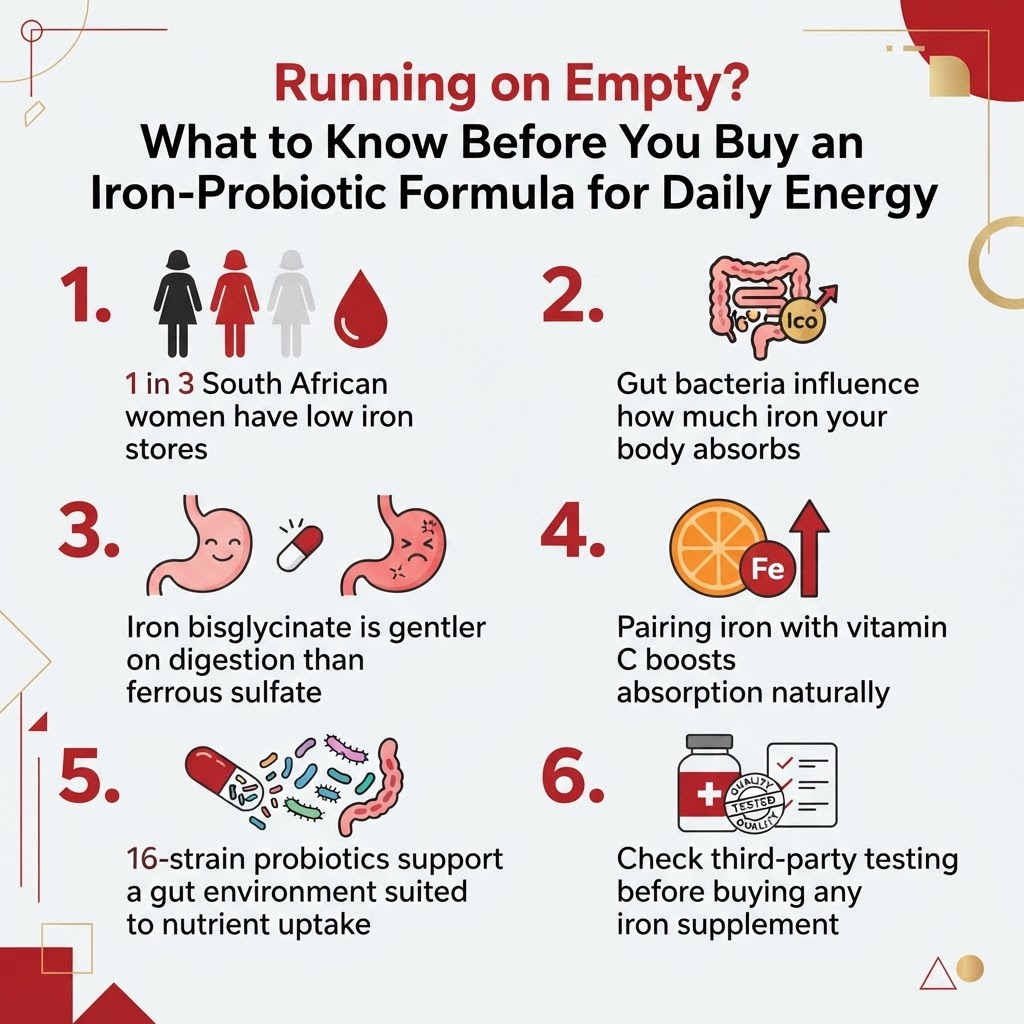
Running on Empty? What to Know Before You Buy an Iron-Probiotic Formula for Daily Energy - the key points at a glance. Source: Velo16 Health Journal.