
Why You're Always Tired: The Hidden Gut-Energy Connection Most Doctors Miss
By Dr. Chomba Chuma, MD | Velo16™ Health Journal
You've had your bloods done. Your thyroid is "fine." Your iron is "within range." Your doctor says you're healthy — so why do you feel absolutely exhausted every single day? If this sounds familiar, you're not imagining it, and you're certainly not alone. Across South Africa, millions of adults live with a persistent, unshakeable tiredness that standard medical tests simply fail to explain. The answer, in many cases, is hiding somewhere your doctor may never think to look: your gut.
As a functional medicine physician, I've spent years connecting dots that conventional medicine often leaves unjoined. And one of the most compelling — and consistently overlooked — connections I see in clinical practice is the relationship between gut health fatigue, nutrient malabsorption, and the downstream energy crisis that follows. In this article, I'm going to walk you through the science of how a disrupted gut microbiome quietly drains your energy, why B vitamins energy pathways are so deeply affected, and what you can actually do about it.
The Gut Is Not Just About Digestion
Most people think of the gut as a simple digestive tube — food goes in, waste comes out. But your gut is one of the most metabolically active organs in your entire body. It houses approximately 70% of your immune system, produces over 90% of your body's serotonin, and is home to roughly 38 trillion microbial organisms collectively known as your gut microbiome.
These microorganisms — bacteria, fungi, viruses, and archaea — are not passive passengers. They are active participants in your metabolism, your mood, your immune responses, and critically, your energy production. When this ecosystem is balanced and diverse, it supports virtually every system in your body. When it's disrupted — a condition called gut dysbiosis — the consequences ripple far beyond your digestive system.
"The gut microbiome plays a central role in human metabolism, immune function, and the synthesis of key vitamins and neurotransmitters. Disruption of microbial balance is increasingly recognised as an underlying factor in a wide range of chronic health conditions." — Nature Microbiology
Research published in NCBI/PubMed has confirmed that gut dysbiosis is associated with systemic inflammation, impaired nutrient absorption, and mitochondrial dysfunction — all of which are foundational drivers of chronic fatigue. Yet the vast majority of patients I see have never been assessed for gut health when presenting with persistent tiredness.
What Causes Gut Dysbiosis in the First Place?
Before we explore the gut-energy link in depth, it helps to understand how dysbiosis develops. In South Africa and across the modern world, several lifestyle factors are chronically degrading our gut microbiomes:
- Antibiotic overuse — both prescribed and present in our food supply — which indiscriminately kills beneficial bacteria
- Highly processed, low-fibre diets that starve beneficial microbes of the prebiotic fuel they need
- Chronic psychological stress, which alters gut motility and microbial composition through the gut-brain axis
- Environmental toxins and pesticides, many of which have antimicrobial properties
- Excess sugar and alcohol consumption, which feeds pathogenic species like Candida
- Poor sleep hygiene, which disrupts the circadian rhythms of the gut microbiome
The result is a gut environment where harmful organisms outcompete beneficial ones, the intestinal lining becomes permeable ("leaky gut"), and the body's capacity to absorb the nutrients it needs for energy collapses.
How a Disrupted Gut Steals Your Energy
The pathway from gut dysbiosis to fatigue is not a single mechanism — it's a cascade. Let me break it down in a way that explains why your tiredness feels so total, so persistent, and so resistant to simply "getting more sleep."
1. Nutrient Malabsorption: Running on Empty
Your small intestine is lined with microscopic finger-like projections called villi, which are responsible for absorbing nutrients from the food you eat. When dysbiosis is present, inflammation and increased intestinal permeability damage these villi, significantly impairing nutrient absorption.
The nutrients most critically affected include iron, magnesium, zinc, and — most relevantly for energy — the B-vitamin complex. When you can't absorb these micronutrients efficiently, you literally cannot generate energy at the cellular level, regardless of how much you eat or rest.
2. The Gut's Role in B-Vitamin Synthesis
Here's something most doctors don't tell you: your gut bacteria don't just help you absorb B vitamins from food — they actually manufacture them. Beneficial bacterial species, including certain strains of Lactobacillus and Bifidobacterium, are capable of synthesising B vitamins, including B12, B9 (folate), B2 (riboflavin), and B7 (biotin) directly in your colon.
A landmark review in the Journal of Clinical Gastroenterology confirmed that several colonic bacteria produce significant quantities of B vitamins, and that gut dysbiosis substantially reduces this endogenous production, contributing to B-vitamin insufficiency even in people with seemingly adequate dietary intake.
This is a critical insight for understanding why standard blood tests may show B12 levels that are technically "normal" but functionally inadequate — especially when combined with poor gut absorption. The reference ranges used in South African pathology labs were established on relatively healthy populations and may not reflect optimal function for people with compromised gut health.
3. Systemic Inflammation and Mitochondrial Suppression
When the gut lining becomes permeable, bacterial endotoxins (specifically lipopolysaccharides, or LPS) leak into the bloodstream. The immune system responds with a low-grade, systemic inflammatory response. This chronic inflammation has a particularly devastating effect on your mitochondria — the energy-producing organelles in every cell of your body.
Research from Harvard Health Publishing supports the growing understanding that gut-driven inflammation is a central driver of fatigue, brain fog, and mood disturbances. When your mitochondria are suppressed by inflammatory signals, they produce less ATP — the cellular currency of energy — and you feel it as that bone-deep exhaustion that no amount of sleep seems to fix.
4. The Serotonin-Fatigue Link
Your gut produces approximately 95% of your body's serotonin — a neurotransmitter most people associate with happiness, but which also plays a fundamental role in regulating sleep quality, motivation, and the perception of physical fatigue. When gut dysbiosis disrupts the specialised enterochromaffin cells that produce serotonin, the consequences include poor sleep architecture, reduced motivation, and amplified feelings of exhaustion.
This is why so many of my patients describe their fatigue as having an emotional texture — it's not just physical tiredness; it's a flatness, a lack of drive, a sense that everything requires more effort than it should. The gut-brain axis is at the heart of this experience.
The B-Vitamin Energy Crisis: Why It Goes Deeper Than Diet
B vitamins are not a single nutrient — they are a family of eight distinct water-soluble vitamins, each playing specific and irreplaceable roles in energy metabolism. When people hear "take a B-complex supplement," they often think of it as optional, a nice-to-have. In the context of gut dysbiosis, however, B-vitamin support can be genuinely transformative.
B1 (Thiamine) — The Gateway to Glucose Energy
Thiamine is essential for converting carbohydrates into usable cellular energy. Deficiency causes fatigue, irritability, and impaired cognitive function. The gut microbiome influences thiamine status both through synthesis and absorption.
B2 (Riboflavin) — The Electron Carrier
Riboflavin is a critical component of the electron transport chain in your mitochondria. Without adequate riboflavin, your cells cannot efficiently extract energy from food. Some Lactobacillus strains are known riboflavin producers in the gut.
B3 (Niacin) — NAD+ and Cellular Repair
Niacin is a precursor to NAD+, a coenzyme that is central to virtually every energy-producing reaction in the body. NAD+ levels decline with age, inflammation, and gut dysfunction — and this decline is now recognised as a major contributor to age-related fatigue and metabolic slowdown.
B6 (Pyridoxine) — Neurotransmitter Synthesis
B6 is essential for the synthesis of serotonin, dopamine, and GABA. It is also critical for protein metabolism. Deficiency is strongly associated with fatigue, depression, and immune suppression.
B9 (Folate) — Methylation and DNA Repair
Folate is essential for methylation — a biochemical process involved in gene expression, detoxification, and neurotransmitter production. Methylation inefficiency caused by folate deficiency is a silent driver of fatigue, particularly in individuals with the common MTHFR genetic variant.
B12 (Cobalamin) — The Nerve and Blood Builder
B12 is perhaps the most well-known energy-related vitamin, critical for red blood cell formation, neurological function, and DNA synthesis. Critically, B12 absorption is entirely dependent on a healthy gut lining and adequate intrinsic factor. This makes B12 deficiency extraordinarily common in people with gut dysbiosis — even in those consuming sufficient dietary B12.
According to the World Health Organization, micronutrient deficiencies — including B-vitamin insufficiencies — affect billions of people globally, with significant impacts on energy, cognition, and immune function, even in the absence of clinical deficiency signs.
The key takeaway? When your gut is dysbiotic, your B-vitamin status suffers from both ends: reduced synthesis and reduced absorption. This is why addressing gut health and B-vitamin status simultaneously is so clinically powerful — and why a targeted probiotic for energy combined with a quality B-complex is a far more complete strategy than either intervention alone.
To understand the full scientific rationale behind this approach, explore The Velo16™ Science page, where we break down the research behind our formulations in detail.
[INFOGRAPHIC_PLACEHOLDER: "The Gut-Energy Cascade: How Dysbiosis Drains Your Vitality" — Visual showing the pathway from gut dysbiosis → intestinal permeability → inflammation → nutrient malabsorption → B-vitamin deficiency → mitochondrial suppression → chronic fatigue. Include icons for the gut microbiome, B-vitamin molecules, mitochondria, and an energy meter.]
Restoring the Foundation: Probiotics, B-Vitamins, and Lasting Energy
Understanding the problem is step one. The more important question is: what do you actually do about it? In functional medicine, the answer is always to address root causes rather than suppress symptoms. For chronic fatigue gut dysfunction, this means working from the inside out.
Step 1: Restore Microbial Balance with Targeted Probiotics
Not all probiotics are created equal. For the purposes of energy and vitality, we need strains that have demonstrated clinical relevance to gut barrier integrity, B-vitamin production, and inflammation modulation. Specifically:
- Lactobacillus rhamnosus — supports gut barrier function and reduces intestinal permeability
- Bifidobacterium longum — modulates systemic inflammation and supports serotonin metabolism
- Lactobacillus plantarum — enhances iron and mineral absorption; demonstrated B-vitamin synthesis capability
- Bifidobacterium breve — supports immune regulation and reduces LPS-driven inflammation
- Lactobacillus acidophilus — improves nutrient bioavailability and restores colonisation resistance against pathogenic species
A robust, multi-strain probiotic formulation addresses the microbiome systematically, helping to re-establish the diversity and function that underpins genuine, sustained energy. Research published on PubMed/NCBI consistently shows that multi-strain probiotics produce superior outcomes compared to single-strain products in both gut barrier restoration and systemic inflammatory reduction.
Step 2: Replenish B Vitamins in Bioavailable Forms
Supplementing B vitamins is not as simple as picking any bottle off the shelf. The form of each B vitamin matters enormously — particularly for people with compromised gut function:
- Methylcobalamin (active B12) rather than cyanocobalamin — far superior bioavailability, especially when gut absorption is impaired
- Methylfolate (5-MTHF) rather than folic acid — bypasses the MTHFR conversion step that many people struggle with
- Pyridoxal-5-Phosphate (P5P) rather than standard B6 — the active form, ready for immediate use by the body
- Riboflavin-5-phosphate rather than plain riboflavin — the coenzyme form, more readily utilised
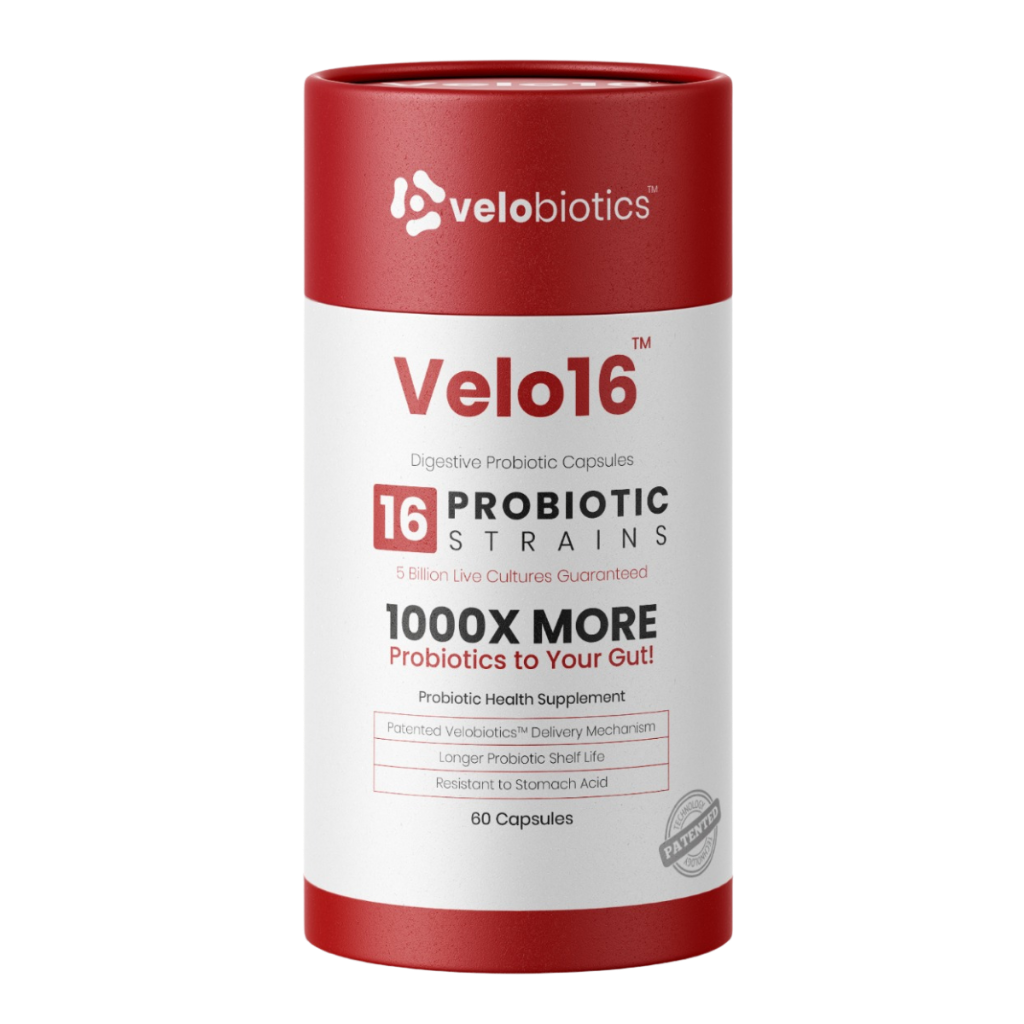
The Velo16™ Probiotics + B-Complex Energy formulation was specifically designed around this principle — combining clinically relevant probiotic strains with active-form B vitamins to address both the upstream gut dysfunction and the downstream nutritional deficiency simultaneously. This is the dual-action approach that I believe makes the most meaningful difference for people suffering from persistent, unexplained fatigue.
Step 3: Support the Gut Environment with Dietary Changes
Supplementation works best when supported by dietary foundations. For gut health and energy specifically, I recommend:
- Increase dietary fibre from diverse plant sources — aim for 30 different plant foods per week to support microbial diversity
- Incorporate fermented foods daily — kefir, sauerkraut, kimchi, and unsweetened yoghurt all provide live cultures and support microbiome diversity
- Reduce ultra-processed foods — the emulsifiers, preservatives, and artificial sweeteners in processed foods are directly disruptive to gut microbiota
- Eat B-vitamin rich whole foods — legumes, dark leafy greens, eggs, lean meats, and nutritional yeast all contribute meaningfully to B-vitamin status
- Manage stress actively — chronic psychological stress is one of the most potent drivers of gut dysbiosis through the gut-brain axis; prioritise sleep, movement, and genuine rest
Browse the full Velo16™ Health Journal for additional articles on gut-supportive nutrition, stress management, and lifestyle strategies that complement supplementation.
What to Expect: The Clinical Timeline for Energy Recovery
One of the most common questions I hear from patients is: "How long before I feel better?" This is a fair question, and I believe in honest answers.
Gut microbiome restoration is not an overnight process. The microbiome is a complex ecological system, and meaningful shifts in its composition and function take time. Based on clinical evidence and my own patient outcomes, here is a realistic expectation framework:
- Weeks 1–2: Some patients notice reduced bloating, improved regularity, and modest improvements in energy as the gut environment begins to shift. B-vitamin repletion may also begin contributing to cognitive clarity during this phase.
- Weeks 3–6: More sustained energy improvements typically emerge as gut barrier integrity begins to improve, systemic inflammation reduces, and nutrient absorption normalises. Sleep quality often improves during this phase.
- Months 2–3: Most patients report significant and consistent improvements in energy, mental clarity, mood stability, and physical stamina. The microbiome is becoming re-established with beneficial populations.
- Months 4–6: Continued optimisation. The goal in this phase is to consolidate gains through consistent supplementation and dietary support, and to build the long-term resilience of the microbiome.
"Sustainable energy is not about stimulants — it's about cellular efficiency. And cellular efficiency begins in the gut. When you fix the foundation, the energy follows." — Dr. Chomba Chuma, MD
As a proudly South African brand, Velo16™ was built specifically with our local population's health challenges, dietary patterns, and lifestyle pressures in mind. As an energy supplement South Africa solution, our formulation accounts for the unique nutritional gaps and stress burdens that affect South Africans across our diverse communities. Discover the full Velo16™ Energy & Vitality Collection to learn more about how these products were developed.
Frequently Asked Questions
Can gut health really cause fatigue, or is this just a trend?
This is far from a trend — it is well-established science. Multiple peer-reviewed studies published on PubMed/NCBI and in journals like Nature Microbiology have confirmed that gut dysbiosis drives systemic inflammation, impairs nutrient absorption, disrupts neurotransmitter synthesis, and suppresses mitochondrial energy production. All of these mechanisms contribute directly to chronic fatigue. The gut-fatigue connection is one of the most robustly supported areas in modern gastroenterology and functional medicine.
How do I know if my fatigue is gut-related?
Common signs that your fatigue may have a gut-health component include: persistent tiredness despite adequate sleep, brain fog or poor concentration, bloating or digestive discomfort, frequent infections or slow wound healing, low mood or anxiety, and a history of antibiotic use or a processed-food-heavy diet. A comprehensive gut microbiome assessment (stool analysis) can provide more definitive diagnostic information. However, even without testing, addressing gut health and B-vitamin status is a safe and often dramatically effective first step.
Can I just take B vitamins without addressing my gut health?
You can, but you will likely see limited results. If your gut lining is inflamed and permeable, your ability to absorb even high-quality B-vitamin supplements is significantly compromised. Additionally, the underlying inflammatory cascade that is suppressing your mitochondria will persist. For lasting energy recovery, addressing both the gut microbiome and B-vitamin status simultaneously is significantly more effective than either approach alone — which is precisely why the Velo16™ Probiotics + B-Complex Energy formulation combines both in a single, synergistic product.
Is the Velo16™ Probiotics + B-Complex Energy supplement safe to take long-term?
Yes. Probiotics from well-characterised strains such as Lactobacillus and Bifidobacterium species have an outstanding long-term safety profile, supported by decades of clinical research. Active-form B vitamins are water-soluble and do not accumulate to toxic levels under normal supplementation conditions. As always, if you have a specific medical condition, are pregnant, or are taking chronic medication, please consult with your healthcare provider before beginning any new supplementation protocol.
How is Velo16™ different from other probiotics and B-complex products on the South African market?
Most probiotic products on the market use single-strain or low-diversity formulations with unverified colony-forming unit (CFU) counts. Most B-complex products use inferior, synthetic forms of vitamins that have poor bioavailability. Velo16™ addresses both of these limitations by combining clinically validated, multi-strain probiotic cultures at therapeutic CFU counts with active, bioavailable forms of all eight B vitamins — in a single, synergistic formulation designed specifically around the gut-energy connection. Explore The Velo16™ Science for the full formulation rationale.
Ready to Reclaim Your Energy From the Inside Out?
If you've been living with persistent fatigue that no one has been able to explain, it's time to look where most doctors don't: your gut. The Velo16™ Probiotics + B-Complex Energy formulation was designed by functional medicine physicians to address the root cause of energy depletion — not mask the symptoms.
- ✅ Clinically relevant, multi-strain probiotic complex
- ✅ Active-form B vitamins for maximum bioavailability
- ✅ Formulated specifically for the South African lifestyle
- ✅ Evidence-based, physician-developed protocol
Explore the Velo16™ Energy & Vitality Collection →
Shop All Velo16™ Products →
Not sure where to start? Your skin is also a mirror of your gut health. Take the Clear Skin Quiz to discover more about what your body is telling you.