
Why You're Always Tired: The Hidden Gut-Energy Connection Most Doctors Miss
By Dr. Chomba Chuma, MD | Velo16™ Health Journal | Functional Medicine & Gut Health
You've had your blood work done. Your iron levels are fine. Your thyroid panel came back normal. Your doctor assures you everything looks good — yet you wake up every morning already exhausted, drag yourself through the afternoon on caffeine, and collapse into bed at night wondering why rest never seems to restore you. If this sounds familiar, you are not alone. Persistent, unexplained fatigue is one of the most common complaints I hear from patients walking into my Johannesburg practice, and the vast majority of them have been told the same thing: "Your results are normal."
The problem isn't that something is being missed in the lab — it's that the wrong system is being investigated. In functional medicine, when we look beyond the standard panels and examine the gut microbiome, we consistently find a story that explains everything. Gut health fatigue is a real, scientifically documented phenomenon, and understanding it may be the missing piece in your energy puzzle.
In this article, I'm going to walk you through the gut-energy connection that most conventional doctors simply aren't trained to look for — and show you how a targeted approach combining probiotics and B vitamins energy support can genuinely change the way you feel every day.
The Gut Is Not Just About Digestion — It's Your Body's Energy Hub
Most people think of the gut as a simple tube that processes food. In reality, your gastrointestinal tract is one of the most metabolically active organs in the body. It houses over 70% of your immune system, produces more than 90% of your serotonin, and — critically for today's discussion — it is directly responsible for how well your body absorbs and synthesises the nutrients required to generate cellular energy.
The trillions of bacteria, fungi, and viruses that collectively make up your gut microbiome are not passive passengers. They are active metabolic contributors. Certain species of beneficial bacteria are responsible for synthesising key vitamins, breaking down complex carbohydrates into usable fuel, and maintaining the integrity of the gut lining that allows nutrients to cross into your bloodstream.
When this ecosystem is disrupted — a condition known as gut dysbiosis — the consequences ripple outward into virtually every system of the body, including your energy metabolism. Research published in Nature Microbiology has demonstrated that the composition of the gut microbiome directly influences mitochondrial function — the very process by which your cells produce adenosine triphosphate (ATP), the currency of energy in the human body.
What Is Gut Dysbiosis and Why Is It So Common?
Gut dysbiosis refers to an imbalance in the microbial community of your gut — too many harmful organisms, too few beneficial ones, or a loss of overall microbial diversity. In South Africa and across the African continent, dysbiosis is increasingly prevalent, driven by:
- Highly processed, low-fibre diets
- Overuse of antibiotics (both prescribed and found in food sources)
- Chronic psychological and physiological stress
- Alcohol consumption and smoking
- Environmental pollutants and toxin exposure
- Insufficient sleep — itself often caused by fatigue, creating a vicious cycle
The World Health Organization recognises micronutrient deficiency as a global public health concern, and what is often overlooked is that many of these deficiencies are not caused by poor dietary intake alone — they are caused by a gut that has lost the capacity to properly absorb and synthesise essential nutrients.
How a Damaged Gut Steals Your Energy: The Malabsorption-Fatigue Loop
Here is what I call the malabsorption-fatigue loop — and once you understand it, your persistent tiredness will begin to make complete sense.
Step 1: Dysbiosis Damages the Gut Lining
Your intestinal wall is lined with specialised cells called enterocytes, bound together by what are known as tight junctions. When the microbiome falls out of balance, harmful bacterial metabolites — such as lipopolysaccharides (LPS) — begin to compromise these tight junctions. The result is a condition known as intestinal permeability, or colloquially, "leaky gut."
When the gut lining is compromised, two things happen simultaneously: nutrients that should be absorbed pass through too quickly or not at all, and substances that shouldn't cross into the bloodstream — like bacterial fragments and undigested food particles — do cross, triggering systemic inflammation.
Step 2: Chronic Inflammation Exhausts the Body
That low-grade systemic inflammation has a direct metabolic cost. Your immune system runs on energy. When it is constantly activated — even at a subclinical level — it diverts significant resources away from other systems, including the cellular energy production pathways that keep your muscles working, your brain sharp, and your mood stable.
"Fatigue is one of the most common symptoms of chronic low-grade inflammation, and the gut is among the most significant drivers of this inflammatory state in otherwise healthy adults." — Harvard Health Publishing, Gut Feelings: The Gut-Brain Connection
Step 3: Key Energy Nutrients Cannot Be Absorbed
A damaged, inflamed gut lining is a poor absorber. Vitamins and minerals that are essential for energy metabolism — particularly the B vitamins, magnesium, iron, and coenzyme Q10 — fail to be adequately absorbed even when you are consuming them in your diet. This is why patients present to my practice with fatigue despite eating what appears to be a healthy, balanced diet.
This is the piece that most standard blood panels miss entirely. A serum B12 test, for example, may appear within range while tissue-level B12 — the form that actually matters for energy metabolism — remains critically low due to malabsorption.
The B-Vitamin Deficiency Connection: Why Your Cells Cannot Make Energy
Of all the micronutrients involved in energy production, the B vitamins are the most critical — and the most frequently depleted in individuals with gut dysbiosis. Understanding why requires a brief look at how your body actually generates energy at the cellular level.
How B Vitamins Fuel Your Mitochondria
Your mitochondria produce ATP through a series of biochemical reactions collectively called the Krebs cycle and the electron transport chain. Every single step of these processes requires B vitamins as essential cofactors. Specifically:
- Vitamin B1 (Thiamine) — Required to convert glucose into pyruvate, the entry point for energy production
- Vitamin B2 (Riboflavin) — Essential component of FAD, a critical electron carrier in mitochondrial respiration
- Vitamin B3 (Niacin) — Precursor to NAD⁺, one of the most important molecules in cellular energy transfer
- Vitamin B5 (Pantothenic Acid) — Required to form Coenzyme A, which powers the Krebs cycle
- Vitamin B6 (Pyridoxine) — Involved in amino acid metabolism and neurotransmitter synthesis, including dopamine and serotonin
- Vitamin B9 (Folate) — Critical for DNA repair and red blood cell production, which carries oxygen to cells
- Vitamin B12 (Cobalamin) — Essential for neurological function, red blood cell formation, and methylation pathways
Without adequate levels of these vitamins, your mitochondria quite literally cannot do their job. You may be breathing, eating, and sleeping — but your cells are running on empty. Research in the Journal of Clinical Gastroenterology has confirmed that individuals with gut dysbiosis and intestinal permeability demonstrate significantly lower serum and tissue levels of multiple B vitamins compared to healthy controls.
The Gut's Role in B-Vitamin Synthesis
Here is a fact that may surprise you: your gut bacteria don't just help you absorb dietary B vitamins — they actually produce them. Beneficial species such as Lactobacillus and Bifidobacterium are well-documented producers of B vitamins, including B12, folate, B2, and B3, directly within the gut lumen.
A landmark study published on PubMed/NCBI demonstrated that specific probiotic strains can measurably increase host B-vitamin status — not just by improving absorption, but through direct endogenous synthesis. When dysbiosis wipes out these beneficial species, you lose both your internal B-vitamin factory and your gut's capacity to absorb the B vitamins you consume externally.
This is the dual hit that creates the profound B-vitamin depletion we see clinically in patients with chronic fatigue gut presentations.
[INFOGRAPHIC_PLACEHOLDER: "The Gut-Energy Connection: How Dysbiosis Depletes B Vitamins and Causes Fatigue" — Visual flow diagram showing: Dysbiosis → Gut Lining Damage → Malabsorption + Loss of B-Vitamin Synthesis → Mitochondrial Dysfunction → ATP Depletion → Chronic Fatigue → Systemic Inflammation → Worsening Dysbiosis (loop)]
Restoring the Gut-Energy Axis: The Probiotic-B Complex Strategy
Now that we understand the mechanism, let's talk about the solution — because the research here is genuinely exciting and increasingly robust.
The most effective clinical approach I have found — and the one supported by an expanding body of peer-reviewed evidence — is a dual-targeted intervention: restore microbiome balance with targeted probiotic strains, while simultaneously replenishing depleted B vitamins to bypass the absorption deficit and directly support mitochondrial function. This is precisely the philosophy behind the Velo16™ Energy & Vitality Collection.
Why Probiotics Are the Foundation
Taking a probiotic for energy might sound like an unusual concept — we're more accustomed to hearing about probiotics for digestive symptoms like bloating or irregularity. But the evidence connecting probiotic supplementation to improved energy levels and reduced fatigue is growing significantly.
A randomised controlled trial published through NCBI found that multi-strain probiotic supplementation significantly reduced symptoms of fatigue and improved measures of physical and mental energy in subjects with functional gut disturbances. The proposed mechanisms include:
- Restoration of tight junction integrity — reducing intestinal permeability and the systemic inflammatory burden
- Reduction of LPS-mediated inflammation — lowering the immune system's constant energy drain
- Re-establishment of endogenous B-vitamin synthesis — particularly through Lactobacillus and Bifidobacterium species
- Improvement of short-chain fatty acid (SCFA) production — SCFAs like butyrate directly fuel colonocyte energy production and support mitochondrial function systemically
- Gut-brain axis modulation — improving serotonin availability and vagal nerve signalling, which influences perceived energy and mood
The key, as the research consistently demonstrates, is strain specificity and multi-strain formulations. Not all probiotics are created equal. The strains must be selected based on clinical evidence for the intended outcomes — not simply based on high CFU counts or marketing claims.
Why B-Complex Supplementation Is the Accelerator
While probiotics work to restore your gut's long-term capacity for B-vitamin synthesis and absorption, a high-quality B-complex supplement provides the immediate cellular fuel your mitochondria need right now. Think of it this way: the probiotics rebuild the factory, while the B-complex keeps the lights on while reconstruction happens.
For South African adults, this combination addresses a particularly important gap. Research from the South African Medical Research Council indicates that B-vitamin inadequacy — particularly B12 and folate — is significantly prevalent across multiple demographic groups, compounded by dietary patterns that are increasingly shifting toward ultra-processed foods.
When selecting a B-complex supplement, the form of the vitamins matters enormously for bioavailability:
- Methylcobalamin (active B12) over cyanocobalamin
- Methylfolate (5-MTHF) over folic acid for individuals with MTHFR gene variants
- Pyridoxal-5-phosphate (P5P) as the active form of B6
- Riboflavin-5-phosphate for active B2
These active, bioavailable forms bypass the liver conversion steps that many individuals — particularly those with compromised gut health — struggle to perform efficiently. Explore The Velo16™ Science for a detailed breakdown of how our formulation choices are grounded in functional medicine evidence.
The Synergistic Effect: More Than the Sum of Their Parts
What makes the combined probiotic and B-complex approach so clinically compelling is the synergy between the two interventions. The probiotics create the conditions for better nutrient absorption over time, while the B vitamins reduce systemic inflammation (B6, B9, and B12 are critical for homocysteine regulation — elevated homocysteine is itself a driver of gut inflammation). Each intervention enhances the effectiveness of the other.
In my clinical experience, patients who implement both simultaneously consistently report earlier and more sustained improvements in energy, mental clarity, and mood than those who use either intervention in isolation.
Practical Steps: What to Do If You Recognise Yourself in This Article
If the fatigue pattern I've described resonates with you, here is the structured approach I recommend to my patients — and what you can begin implementing today.
Step 1: Assess Your Gut Health Symptoms
Chronic fatigue rarely exists in isolation when the gut is the root cause. Look for accompanying signs such as:
- Bloating, gas, or irregular bowel movements
- Food sensitivities that seem to be increasing over time
- Brain fog or difficulty concentrating
- Skin issues such as acne, eczema, or dullness (the gut-skin axis is well established — our Take the Clear Skin Quiz can help you assess this connection)
- Mood disturbances, anxiety, or low-grade depression
- Frequent illness suggesting immune dysregulation
Step 2: Remove the Drivers of Dysbiosis
Supplementation works best when the underlying inputs are also addressed:
- Reduce ultra-processed food — particularly refined sugars and seed oils that feed harmful bacteria
- Increase dietary fibre — aim for 30+ plant varieties per week to support microbial diversity
- Manage stress actively — chronic cortisol is one of the most potent disruptors of the gut microbiome
- Prioritise sleep hygiene — your microbiome follows a circadian rhythm and is significantly disrupted by poor sleep
- Limit unnecessary antibiotic use — always discuss with your doctor before use
Step 3: Implement Targeted Supplementation
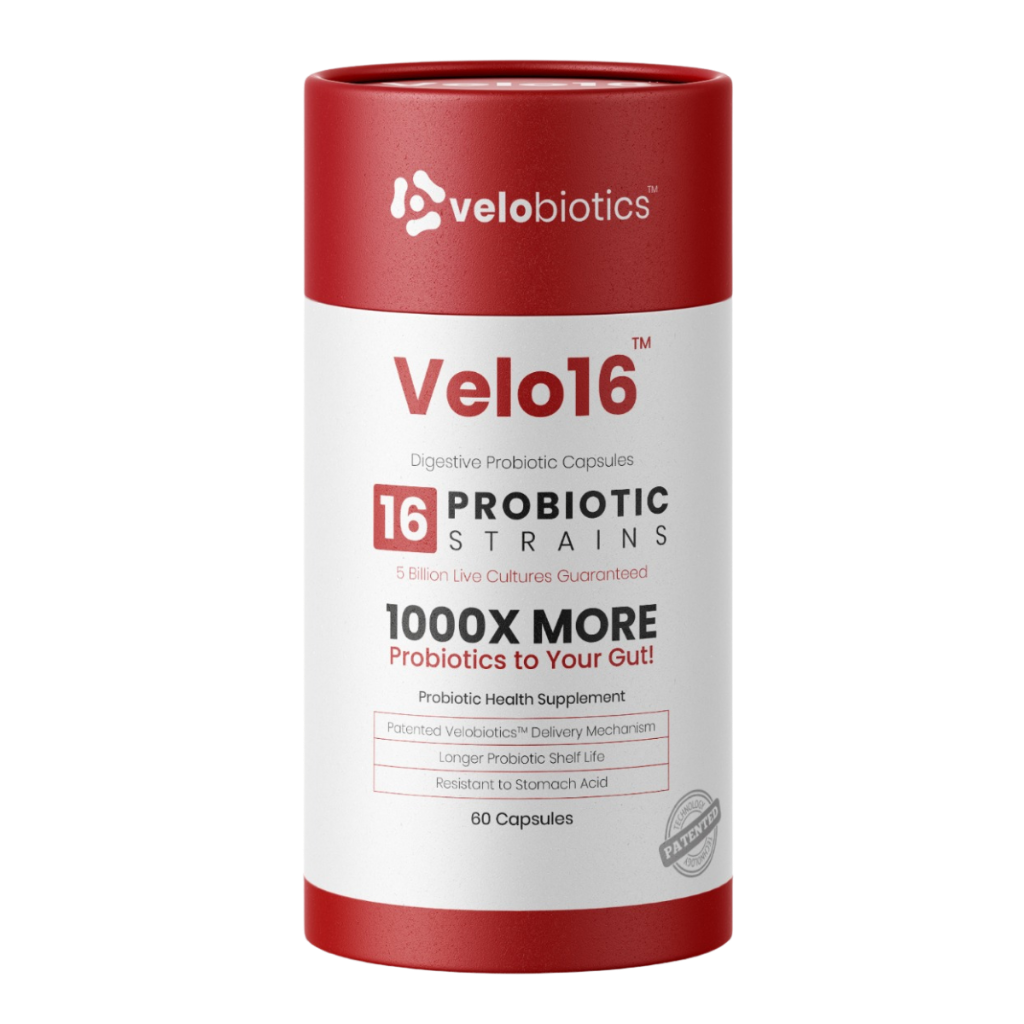
This is where a quality, evidence-formulated supplement stack makes a measurable difference. The Velo16™ Probiotics + B-Complex Energy formulation was designed specifically to address the gut-energy axis with:
- Multi-strain probiotic complex featuring clinically studied Lactobacillus and Bifidobacterium species at therapeutic counts
- Full-spectrum B-complex in active, bioavailable forms
- Synbiotic prebiotics to nourish and sustain the probiotic strains
- Formulated for the specific nutritional gaps prevalent in South African adults
As a energy supplement South Africa solution, Velo16™ was built from the ground up to address the intersection of gut health and energy metabolism — not as a stimulant that masks fatigue, but as a restoration strategy that addresses the root cause.
Browse the full range on our Shop All Velo16™ Products page, or read more evidence-based articles on the Velo16™ Health Journal.
Step 4: Track and Adjust Over 8-12 Weeks
Gut restoration is not an overnight process. The research suggests that meaningful, measurable shifts in microbiome composition require consistent supplementation over 8 to 12 weeks. I encourage my patients to track their energy levels, sleep quality, digestive symptoms, and mood on a weekly basis to observe the trajectory of improvement — which typically begins within the first 2-3 weeks for B-vitamin related symptoms and deepens over the following months as the microbiome stabilises.
"Microbiome interventions should be viewed as long-term investments in metabolic health, not short-term fixes. Consistency and patience are as important as the quality of the intervention itself." — Dr. Chomba Chuma, MD, Velo16™
Frequently Asked Questions
Can a probiotic really help with fatigue, or is that just marketing?
This is a fair and important question. The link between probiotics and energy is not marketing — it is increasingly well-supported by peer-reviewed science. Multiple randomised controlled trials have demonstrated that specific probiotic strains reduce markers of systemic inflammation, improve intestinal permeability, and contribute to endogenous B-vitamin synthesis — all of which directly influence energy metabolism. The key is using a multi-strain formulation with clinically studied strains at therapeutic doses, not just any probiotic off the shelf. The gut-energy connection is a legitimate area of active research in gastroenterology and functional medicine.
How long before I notice a difference in my energy levels?
Most patients notice initial improvements in digestive symptoms and some reduction in brain fog within the first 2-4 weeks as B-vitamin levels begin to replenish. Sustained, meaningful improvements in energy — which reflect deeper microbiome restoration — typically become apparent over 8-12 weeks of consistent use. Individual results vary depending on the severity of existing dysbiosis, dietary habits, stress levels, and sleep quality. The combination of probiotics and B-complex tends to produce faster results than either intervention alone.
I've tried B vitamins before and didn't notice a difference. Why would this be different?
This is one of the most common things I hear. The answer usually lies in two factors: the form of the B vitamins used, and the underlying absorption problem. Many B-complex supplements use inactive, synthetic forms of vitamins (like cyanocobalamin or folic acid) that require significant liver conversion to become biologically active. If your gut is compromised, your liver is also under increased toxic burden, making this conversion inefficient. Velo16™ uses active, methylated forms that are immediately bioavailable. More importantly, without addressing the gut environment simultaneously, any B-vitamin supplementation will remain partially ineffective due to ongoing malabsorption.
Is this approach safe if I have an existing health condition or take medication?
Probiotics and B-complex supplements are generally considered safe for healthy adults. However, if you have an immunocompromising condition, are receiving chemotherapy, or take medications that interact with B vitamins (such as metformin, which depletes B12, or certain anticonvulsants that affect folate), it is essential to consult your healthcare provider before beginning any new supplement regimen. As a physician, I always recommend working with a qualified health professional who can contextualise supplementation within your broader health picture.
What is the difference between Velo16™ Probiotics + B-Complex Energy and a regular pharmacy probiotic or multivitamin?
The fundamental difference is specificity and formulation philosophy. Most pharmacy probiotics contain one or two strains at relatively low doses, chosen for their shelf stability rather than their clinical efficacy for specific outcomes. Most multivitamins contain synthetic, inactive forms of B vitamins in arbitrary doses. Velo16™ was formulated by functional medicine practitioners to specifically target the gut-energy axis, using clinically studied multi-strain probiotic complexes alongside active, bioavailable B vitamins at therapeutic doses. The combination product also accounts for synergistic effects between the two — something generic products cannot offer.
Ready to Address the Root Cause of Your Fatigue?
If you've been living with persistent, unexplained tiredness and you recognise the patterns described in this article, it's time to stop managing the symptoms and start addressing the source. The gut-energy connection is real, the science is clear, and the solution is within reach.
The Velo16™ Energy & Vitality Collection was developed by functional medicine physicians specifically for health-conscious South Africans who want evidence-based solutions — not stimulant-driven quick fixes.
- ✓ Multi-strain probiotic complex with clinically studied species
- ✓ Full-spectrum B-complex in active, bioavailable forms
- ✓ Synbiotic prebiotic support for microbiome restoration
- ✓ Formulated for the South African nutritional context
- ✓ Backed by functional medicine science and real clinical experience
Shop All Velo16™ Products and begin your gut-to-energy restoration journey today. Your cells are waiting for the fuel they've been missing.