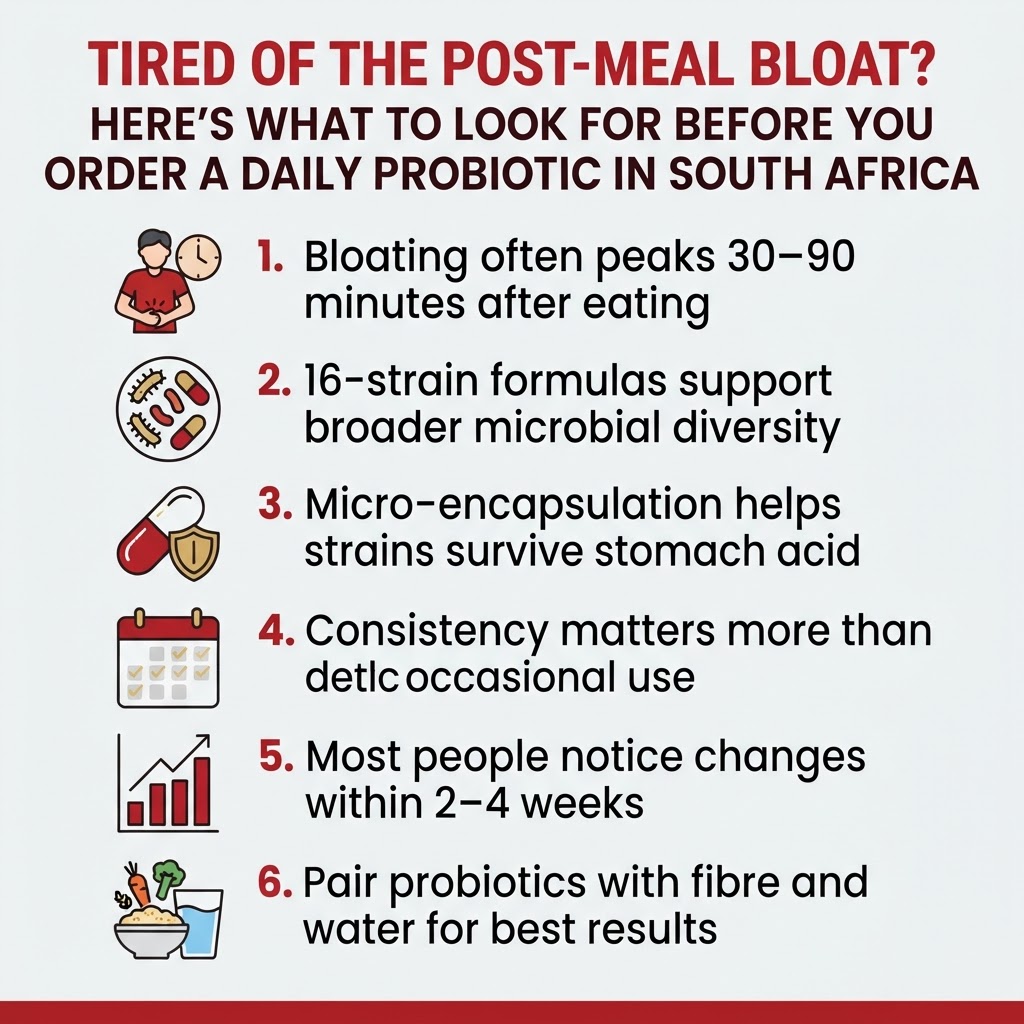

Tired of the Post-Meal Bloat? Here's What to Look for Before You Order a Daily Probiotic in South Africa
If you've ever had to unbutton your jeans after lunch or avoided a second helping because you knew your stomach would swell like a balloon, you're not alone. Bloating after eating is one of the most common digestive complaints among South African adults, yet most people never figure out what's actually causing it. Before you reach for yet another antacid or give up on certain foods altogether, it helps to understand what's happening inside your gut — and what a genuinely good daily probiotic should do about it.
Why Bloating After Eating Is So Common Here
South African diets often combine refined carbohydrates, sugar, and fried foods with irregular eating schedules shaped by long commutes and busy workdays. Add in stress, antibiotic use, and inconsistent water intake, and the gut microbiome takes a real knock. Over time, this imbalance — sometimes called dysbiosis — makes it harder for your digestive system to break food down efficiently.
When digestion slows or ferments food unevenly, gas builds up in the intestines. That trapped gas is what causes the tight, swollen feeling most people describe as bloating. According to the Mayo Clinic, bloating is frequently linked to how food is digested rather than how much is eaten, which is why two people can eat the same meal and have completely different reactions.
What's Actually Happening in Your Gut When You Feel Bloated
Your gut hosts trillions of bacteria that help break down fibre, produce short-chain fatty acids, and regulate gas production. When the balance of