

Bloated After Every Meal and Never Sure Why? A Practical Buyer's Guide to Digestive Enzyme and Probiotic Complexes
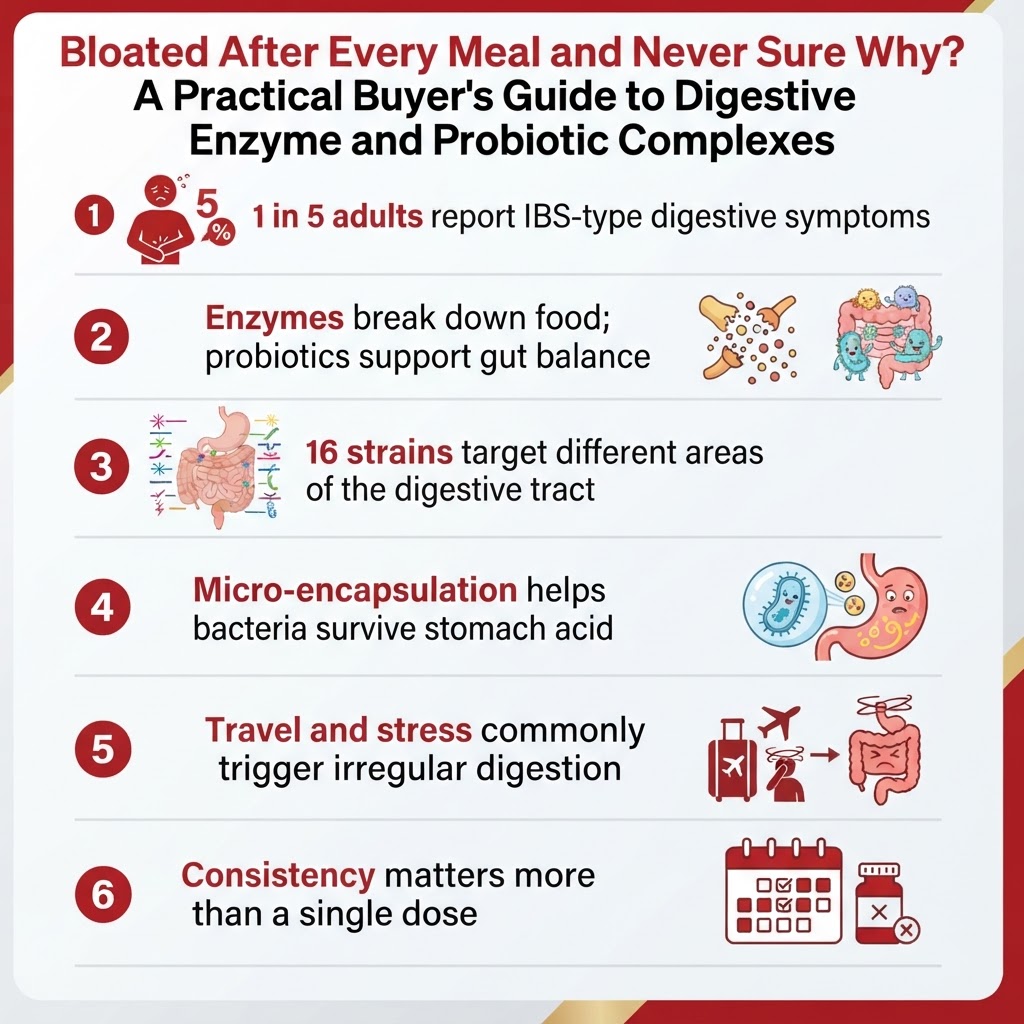
If your stomach feels like its own weather system — calm one day, stormy the next — you're not imagining things. Research suggests IBS-type digestive symptoms affect roughly 1 in 5 adults globally, and the discomfort (bloating, gas, irregular bowel habits, cramping) often has no single obvious trigger. This guide answers the questions we hear most often from readers trying to work out whether a digestive enzyme and probiotic complex could be a sensible next step, and how to choose one with confidence before you order.
What Does "IBS-Type" Digestion Actually Mean?
IBS-type digestion describes a pattern rather than a single diagnosis. It usually includes some combination of bloating, gas, unpredictable bowel habits, and a feeling of heaviness after meals that doesn't clearly relate to what you ate. According to the Mayo Clinic, IBS symptoms are associated with how the gut communicates with the brain, how quickly food moves through the intestines, and the balance of bacteria living there.
This is different from a one-off bout of indigestion. It's a recurring pattern that can make eating out, travelling or simply getting through a workday feel stressful. For a deeper look at what heaviness after meals might be signalling, our earlier piece on digestive enzymes and post-meal heaviness is a useful companion read.
Why Enzymes and a 16-Strain Probiotic Work Better Together
Digestive enzymes and probiotics solve two different problems, which is why combining them is often more practical than choosing one or the other.
- Enzymes help break down proteins, fats and carbohydrates so nutrients are more easily absorbed.
- Probiotics support the balance of bacteria further along the digestive tract, where fermentation, gas production and bowel regularity are influenced.
- Together, they address both the mechanical breakdown of food and the microbial environment it passes through.
A 16-strain formulation, like the one used in Velobiotics' patented micro-encapsulation process, is designed to introduce a broader diversity of bacteria than single-strain products, since different strains are associated with different functions — some with gas reduction, others with regularity, others with immune signalling.
"Diversity within the gut microbiome is increasingly recognised as being as important as the overall quantity of bacteria present."
- Didari et al., World Journal of Gastroenterology
What the Research Actually Says
A systematic review published in the World Journal of Gastroenterology found that certain probiotic strains were associated with modest improvements in IBS symptom scores, particularly bloating and abdominal pain, though the authors noted that effects vary by strain and by individual. Separately, research summarised by the National Library of Medicine on digestive enzyme supplementation points to enzymes supporting more complete breakdown of difficult-to-digest foods, which may reduce the fermentation that leads to gas and discomfort.
Neither enzymes nor probiotics are positioned in the research as a cure for IBS-type digestion. They're better understood as supportive tools that may help your digestive system work more efficiently, alongside diet, hydration, sleep and stress management.
Common Questions People Ask Before Ordering
Is it safe to take enzymes and probiotics together, every day?
For most healthy adults, taking a combined enzyme-probiotic supplement daily is considered low-risk, since enzymes support digestion at mealtimes and probiotics are naturally occurring organisms already present in a healthy gut. If you have an existing digestive condition, are pregnant, or take prescription medication, it's sensible to check with your doctor or pharmacist first.
How soon will I notice a difference?
This varies significantly between individuals. Some people report feeling less bloated within the first one to two weeks, while microbiome-related changes are generally understood to build gradually over four to eight weeks of consistent use. Expecting an overnight transformation often leads to disappointment — consistency matters more than any single dose.
Can I take it alongside antibiotics or after a course of them?
Antibiotics can disrupt the gut's bacterial balance, which is one reason many people look to introduce a 16-strain probiotic afterward. If you're currently on antibiotics, it's generally recommended to space doses a few hours apart and speak to your pharmacist about timing.
Will it help with travel-related digestion issues?
Unfamiliar food, time zone changes, dehydration and stress are all common disruptors of regular digestion while travelling. Many people choose to start a probiotic and enzyme routine a week or two before a trip, continuing it throughout, as a practical way to support consistency when routines are unpredictable.
How to Choose the Right Complex: A Simple Checklist
Not all enzyme-probiotic products are built the same way, and the differences matter more than the marketing often suggests.
- Look for multiple probiotic strains (not just one or two), since different strains are linked to different benefits.
- Check for a delivery method — like micro-encapsulation — designed to help bacteria survive stomach acid and reach the intestines alive.
- Confirm the enzyme blend covers proteins, fats and carbohydrates, not just one food group.
- Favour transparent labelling of CFU counts and strain names over vague "proprietary blend" claims.
- Consider whether the product is formulated with everyday South African eating patterns in mind, rather than imported formulations designed for different diets.
It's also worth remembering that supplements work best as part of a broader approach. Our article on how much of your immune system lives in your gut explains why gut support often has knock-on effects well beyond digestion itself.
Travel, Stress and Life's Unpredictable Moments
Digestion rarely misbehaves at convenient times. Deadlines, long flights, irregular meals and poor sleep all place strain on the same systems that keep digestion steady, which is why IBS-type symptoms often flare during life's busiest periods rather than its calmest ones.
"The gut's nervous system is so extensive and influential that it's often referred to as a second brain, responding to stress in ways that directly affect digestion."
- Mayo Clinic, Irritable Bowel Syndrome overview
This is one reason many people prefer to keep a digestive enzyme and probiotic complex as a standing part of their routine, rather than something reached for only after symptoms appear. Supporting the gut consistently, rather than reactively, is generally the more sustainable approach.
Your Simplest First Step
If bloating, gas or unpredictable digestion have become a regular feature of your week rather than an occasional nuisance, the most straightforward next step is to try a formulation built specifically to combine enzyme support with microbial diversity. You can explore and order the Velo16 digestive enzyme and probiotic complex here, formulated with 16 probiotic strains and patented micro-encapsulation designed for everyday South African gut health.
Want more practical, research-informed gut health guidance delivered straight to your inbox? Subscribe to the Velo16 Health Journal newsletter for new articles, tips and early access to product updates.