
70% of Your Immune System Lives in Your Gut: Here's How to Activate It
By Dr. Chomba Chuma, MD | Velo16™ Health Journal
Most people think of the immune system as something that lives in their blood, their lymph nodes, or perhaps their white blood cells circulating through the body on patrol. What very few people realise is that the single largest concentration of immune tissue in the entire human body is sitting quietly inside your digestive tract — right now, as you read this.
That's not a metaphor. It's anatomy.
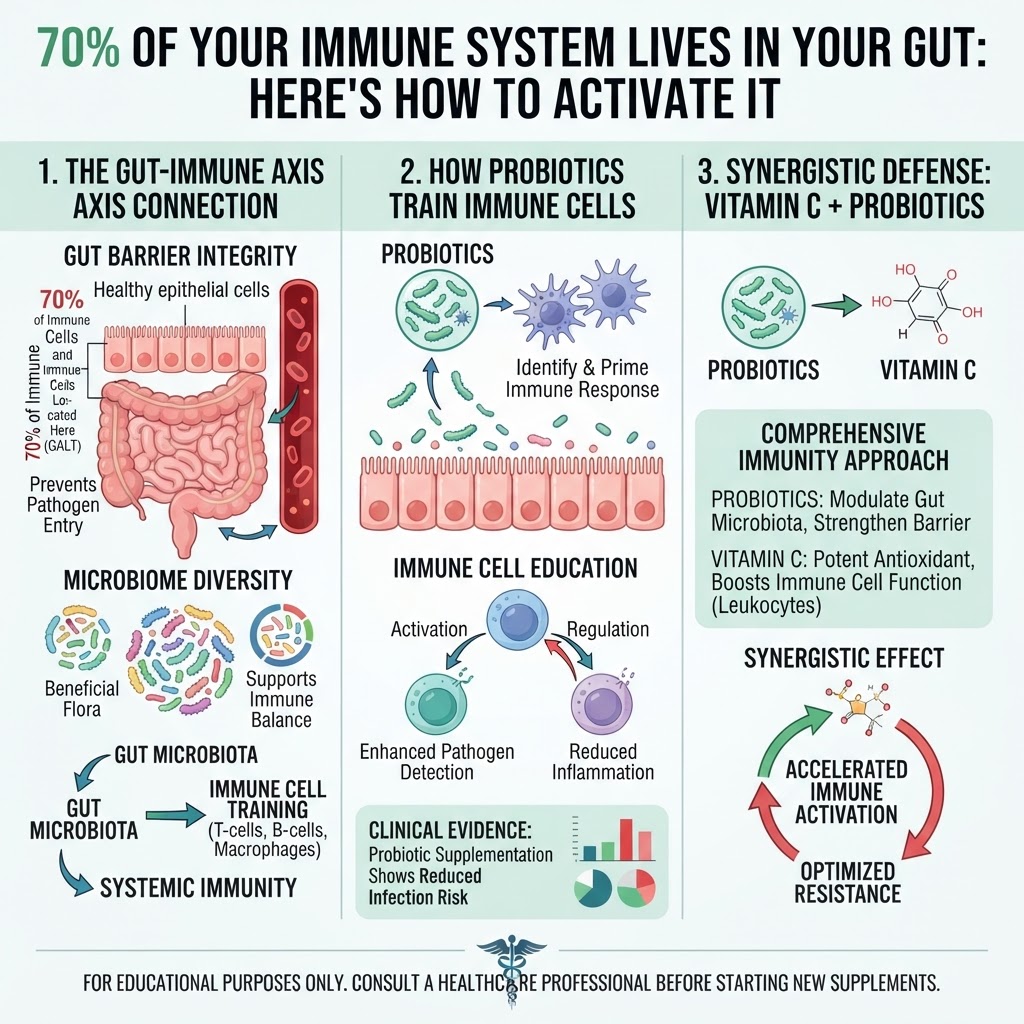
Approximately 70 to 80 percent of your immune cells reside in or around your gut, housed within a sophisticated network of lymphoid tissue that scientists call the gut-associated lymphoid tissue (GALT). This system is your body's primary immunological training ground — and the health of your gut microbiome determines whether it functions at its peak or operates at a chronic deficit.
In this article, I want to walk you through the science of the gut immune system, explain exactly how probiotics train and modulate your immune response, and make the case for why combining a clinically diverse probiotic with high-dose Vitamin C immunity support creates the most complete immune defence available. This isn't wellness marketing. This is functional medicine — backed by evidence, and built for real results.
What Is Gut-Associated Lymphoid Tissue (GALT) and Why Does It Matter?
To understand why your gut is your immune system's headquarters, we need to understand the anatomy involved. The GALT is a collective term for all the immune tissue embedded in and around the gastrointestinal tract. It includes structures like Peyer's patches in the small intestine, isolated lymphoid follicles, mesenteric lymph nodes, and the appendix — yes, the appendix has an immune function.
Within the GALT, you'll find enormous populations of T lymphocytes, B lymphocytes, natural killer cells, macrophages, and dendritic cells — all the major players of both innate and adaptive immunity. The reason so much immune tissue concentrates here is actually quite logical: your digestive tract is the largest surface area of your body that's exposed to the outside world.
"The mucosal surface of the gastrointestinal tract covers approximately 400 square metres — roughly the size of a tennis court — and is in constant contact with food antigens, environmental toxins, and hundreds of trillions of microorganisms." — National Center for Biotechnology Information (NCBI)
Every bite of food you eat, every sip of water you drink, carries with it potential pathogens, allergens, and foreign proteins. The GALT is the gatekeeper — constantly sampling what's passing through, distinguishing friend from foe, and calibrating immune responses accordingly. When the GALT functions well, you experience robust immunity, appropriate inflammatory responses, and tolerance to harmless food antigens. When it's compromised — through dysbiosis, poor nutrition, stress, or antibiotic overuse — the entire immune architecture begins to falter.
The Gut Barrier: Your First Line of Defence
Before immune cells even come into play, your gut has a physical defence: a single-cell-thick mucosal lining sealed together by what scientists call tight junctions. These microscopic protein bridges hold your gut epithelial cells together, preventing undigested food particles, bacterial toxins, and pathogens from slipping directly into your bloodstream.
When tight junctions weaken — a condition increasingly referred to as intestinal permeability or "leaky gut" — this physical barrier fails. The immune system then becomes chronically activated, not by genuine threats, but by a constant low-grade flood of particles it was never meant to encounter. The result is systemic inflammation, immune exhaustion, and paradoxically, reduced capacity to fight real infections.
This is why gut health isn't just a digestive issue. It is, at its core, an immune issue.
How Your Gut Microbiome Trains Your Immune Cells
Here is where the science becomes truly extraordinary. The trillions of bacteria, fungi, and other microorganisms that colonise your digestive tract — collectively called the gut microbiome — do not merely coexist with your immune system. They actively educate it.
From the moment we're born, gut bacteria begin communicating with immune cells in the GALT, essentially teaching them what a normal, healthy microbial environment looks like. This process shapes which immune responses become amplified and which become suppressed. A diverse, balanced microbiome cultivates what immunologists call immune tolerance — the capacity to respond aggressively to genuine threats while remaining calm in the presence of harmless antigens.
Short-Chain Fatty Acids and Immune Regulation
One of the most important mechanisms by which gut bacteria influence immunity is through the production of short-chain fatty acids (SCFAs) — particularly butyrate, propionate, and acetate. These compounds are generated when beneficial bacteria ferment dietary fibre, and they serve as a primary energy source for colonocytes (gut lining cells) while simultaneously modulating immune cell behaviour.
Research published in Nature Microbiology has demonstrated that SCFAs, especially butyrate, directly influence the differentiation of regulatory T cells — the immune cells responsible for preventing autoimmune reactions and dampening chronic inflammation. In other words, what your gut bacteria eat determines how well your immune system self-regulates.
Secretory IgA: The Gut's Immune Antibody
The gut immune system also produces its own specialised antibody: secretory immunoglobulin A (sIgA). Unlike the IgG antibodies that circulate in your blood, sIgA is secreted directly into the gut lumen, where it coats pathogens and prevents them from adhering to your intestinal wall. Think of it as the immune system painting a "no entry" sign on your gut surface.
The production of sIgA is intimately tied to microbiome diversity. Studies have shown that individuals with depleted gut bacteria produce significantly less sIgA, leaving them more vulnerable to gastrointestinal infections, respiratory illnesses, and chronic inflammatory conditions. This is one reason why antibiotics — which indiscriminately devastate gut flora — so frequently leave people susceptible to secondary infections in the weeks that follow a course of treatment.
Probiotic Immunity: What the Science Actually Says
The word "probiotic" has been so overused in marketing that it risks losing its clinical meaning. So let me be precise. Probiotics, as defined by the World Health Organization, are "live microorganisms which, when administered in adequate amounts, confer a health benefit on the host." The key phrase is adequate amounts — and the science is increasingly clear that both strain diversity and colony-forming unit (CFU) count matter enormously.
When it comes to probiotic immunity, the mechanisms are multifaceted:
- Competitive exclusion: Beneficial bacteria occupy receptor sites on the gut wall, physically preventing pathogenic bacteria from taking hold.
- Antimicrobial peptide production: Certain probiotic strains produce bacteriocins and other antimicrobial substances that inhibit the growth of harmful organisms.
- Cytokine modulation: Probiotics interact with dendritic cells and macrophages in the GALT, influencing the production of pro- and anti-inflammatory cytokines — the chemical messengers that coordinate immune responses.
- Enhanced gut barrier integrity: Multiple Lactobacillus and Bifidobacterium strains have been shown to upregulate tight junction proteins, reinforcing the physical gut barrier.
- Increased sIgA secretion: Probiotic supplementation has been demonstrated to increase mucosal sIgA levels, enhancing the gut's first-line antibody defence.
A meta-analysis published in the Journal of Clinical Gastroenterology found that multi-strain probiotic supplementation significantly reduced the duration and severity of upper respiratory tract infections — demonstrating that gut-based immune support has measurable, systemic effects beyond the digestive tract itself.
Why Strain Diversity Is Non-Negotiable
Not all probiotics are created equal. A single-strain supplement containing only Lactobacillus acidophilus, for example, will produce a very narrow range of immunological effects. The gut microbiome in a healthy individual contains hundreds of species, each performing distinct functions. Restoring or maintaining this diversity requires a multi-strain approach that mirrors the complexity of a thriving microbial ecosystem.
At Velo16™, our formulation philosophy is rooted in this principle. Explore The Velo16™ Science to understand how we select and combine specific strains based on clinical evidence, not commercial convenience.
Vitamin C Immunity: The Micronutrient Your Gut and Immune System Both Need
If probiotics are the architects of your gut immune system, Vitamin C is the master builder that keeps the entire structure functional. Yet despite being one of the most extensively researched micronutrients in history, Vitamin C remains chronically underestimated in mainstream immune health conversations.
Let's be clear about the evidence. Vitamin C — chemically known as ascorbic acid — is a potent water-soluble antioxidant that performs critical functions at multiple levels of immune defence:
- Stimulates the production and function of white blood cells, including neutrophils, lymphocytes, and phagocytes.
- Accumulates in high concentrations within immune cells, protecting them from oxidative damage during the inflammatory response.
- Supports the synthesis of collagen, which is essential for maintaining the integrity of physical barriers including the gut lining and skin.
- Enhances iron absorption, which is necessary for optimal immune cell proliferation.
- Directly neutralises free radicals produced during immune activation, preventing collateral tissue damage.
"Vitamin C contributes to immune defence by supporting various cellular functions of both the innate and adaptive immune system. Vitamin C deficiency results in impaired immunity and higher susceptibility to infections." — Nutrients Journal, NCBI, 2017
The Gut-Vitamin C Connection
What's less commonly discussed is the relationship between gut health and Vitamin C absorption. Ascorbic acid is absorbed primarily in the small intestine through specific sodium-dependent transporter proteins. When gut inflammation is present — as is common in dysbiosis — these transporters become compromised, reducing how much Vitamin C actually reaches systemic circulation regardless of how much you consume.
This creates a vicious cycle: poor gut health impairs Vitamin C absorption, and insufficient Vitamin C weakens the gut barrier and immune function that would otherwise support gut health. Breaking this cycle requires addressing both variables simultaneously — which is precisely the rationale behind combining a high-quality probiotic with therapeutic-dose Vitamin C.
Research from Harvard Health Publishing confirms that while Vitamin C alone may modestly reduce the duration of colds, its protective effects are most significant in individuals under physiological stress — including those with compromised gut function, athletes, and people in high-exposure environments. For the average South African adult navigating the demands of modern life, that category is broader than most people realise.
High-Dose Versus Standard-Dose Vitamin C: What Does the Evidence Say?
Standard dietary reference intakes for Vitamin C hover around 75–90 mg per day for adults — the minimum required to prevent scurvy, not the amount optimised for immune performance. Functional medicine practitioners, myself included, frequently work with therapeutic doses ranging from 500 mg to 2000 mg daily, depending on individual health status, stress load, and immune demand.
At these higher doses, Vitamin C's role shifts from merely preventing deficiency to actively supporting immune cell function, reducing inflammatory markers, and accelerating recovery from illness. The key is bioavailability — choosing a form of Vitamin C that absorbs efficiently and causes minimal gastrointestinal discomfort, which is why formulation quality matters as much as dosage.
Why Combining Probiotics and Vitamin C Creates a Complete Immune Defence
The conventional approach to immune supplementation tends to be reductive — take Vitamin C when you feel a cold coming on, or add a probiotic after a course of antibiotics. Functional medicine asks a different question: what does the immune system need continuously, at a foundational level, to remain in a state of optimal readiness?
The answer, increasingly supported by clinical evidence, is a combination approach that addresses both the microbial and micronutrient dimensions of immunity simultaneously.
Here's why the synergy between probiotics and Vitamin C is greater than the sum of its parts:
- Probiotics restore and maintain the gut barrier — the physical and immunological gatekeeper. Vitamin C provides the raw material (collagen synthesis) to keep that barrier structurally intact.
- Probiotics modulate immune cell education in the GALT. Vitamin C ensures those immune cells are adequately protected from oxidative damage once activated.
- A healthy microbiome improves Vitamin C absorption by maintaining intestinal transporter function. Conversely, Vitamin C's antioxidant activity reduces gut inflammation, creating a more hospitable environment for beneficial bacteria.
- Both compounds support sIgA production — probiotics through direct GALT stimulation, Vitamin C through supporting the mucosal immune environment.
- The combination addresses both speed and specificity of immune response — probiotics prime the adaptive immune system for long-term defence, while Vitamin C enhances the rapid innate response to acute threats.
This is the clinical logic that underpins the Velo16™ Probiotics + Vitamin C formulation. It's not about stacking supplements arbitrarily. It's about building a complete system where each component amplifies the other's effectiveness.
For South African adults looking for a credible, evidence-based immune support supplement in South Africa, the Velo16™ approach represents a meaningful departure from the single-ingredient solutions that dominate pharmacy shelves. Browse the full Velo16™ Immune Health Collection to understand how this formulation was designed from the ground up for comprehensive immune support.
Who Benefits Most from This Combination?
While virtually everyone can benefit from supporting their gut immune axis, certain populations have the most to gain:
- Individuals who have taken antibiotics within the past 12 months
- People experiencing chronic stress — which measurably depletes both gut flora diversity and Vitamin C reserves
- Those with a history of frequent colds, respiratory infections, or slow recovery from illness
- Adults over 40, whose microbiome diversity tends to decline naturally with age
- Anyone eating a diet low in fibre and fermented foods — the majority of modern urban adults
- Individuals with skin concerns rooted in gut inflammation (the gut-skin axis is closely linked — if this resonates, Take the Clear Skin Quiz to explore your personal profile)
Practical Implementation: Building Your Immune Protocol
Understanding the science is the first step. Translating it into daily practice is where results are made. A functional medicine approach to gut-based immune support includes:
- Daily probiotic supplementation with a multi-strain, high-CFU formulation taken consistently — not reactively
- Therapeutic Vitamin C at a dose appropriate to your health status, ideally taken with food to optimise absorption
- Prebiotic fibre intake from vegetables, legumes, and whole grains to feed and sustain beneficial bacteria
- Stress management — cortisol is one of the most potent disruptors of both gut flora and immune function
- Adequate sleep — the gut microbiome follows circadian rhythms, and sleep deprivation measurably impairs both microbial diversity and immune cell regeneration
You can explore all Velo16™ products designed to support this comprehensive approach at Shop All Velo16™ Products, and stay up to date with the latest in gut health science through the Velo16™ Health Journal.
Frequently Asked Questions
How long does it take for probiotics to improve immune function?
Most clinical studies observe measurable changes in gut microbiome composition and immune markers within 4 to 8 weeks of consistent probiotic supplementation. However, some individuals notice improvements in digestive comfort and energy levels within the first two weeks. Immune benefits tend to become most apparent over a 2 to 3 month period of daily use. Consistency is the single most important variable — probiotics require sustained supplementation to produce lasting changes in the GALT's immunological function.
Can I take Vitamin C and probiotics at the same time?
Yes — and the evidence suggests this combination is not only safe but mutually beneficial. Vitamin C's acidic nature does not meaningfully harm probiotic bacteria when taken together, particularly in enteric-coated or acid-resistant formulations. In fact, Vitamin C's antioxidant properties may help protect probiotic organisms during transit through the gastrointestinal tract. Taking both with a meal is generally recommended to optimise absorption of both compounds.
What makes the gut-immune axis relevant to South African adults specifically?
South Africa's unique context — including high rates of antibiotic use, urbanisation-driven dietary changes away from traditional fermented foods, significant psychosocial stress, and a high burden of both infectious and non-communicable disease — creates specific vulnerabilities in gut-immune health. Additionally, Vitamin C deficiency remains more prevalent than commonly acknowledged in populations with limited access to fresh produce. Addressing the gut immune axis is particularly relevant in this context, where both the microbial and micronutrient dimensions of immunity face significant pressure.
Is gut-associated lymphoid tissue (GALT) different from the rest of the immune system?
The GALT is not separate from the immune system — it is its largest and arguably most important compartment. What distinguishes it is its unique challenge: it must mount aggressive responses against genuine pathogens while simultaneously maintaining tolerance to the trillions of beneficial microorganisms and harmless food antigens it encounters daily. This requires extraordinary immunological sophistication. When the GALT is compromised by dysbiosis or gut barrier disruption, this balance breaks down — leading to both increased susceptibility to infections and increased risk of inflammatory and autoimmune conditions.
How does the Velo16™ Probiotics + Vitamin C formulation differ from standard pharmacy products?
Most pharmacy probiotic products contain one to three strains at relatively low CFU counts, formulated primarily for digestive complaints. Velo16™ Probiotics + Vitamin C was developed with a specific focus on immune-axis activation — selecting strains with documented immunomodulatory properties, combining them with therapeutic-dose Vitamin C in a bioavailable form, and formulating for stability under South African climate conditions. The formulation is grounded in peer-reviewed research rather than commercial convention. Visit The Velo16™ Science for a detailed breakdown of the evidence behind each ingredient.
Activate Your Gut Immune System — Start Today
Your immune system is only as strong as the gut environment supporting it. Every day without adequate probiotic diversity and Vitamin C is a day your GALT is operating below its potential. You don't have to wait until illness strikes to take your immune health seriously.
The Velo16™ Probiotics + Vitamin C formulation was developed specifically to address the gut-immune axis with clinical precision — combining multi-strain probiotic diversity with high-bioavailability Vitamin C in a single, convenient daily protocol.
Explore the Velo16™ Immune Health Collection →
Shop All Velo16™ Products →
Evidence-based. South African-designed. Built for the demands of your life.