

Alcohol and Your Microbiome: Why South Africans Are Choosing to Buy Velo16 Probiotics Plus Fulvic Acid Online
Braais, weekend wine with friends, a few beers after a long week at the office — social drinking is woven into everyday South African life. What most people don't realise is that even "normal" drinking patterns can quietly reshape the trillions of microbes living in the gut, long before a hangover ever shows up.
If you've ever wondered why a weekend of drinks leaves you bloated, foggy or low on energy days later, the answer often lives in your microbiome rather than your liver alone. This article explains what alcohol actually does to your gut lining and bacterial balance, why recovery takes longer than most people expect, and what to look for if you're considering a probiotic and fulvic acid combination to support your gut after drinking.
How Alcohol Disrupts the Gut Microbiome
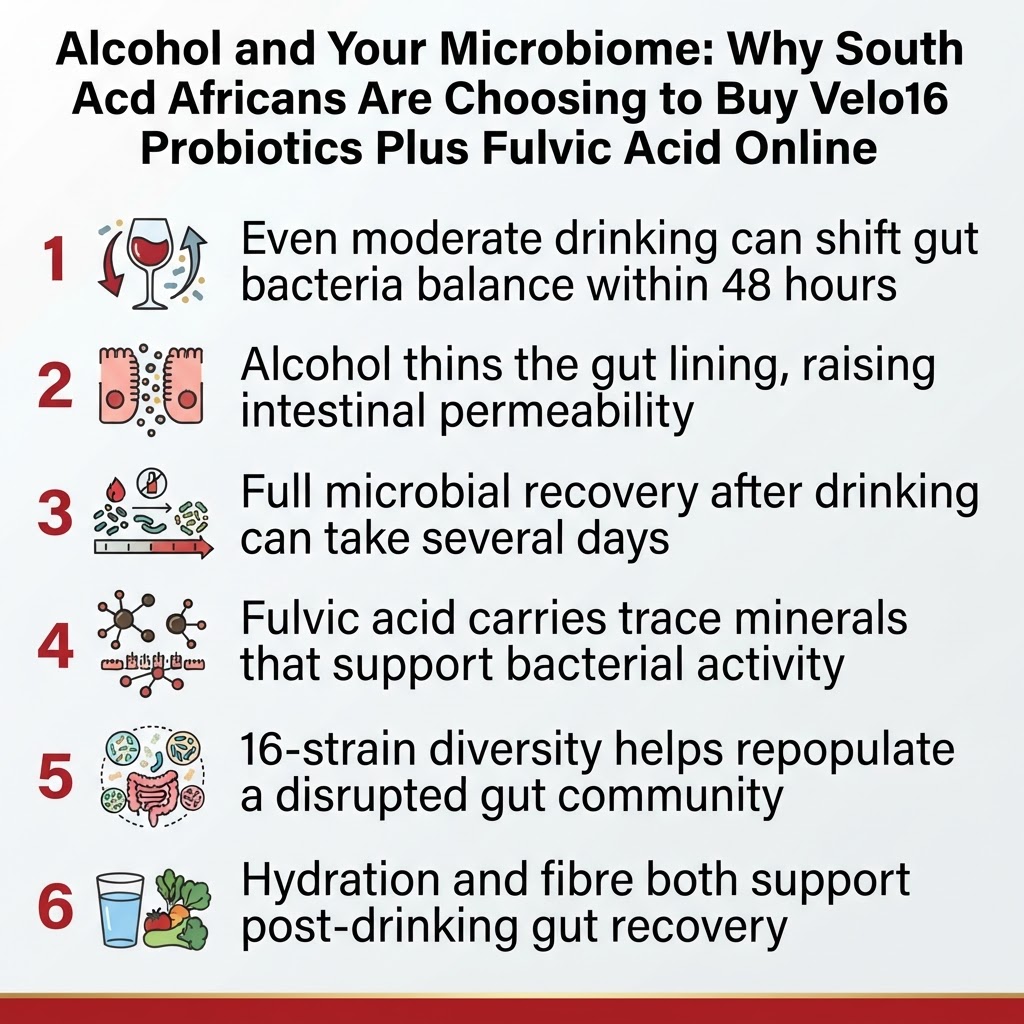
Your gut is home to hundreds of species of bacteria that help digest food, train your immune system and manufacture compounds your brain relies on. Alcohol, even in moderate amounts, is associated with measurable shifts in the ratio of beneficial to less helpful bacteria. Research published in Alcohol Research found that regular alcohol exposure is linked to reduced microbial diversity and overgrowth of bacteria associated with inflammation.
This matters because a diverse gut community is generally considered a marker of resilience. When diversity drops, the gut becomes less efficient at breaking down fibre, regulating mood-related compounds, and keeping the intestinal lining intact.
The "Leaky Gut" Connection
Alcohol can thin the mucus layer that protects your intestinal wall, making the gut lining more permeable than usual. This is sometimes described informally as a "leaky gut," where larger particles and bacterial fragments may pass into the bloodstream more easily than they should.
"Alcohol-induced disruption of the intestinal barrier is one of the most consistently observed effects of alcohol exposure on the gastrointestinal system."
- Engen et al., Alcohol Research: Current Reviews
According to the Mayo Clinic, this kind of gut irritation is one reason heavier or more frequent drinking is associated with digestive discomfort, even in people who otherwise feel healthy.
Why Gut Recovery Takes Longer Than You Think
A hangover headache fades within a day, but your gut bacteria don't bounce back on the same timeline. Studies suggest microbial balance can take several days to begin normalising after a single heavy drinking episode, and longer with repeated exposure over weeks.
This delayed recovery is part of why people report feeling "off" well after the physical hangover has passed — bloated digestion, inconsistent energy, and a foggy, unfocused feeling that lingers into the new week. These effects connect closely to what we've explored in The Gut-Brain Axis: How Your Microbiome Controls Your Mood, Focus and Memory, where gut bacteria communicate directly with brain chemistry.
- Reduced short-chain fatty acid production, which supports gut lining health
- Temporary dip in beneficial strains like Lactobacillus and Bifidobacterium
- Slower nutrient absorption, particularly of B vitamins and magnesium
- Disrupted sleep architecture, which further stresses the gut-brain relationship
What Is Fulvic Acid, and Why Pair It With Probiotics?
Fulvic acid is a naturally occurring organic compound formed through the breakdown of plant material over time. It's rich in trace minerals and is thought to act as a carrier, helping shuttle nutrients across cell membranes more efficiently.
In the context of gut health, fulvic acid is associated with supporting the environment in which probiotic bacteria live and function. Rather than acting as a probiotic itself, it's better understood as groundwork — minerals and compounds that may help beneficial bacteria establish themselves more readily after disruption.
We go into more depth on this pairing in Fulvic Acid and Probiotics: The Gut Restoration Stack That's Changing Everything, which explains the mechanism in more detail for readers who want the full science.
"Trace mineral complexes like fulvic acid are increasingly studied for their role in supporting the gut's microecological environment, rather than acting as isolated supplements."
- Journal of Functional Foods review, summarised findings
Why 16 Strains Matter More When Your Gut Is Under Pressure
A single-strain probiotic may help in specific situations, but alcohol's impact on the gut tends to be broad — affecting diversity across multiple bacterial families at once. A formula built on 16 distinct strains is designed to address that breadth, rather than targeting one narrow pathway.
Microencapsulation also matters here. Alcohol increases stomach acidity and gut lining sensitivity, which can make it harder for unprotected probiotic capsules to survive the journey to the intestine intact. This is one of the core reasons Velo16 uses a protective microencapsulation process, something covered thoroughly in our 7-Point Checklist for Buying a 16-Strain Microencapsulated Probiotic Online in South Africa.
- Broader strain diversity may support a wider range of disrupted bacterial families
- Microencapsulation helps protect live cultures through stomach acid
- Combining probiotics with fulvic acid addresses both bacteria and their environment
- Consistency matters more than any single dose after a heavy weekend
A Realistic Gut-Support Routine for Social Drinkers
You don't need to give up a glass of wine with dinner to take your gut seriously. The goal is a simple, repeatable routine that gives your microbiome a better chance to recover between social occasions.
- Hydrate deliberately the day after drinking, not just during the hangover
- Prioritise fibre-rich vegetables and legumes to feed beneficial bacteria
- Space alcohol-free days through the week rather than clustering drinks
- Take a daily probiotic and fulvic acid combination consistently, not only after drinking
- Prioritise sleep, since poor sleep compounds gut lining stress
According to the World Health Organization, there is no level of alcohol consumption that is entirely free of risk, which is a useful reminder that gut-support habits work best as an ongoing practice rather than a once-off fix after a big weekend.
Who Should Be Extra Mindful
Some people notice digestive disruption from alcohol more than others, often due to existing gut sensitivity, medication use, or travel-related schedule changes. If any of the following sound familiar, gut support may be worth prioritising.
- You regularly feel bloated or sluggish the day after drinking, even moderately
- You've recently finished a course of antibiotics and are also drinking socially
- You travel frequently, where irregular meals and alcohol often overlap
- You already experience brain fog, low energy or inconsistent digestion
Buying Smart: What to Check Before You Order Online
If you're considering a probiotics plus fulvic acid combination, a few basics are worth confirming before you buy anything online in South Africa.
- Strain count and whether they're named specifically, not just a generic blend
- Evidence of microencapsulation or acid-resistant delivery technology
- Fulvic acid sourcing and concentration disclosed on the label
- Clear, realistic language — avoid products promising guaranteed results
These same fundamentals apply across most of our buyer guides, and they're worth revisiting whenever you're comparing supplement options, not just this one.
Your Simplest First Step
You don't need to overhaul your social life to support your gut after drinking — you just need a consistent, well-formulated routine behind you. The easiest first step is to browse the Velo16 range and choose the Probiotics Plus Fulvic Acid formula that fits your routine.
Want more practical, no-nonsense gut health guidance like this? Subscribe to the Velo16 newsletter for future articles straight to your inbox.