
Can Probiotics Help You Lose Weight? What the Clinical Research Actually Shows
By Dr. Chomba Chuma, MD — Founder & Medical Director, Velo16™ | Velo16™ Health Journal
If you've spent any time in a pharmacy, scrolled through a wellness feed, or chatted with a health-conscious friend in Johannesburg, Cape Town, or Durban recently, you've probably encountered the claim: probiotics can help you lose weight. But is there real science behind this, or is it just clever marketing dressed up in white-coat language?
As a functional medicine physician who has spent years studying the gut microbiome and its influence on metabolic health, I want to give you a straight answer — and that answer is nuanced, evidence-based, and genuinely exciting. The connection between your gut bacteria and your body weight is not a myth. It is one of the most robustly studied areas in metabolic science right now. But the mechanism is far more sophisticated than simply "take a probiotic, lose weight." Let's unpack what the clinical research actually shows.
The Gut Microbiome and Body Weight: What Scientists Have Discovered
Your gut is home to approximately 38 trillion microorganisms — bacteria, fungi, viruses, and archaea — collectively known as the gut microbiome. This complex ecosystem doesn't just help you digest food. It regulates your immune system, synthesises vitamins, governs your mood, and — critically for this discussion — plays a profound role in how your body stores fat, burns energy, and controls appetite.
The landmark evidence began with animal studies. Researchers at Washington University discovered that germ-free mice (mice with no gut bacteria at all) had dramatically less body fat than normal mice, even when they ate more calories. When the scientists transplanted gut bacteria from obese mice into the germ-free mice, those mice rapidly gained body fat — without any change in diet. This was a defining moment in microbiome research, published in Nature and subsequently replicated in multiple subsequent trials.
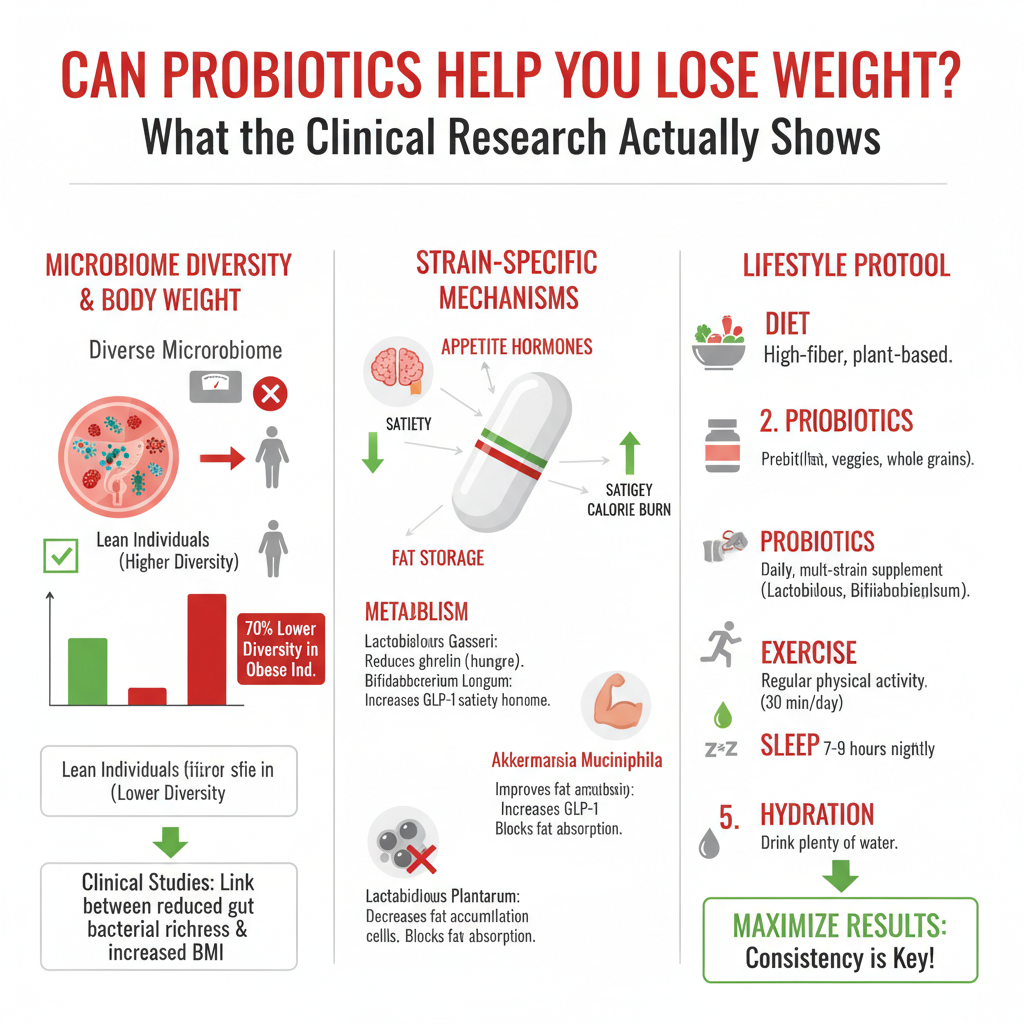
In human research, the association between gut bacteria obesity has become increasingly clear. A landmark study published in Nature analysed the gut microbiomes of 169 obese and 123 non-obese Danish individuals and found that those with lower bacterial gene counts (lower microbiome diversity) had significantly greater adiposity, insulin resistance, and systemic inflammation. Microbiome diversity — the richness and balance of bacterial species — emerged as a key predictor of metabolic health.
The Firmicutes-to-Bacteroidetes Ratio
One of the most discussed findings in gut microbiome weight research is the ratio between two dominant bacterial phyla: Firmicutes and Bacteroidetes. Multiple studies have found that individuals with obesity tend to have a higher proportion of Firmicutes and a lower proportion of Bacteroidetes compared to lean individuals. Firmicutes are exceptionally efficient at extracting calories from food — meaning the same meal can yield more energy (and therefore more fat storage) in a person with a Firmicutes-dominant microbiome.
Importantly, this is not a life sentence. Diet, lifestyle, and targeted supplementation can shift this ratio. And that is precisely where probiotics weight loss research becomes compelling.
Short-Chain Fatty Acids and Metabolic Signalling
Beneficial gut bacteria — particularly those in the Lactobacillus and Bifidobacterium genera — ferment dietary fibre to produce short-chain fatty acids (SCFAs) such as butyrate, propionate, and acetate. These SCFAs are not waste products. They are powerful metabolic signalling molecules that:
- Stimulate the release of gut hormones like GLP-1 (glucagon-like peptide-1) and PYY (peptide YY), both of which suppress appetite
- Improve insulin sensitivity in peripheral tissues
- Reduce low-grade systemic inflammation — a key driver of weight gain and metabolic dysfunction
- Enhance fat oxidation (fat burning) by activating AMPK pathways in muscle and liver tissue
According to research published in the Journal of Clinical Gastroenterology, SCFA production from a balanced microbiome is one of the key mechanisms linking gut health to appetite regulation and energy homeostasis. This is not peripheral science — it sits at the heart of metabolic medicine.
Specific Probiotic Strains and Their Evidence for Weight Management
Not all probiotics are created equal. When evaluating metabolism probiotics, strain specificity matters enormously. Here is what the clinical evidence shows for the strains most relevant to weight management:
Lactobacillus gasseri
This is arguably the most studied probiotic strain for body composition. A randomised, double-blind, placebo-controlled trial published in the European Journal of Clinical Nutrition (via PubMed/NCBI) found that participants who consumed L. gasseri SBT2055 daily for 12 weeks experienced an 8.5% reduction in visceral fat area, a 3.3% reduction in subcutaneous fat, and a meaningful reduction in BMI and waist circumference — compared to a placebo group that showed no significant change. Visceral fat — the fat packed around internal organs — is the most metabolically dangerous type of fat, strongly associated with type 2 diabetes, cardiovascular disease, and chronic inflammation.
Lactobacillus rhamnosus
A notable clinical trial published in the British Journal of Nutrition (via PubMed/NCBI) investigated L. rhamnosus CGMCC1.3724 supplementation in obese men and women over 24 weeks. Women in the probiotic group lost significantly more weight than those in the placebo group — and more importantly, they continued to lose weight during the maintenance phase of the study, while the placebo group stabilised. Researchers attributed this to the strain's influence on leptin sensitivity and the intestinal permeability of lipopolysaccharides (LPS), inflammatory compounds that drive fat storage.
Bifidobacterium lactis and Bifidobacterium breve
Bifidobacterium strains are critical for the production of SCFAs and for maintaining the integrity of the gut lining — often referred to as preventing "leaky gut." Research in Nature Microbiology has highlighted the role of Bifidobacterium in modulating the gut-brain axis, specifically through its influence on GLP-1 secretion — the same pathway targeted by the new generation of weight-loss medications. B. breve has also demonstrated the ability to reduce fat accumulation in clinical studies conducted in Japanese adults.
The Multi-Strain Advantage
Here is something I see consistently in clinical practice: single-strain probiotic products often underperform relative to multi-strain formulations. The gut microbiome is a community — and communities function through synergy. When diverse strains are combined, they occupy different niches in the gastrointestinal tract, produce a broader spectrum of metabolic byproducts, and create more robust competition against pathogenic bacteria. This is the foundational philosophy behind the formulation of our Velo16™ Weight Management Collection, which combines clinically validated strains in synergistic ratios rather than offering a high-dose single-strain product.
"Gut microbiome composition is not a fixed characteristic — it is dynamic, malleable, and directly responsive to what we eat, how we move, how we sleep, and what we supplement with."
— Dr. Chomba Chuma, MD, Founder of Velo16™
How Probiotics Influence Appetite Hormones and Fat Storage
Understanding the gut microbiome weight connection requires looking beyond calorie counting. The hormonal mechanisms are where things get truly fascinating — and where probiotic supplementation has its most direct metabolic impact.
Leptin and Ghrelin: The Hunger-Satiety Axis
Leptin is produced by fat cells and signals to the brain that you are full and have sufficient energy stores. In many individuals with obesity, leptin resistance develops — the brain stops responding to leptin's signals, creating a cycle of chronic hunger despite adequate or excess energy intake. Gut dysbiosis (an imbalanced microbiome) is now understood to be a significant driver of leptin resistance, through the mechanism of LPS-induced inflammation in the hypothalamus.
Ghrelin is the "hunger hormone" — it spikes before meals and drives appetite. Emerging research suggests that specific Lactobacillus strains can modulate ghrelin secretion patterns, flattening the hunger spikes that drive overeating. A study referenced by Harvard Health Publishing highlighted the gut-brain axis as a critical regulator of appetite, with the microbiome acting as a central conductor of these hormonal signals.
GLP-1: The Gut-Derived Satiety Signal
GLP-1 (glucagon-like peptide-1) has become one of the most talked-about molecules in metabolic medicine. It is the hormone targeted by semaglutide — the active ingredient in popular weight-loss medications. What many people don't know is that GLP-1 is naturally produced by L-cells in the intestinal lining, and its production is directly stimulated by SCFAs produced through gut bacterial fermentation.
When your beneficial gut bacteria are thriving and producing adequate SCFAs, you naturally produce more GLP-1 after meals, which:
- Slows gastric emptying (you feel full longer)
- Reduces appetite signalling in the hypothalamus
- Stimulates insulin secretion in response to glucose
- Reduces glucagon, preventing blood sugar spikes
This is not a speculative pathway — it is one of the most well-characterised mechanisms in gut-metabolic physiology. Optimising your microbiome with the right probiotic strains is, in effect, supporting your body's own natural GLP-1 production. To understand the full science behind how Velo16™ formulations are designed around these mechanisms, visit The Velo16™ Science page.
Intestinal Permeability, Inflammation, and Fat Storage
A compromised gut barrier — often called "leaky gut" — allows bacterial endotoxins (particularly LPS) to enter the bloodstream. This triggers chronic low-grade inflammation, which the World Health Organization now recognises as a key driver of metabolic syndrome, insulin resistance, and obesity. Probiotic strains like L. rhamnosus and B. lactis have been shown in clinical trials to strengthen tight junctions in the gut lining, reducing LPS translocation and, consequently, systemic inflammation and adipogenesis (the formation of new fat cells).
The South African Context: Why This Matters Here
For those of us focused on probiotic weight management South Africa, the local context adds an important layer. South Africa faces a significant and growing metabolic health crisis. According to the South African National Health and Nutrition Examination Survey (SANHANES), over 68% of South African women and 31% of men are overweight or obese — among the highest rates on the African continent. Rates of type 2 diabetes, hypertension, and metabolic syndrome are rising sharply, particularly in urban centres.
Several factors specific to the South African context contribute to gut dysbiosis and metabolic dysfunction:
- Dietary transition: The rapid shift from traditional, high-fibre, plant-rich diets to processed, ultra-refined diets in urban populations has significantly reduced microbiome diversity
- Antibiotic exposure: High rates of antibiotic prescribing and antibiotic residues in the food supply disrupt gut bacterial communities
- Chronic psychological stress: Socioeconomic pressures and high stress burden directly alter gut microbiome composition through the gut-brain axis
- Environmental factors: Emerging research suggests that environmental pollutants common in industrialised South African regions may negatively impact microbiome diversity
These factors make targeted probiotic supplementation not just a wellness trend but a clinically relevant intervention for a large proportion of South African adults. The Velo16™ Health Journal exists precisely to translate this global science into actionable insights for our local community. Browse the full range of evidence-based content in the Velo16™ Health Journal.
Key Statistic: A 2022 meta-analysis published in PubMed/NCBI analysing 27 randomised controlled trials found that probiotic supplementation was associated with statistically significant reductions in BMI, body weight, fat percentage, and waist circumference — with multi-strain formulations producing greater effect sizes than single-strain products.
The Velo16™ Protocol: Maximising Results With Lifestyle Synergy
Let me be direct with you as both a physician and someone who has formulated these products: probiotics are not a standalone weight-loss solution. They are a powerful metabolic support tool that produces the most meaningful results when integrated into a coherent lifestyle protocol. Here is the framework I use with patients and recommend to Velo16™ users:
Step 1: Feed Your Probiotics — Prebiotic Nutrition
Probiotic bacteria need fuel. Prebiotics — non-digestible fibres that selectively feed beneficial gut bacteria — are essential for allowing the strains in your supplement to colonise and thrive. Prioritise these foods daily:
- Chicory root, Jerusalem artichoke, and asparagus (highest prebiotic fibre)
- Garlic, leeks, and onions (fructooligosaccharides)
- Green bananas and cooked-then-cooled potatoes (resistant starch)
- Legumes — lentils, chickpeas, black beans (a dietary staple in many South African households)
Step 2: Time Your Supplementation Strategically
Clinical research suggests that probiotics survive best when taken 30 minutes before a meal or with the first few bites of food. The buffering effect of food reduces gastric acid exposure and significantly improves live bacteria delivery to the small intestine and colon. Take your Velo16™ Probiotics + Metabolism Boost consistently at the same time each day — consistency of colonisation matters.
Step 3: Prioritise Sleep for Microbiome Health
This one surprises many patients: poor sleep is one of the most potent disruptors of gut microbiome diversity. Inadequate sleep elevates cortisol, which promotes gut dysbiosis and increases appetite (particularly for high-calorie, high-sugar foods) the following day. Aim for 7–9 hours of quality sleep. The gut-circadian clock connection is a rapidly emerging field, with recent research in Nature Microbiology showing that gut bacteria have their own circadian rhythms that are disrupted by irregular sleep patterns.
Step 4: Strategic Exercise — Timing and Type
Exercise independently increases gut microbiome diversity. A 2019 study found that resistance training and moderate-intensity aerobic exercise both significantly increased populations of butyrate-producing bacteria. The synergy between regular exercise and probiotic supplementation for metabolic outcomes is additive — they reinforce the same pathways. Aim for at least 150 minutes of moderate-intensity activity per week, with 2–3 strength training sessions included.
Step 5: Minimise Microbiome Disruptors
Protect the microbial community you are building:
- Avoid unnecessary antibiotic use — if prescribed antibiotics, take your probiotics at a 2-hour interval and continue for 4 weeks post-course
- Reduce ultra-processed food consumption — emulsifiers and artificial sweeteners in processed foods are documented microbiome disruptors
- Limit chronic alcohol consumption, which promotes gut dysbiosis and intestinal permeability
- Manage psychological stress through evidence-based tools: mindfulness, breathwork, social connection, and nature exposure all have documented positive effects on gut microbiome composition
Ready to start? Explore the full range at Shop All Velo16™ Products and find the right formulation for your health goals.
Frequently Asked Questions
How long does it take for probiotics to start working for weight loss?
Clinical trials typically demonstrate measurable changes in body composition after 8–12 weeks of consistent daily supplementation. However, many users report improvements in bloating, digestion, and appetite regulation within the first 2–4 weeks. It is important to understand that probiotics support a metabolic environment conducive to weight management — they are not a rapid weight-loss intervention. Sustainable results require consistent supplementation alongside appropriate nutrition and lifestyle practices.
Can I take Velo16™ Probiotics + Metabolism Boost if I am on medication?
For most healthy adults, probiotic supplementation is safe alongside common medications. However, if you are immunocompromised, on immunosuppressive therapy, or have a serious gastrointestinal condition, please consult your physician before starting any probiotic supplement. If you are on antibiotics, separate your probiotic dose by at least 2 hours to maximise bacterial survival. As always, discuss any new supplement with your healthcare provider if you have specific medical concerns.
Is there clinical evidence that probiotics reduce belly fat specifically?
Yes. The most robust evidence is for visceral adiposity (abdominal fat around internal organs). The Lactobacillus gasseri SBT2055 trial mentioned in this article specifically measured visceral fat via CT scan and found an 8.5% reduction over 12 weeks. Multiple meta-analyses have confirmed that probiotic supplementation is associated with reductions in waist circumference — a proxy measure for visceral fat — beyond what is seen with placebo alone.
Do I need to take probiotics forever, or is there a recommended course?
The gut microbiome is dynamic and requires ongoing support, especially in modern environments characterised by processed food consumption, antibiotic exposure, and chronic stress. I generally recommend a minimum initial course of 12 weeks to establish meaningful microbial changes, followed by an ongoing maintenance dose. Think of it like exercise — the benefits diminish if you stop consistently. For many of my patients, daily probiotic supplementation has become a non-negotiable foundation of their long-term metabolic health strategy.
Are probiotics for weight loss safe for women who are pregnant or breastfeeding?
Probiotics from established Lactobacillus and Bifidobacterium strains have an excellent safety profile and have been used in clinical trials with pregnant and breastfeeding women. In fact, some evidence suggests that probiotic use during pregnancy may reduce the risk of gestational weight gain and support infant microbiome development. However, the weight management specific formulation with metabolism-boosting ingredients should be assessed on an individual basis with your obstetrician or midwife before use during pregnancy.
Ready to Support Your Metabolism From the Inside Out?
The science is clear: a thriving, diverse gut microbiome is one of your most powerful allies in achieving and maintaining a healthy body weight. Velo16™ Probiotics + Metabolism Boost was formulated by a functional medicine physician — using clinically validated multi-strain technology — to support exactly the mechanisms we've discussed in this article: appetite hormone balance, visceral fat reduction, gut barrier integrity, and metabolic SCFA production.
This is not a quick-fix supplement. It is a precision tool for building long-term metabolic resilience, designed for health-conscious South African adults who want evidence-based solutions that work with their biology, not against it.
- ✅ Clinically validated probiotic strains at therapeutic doses
- ✅ Multi-strain synergistic formulation for superior colonisation
- ✅ Designed to support GLP-1 production, appetite regulation, and fat metabolism
- ✅ Formulated by Dr. Chomba Chuma, MD — for the South African health landscape
Explore the Velo16™ Weight Management Collection →
Not sure where to start? While our weight management range is the focus of this article, gut health touches every aspect of wellbeing — including skin health. Take the Clear Skin Quiz to discover how your gut health may be affecting your complexion too.
```