
Can Probiotics Help You Lose Weight? What the Clinical Research Actually Shows
By Dr. Chomba Chuma, MD — Founder, Velo16™ | Velo16™ Health Journal
Every week in my functional medicine practice in Johannesburg, I see patients who have tried everything — calorie restriction, exercise programmes, intermittent fasting — and still struggle to shift stubborn weight. Many of them share a common thread that conventional medicine has been slow to address: a disrupted gut microbiome. Over the past decade, the science linking gut bacteria and obesity has moved from fringe hypothesis to one of the most compelling frontiers in metabolic medicine. And at the centre of that conversation is a question I get asked constantly: can probiotics actually help you lose weight?
The honest answer is nuanced. Probiotics are not a magic pill. But the clinical evidence suggesting that specific bacterial strains can meaningfully influence appetite hormones, fat storage, inflammation, and metabolic rate is robust enough that ignoring it would be a disservice to anyone serious about their health. In this article, I want to walk you through what the research actually shows — not the marketing hype, but the peer-reviewed science — and explain how to build a protocol that gives you the best possible chance of results.
Whether you are exploring probiotic weight management in South Africa for the first time or you have been supplementing for years without seeing results, this guide will give you a science-based framework to work with.
---1. Your Gut Microbiome and Body Weight: The Evidence Base
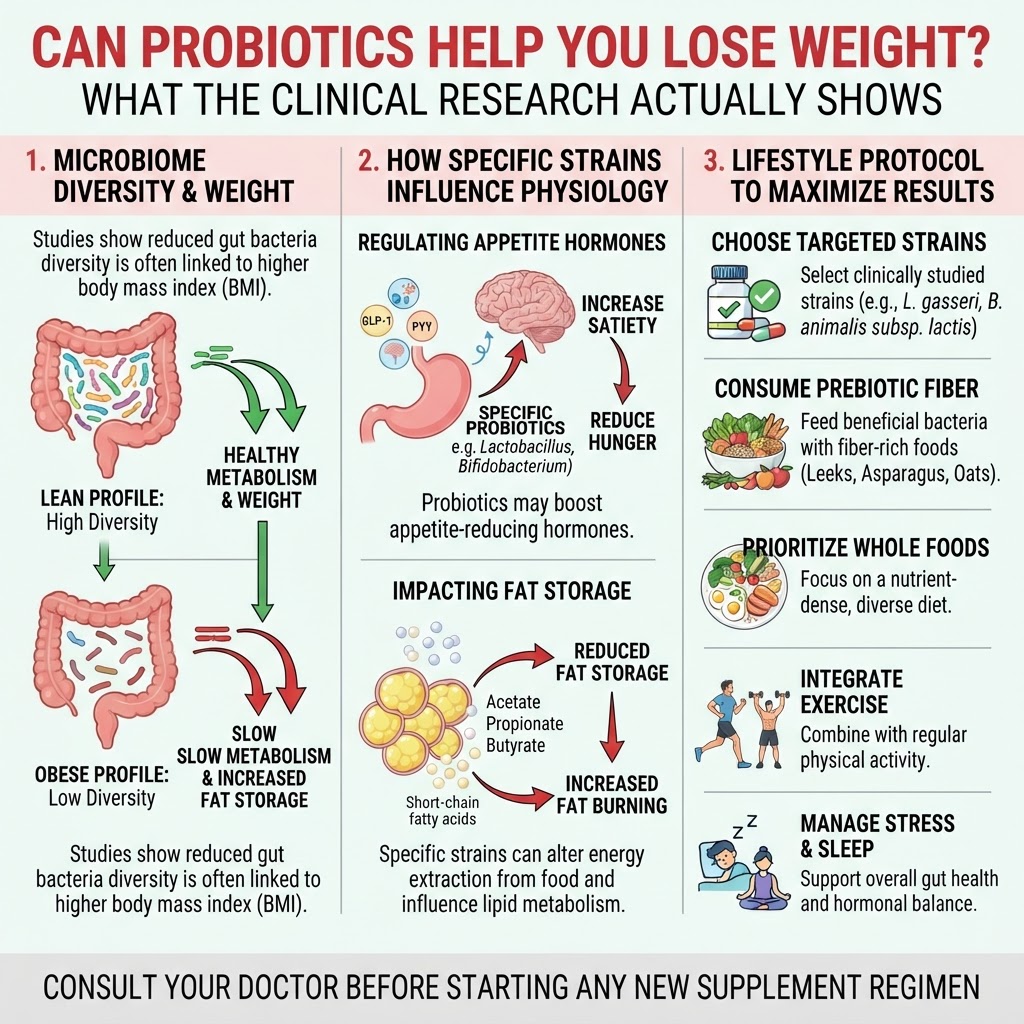
The human gut houses approximately 100 trillion microorganisms — bacteria, fungi, viruses, and archaea — collectively known as the gut microbiome. This ecosystem weighs roughly 1.5 kg and performs metabolic functions so significant that scientists have begun calling it a "virtual organ." Research published in Nature Microbiology has consistently shown that the diversity and composition of this microbial community differs dramatically between lean individuals and those living with obesity.
The Landmark Twin Studies
Some of the most compelling early evidence came from studies examining identical twins where one sibling was obese and the other was lean. Despite sharing identical DNA, the obese twin consistently showed lower microbial diversity and a higher ratio of Firmicutes to Bacteroidetes — two dominant bacterial phyla in the gut. When researchers at Washington University School of Medicine transplanted gut bacteria from obese twins into germ-free mice, those mice gained significantly more fat than mice receiving bacteria from lean twins, despite consuming the same diet. This was a pivotal moment: it demonstrated that gut bacteria obesity links are causal, not merely correlational.
What Reduced Microbiome Diversity Actually Does
A less diverse microbiome tends to:
- Extract more calories from food through more efficient fermentation
- Produce higher levels of lipopolysaccharides (LPS), triggering low-grade inflammation that impairs insulin sensitivity
- Generate fewer short-chain fatty acids (SCFAs) like butyrate, which regulate appetite and fat metabolism
- Disrupt the gut-brain axis, affecting satiety signalling
- Increase intestinal permeability ("leaky gut"), allowing metabolic endotoxins into the bloodstream
"The gut microbiota influences energy homeostasis by modulating nutrient absorption, fat storage, and the secretion of appetite-regulating hormones. Altered microbial composition is now considered a contributing factor in the pathophysiology of obesity." — Gut Microbiota and Obesity: Pathophysiology and Management, PubMed/NCBI
The World Health Organization reports that over 1 billion people globally are living with obesity — a figure that demands we look beyond calories-in-calories-out as the sole explanatory framework. The microbiome offers one of the most promising additional lenses.
---2. How Specific Probiotic Strains Influence Weight — The Mechanisms
Understanding metabolism probiotics requires moving beyond the general concept of "good bacteria" and examining the specific biological pathways through which particular strains influence body composition. Not all probiotics are equal. Strain specificity matters enormously.
Lactobacillus gasseri: The Most Studied Strain for Fat Reduction
Of all the probiotic strains studied in the context of weight management, Lactobacillus gasseri has accumulated the most consistent clinical evidence. A randomised controlled trial published on PubMed/NCBI involving 210 adults with central obesity found that daily supplementation with L. gasseri SBT2055 for 12 weeks resulted in a significant reduction in abdominal visceral fat, subcutaneous fat, body weight, BMI, and waist and hip circumferences — compared to the placebo group. Importantly, when participants stopped taking the probiotic, these measurements returned toward baseline, confirming the strain's active role.
Lactobacillus rhamnosus: Appetite Hormones and Sustained Weight Loss
Lactobacillus rhamnosus CGMCC1.3724 has shown particular promise in influencing appetite-regulating hormones. A double-blind, randomised, placebo-controlled trial followed overweight men and women through a 24-week programme combining dietary intervention with either probiotic or placebo supplementation. Women in the probiotic group lost significantly more weight during the first 12 weeks and continued losing weight in the second 12 weeks, while the placebo group plateaued. The probiotic group also showed lower circulating leptin levels and reduced intestinal permeability markers — both significant metabolic findings.
Bifidobacterium lactis: Insulin Sensitivity and Metabolic Inflammation
Bifidobacterium lactis strains have been shown to improve insulin sensitivity and reduce markers of metabolic inflammation — two critical components of weight regulation that are often overlooked. By reducing LPS-driven inflammation in the gut lining, B. lactis helps restore insulin receptor sensitivity, meaning your body requires less insulin to process the same amount of glucose. Over time, this reduces the metabolic signal to store excess energy as fat.
The SCFA Connection
Multiple strains — particularly those in the Lactobacillus and Bifidobacterium genera — produce short-chain fatty acids (SCFAs) during fermentation of dietary fibre. SCFAs, particularly propionate and butyrate, exert significant metabolic effects:
- Propionate stimulates the release of PYY and GLP-1, two satiety hormones that reduce appetite and slow gastric emptying
- Butyrate serves as the primary fuel for colonocytes (gut lining cells), maintaining barrier integrity and reducing inflammatory signalling
- Acetate has been shown to suppress appetite via central nervous system signalling through the hypothalamus
For a deeper look at the clinical science underpinning our formulation choices, visit The Velo16™ Science.
---3. What Randomised Clinical Trials Tell Us (And Where the Limitations Are)
I want to be transparent here, as I am with all my patients: the clinical literature on probiotics weight loss is promising but not yet definitive. The field is young, methodologies vary considerably between studies, and effect sizes — while statistically significant — are modest when probiotics are used in isolation.
The Meta-Analytic Picture
A comprehensive meta-analysis of 15 randomised controlled trials, available on PubMed/NCBI, found that probiotic supplementation was associated with a statistically significant reduction in body weight (mean reduction: 0.59 kg), BMI, and fat percentage compared to placebo. While critics note that 0.59 kg is a small absolute difference, it is worth contextualising: these are average effects across heterogeneous populations, varying strains, and varying doses. Studies using multi-strain formulations and higher CFU counts generally showed larger effects.
A more recent 2019 systematic review analysing 27 trials found greater benefits when probiotics were combined with dietary modification and exercise, with some trials showing reductions in waist circumference of up to 1.5 cm over 8-12 weeks — a clinically meaningful change in visceral adiposity risk.
Key Limitations to Acknowledge
As a physician, I am obligated to flag where the evidence has gaps:
- Strain variability: Studies use different strains, making direct comparisons difficult
- Dose heterogeneity: CFU counts range from 10⁸ to 10¹¹ across studies
- Duration: Most trials run 8-24 weeks; long-term effects are less studied
- Baseline microbiome state: Individuals with more disrupted microbiomes tend to respond better
- Diet interaction: Probiotic effects are significantly blunted in the absence of adequate prebiotic fibre
"Probiotics show consistent but modest effects on body weight and composition when used appropriately. The most promising results emerge from multi-strain formulations combined with dietary fibre and sustained lifestyle modification." — Harvard Health Publishing
4. The Gut-Brain-Hormone Axis: Why Your Microbiome Affects Cravings
One of the most fascinating — and underappreciated — mechanisms through which the gut microbiome weight connection operates is the gut-brain axis. This bidirectional communication highway connects your enteric nervous system (sometimes called the "second brain") with your central nervous system via the vagus nerve, hormonal signals, and neurotransmitter production.
Ghrelin, Leptin, and the Probiotic Influence
Ghrelin is your primary hunger hormone — it rises before meals and falls after eating. Leptin is your satiety hormone — it signals to your brain that you have sufficient energy stores and should stop eating. In obesity, leptin resistance frequently develops: your brain stops hearing the "I'm full" signal despite adequate or excess fat stores.
Clinical research published in the Journal of Clinical Gastroenterology has shown that certain probiotic strains can modulate ghrelin secretion and improve leptin sensitivity. L. rhamnosus supplementation was associated with reduced fasting ghrelin levels — meaning participants felt less hungry throughout the day — alongside improved leptin receptor signalling.
Serotonin: The Gut's Weight-Regulating Neurotransmitter
Approximately 90-95% of your body's serotonin is produced in the gut — not the brain. Serotonin plays a critical role in appetite regulation, emotional eating, and bowel transit time (which affects caloric extraction). Certain gut bacteria, particularly specific Lactobacillus strains, directly influence enterochromaffin cells that produce gut serotonin. Disrupted serotonin signalling is associated with both mood disorders and compulsive eating patterns — a connection that explains why so many of my patients find their food cravings shift meaningfully when gut health is addressed.
Dopamine and Food Reward Circuitry
Emerging research suggests that gut microbiota composition influences dopaminergic reward pathways — the same circuits involved in food cravings and overconsumption of ultra-processed foods. A dysbiotic microbiome may amplify dopamine-driven food-seeking behaviour, making high-sugar and high-fat foods feel more rewarding. Restoring microbial diversity appears to dampen this amplification, making whole food choices easier to sustain — not through willpower, but through biochemistry.
---5. The Velo16™ Protocol: Maximising Weight Management Results
Based on both the clinical literature and my years of functional medicine practice, I have developed a structured approach to using probiotics as part of a comprehensive probiotic weight management protocol. The Velo16™ Weight Management Collection was formulated with this multi-layered protocol in mind.
Step 1: Choose the Right Multi-Strain Formulation
The evidence consistently favours multi-strain over single-strain probiotic supplements for metabolic outcomes. Look for formulations that include:
- Lactobacillus gasseri — for visceral fat reduction
- Lactobacillus rhamnosus — for appetite hormone modulation
- Bifidobacterium lactis — for insulin sensitivity and gut barrier integrity
- Lactobacillus acidophilus — for broad microbiome support and SCFA production
- A prebiotic substrate (inulin, FOS, or psyllium) — to feed and sustain colonisation
CFU count matters: look for at least 10-50 billion CFUs per dose, with guaranteed potency at end of shelf life — not at time of manufacture.
Step 2: Pair With a Microbiome-Supportive Diet
Probiotics perform poorly in a diet that starves or actively harms beneficial bacteria. The research is clear that high-fibre, plant-diverse diets dramatically amplify probiotic efficacy. Practically, this means:
- Aim for 30+ different plant foods per week (vegetables, fruits, legumes, whole grains, nuts, seeds)
- Include naturally fermented foods daily: plain yoghurt, kefir, sauerkraut, or kimchi
- Reduce ultra-processed food consumption, which selectively feeds pro-inflammatory bacteria
- Prioritise prebiotic-rich foods: garlic, onions, leeks, asparagus, bananas, oats
- Minimise unnecessary antibiotic use, which devastates microbial diversity
Step 3: Address the Sleep-Microbiome Connection
This is the step most weight management programmes miss entirely. Poor sleep directly alters gut microbiome composition within 48 hours, reducing Bifidobacterium and increasing pro-inflammatory species. It simultaneously elevates cortisol and ghrelin while suppressing leptin — a hormonal triple-threat for weight gain. Consistent sleep of 7-9 hours per night is not optional when you are working to restore metabolic health through the microbiome.
Step 4: Manage Chronic Stress Actively
Chronic psychological stress triggers the release of cortisol and catecholamines that directly alter gut motility, intestinal permeability, and microbial composition — a phenomenon documented extensively in the field of psychoneuroimmunology. Daily stress management practices (breathwork, mindfulness, movement, social connection) are not wellness extras; they are metabolic interventions.
Step 5: Be Patient — And Measure the Right Things
Microbiome restoration is a process that typically takes 3-6 months of consistent effort to produce durable shifts. Patients who expect dramatic weight loss within 4 weeks are often disappointed — and abandon the protocol just as it begins working. I encourage tracking:
- Waist circumference (more indicative of visceral fat than scale weight)
- Energy levels and afternoon energy crashes
- Bloating, bowel regularity, and digestive comfort
- Food craving intensity and frequency
- Sleep quality and recovery
Browse the full range of evidence-based products supporting this protocol at Shop All Velo16™ Products.
---6. Probiotic Weight Management in South Africa: Context and Considerations
As a South African physician, I am acutely aware that the dietary landscape here presents both unique challenges and genuine advantages when it comes to microbiome health. Probiotic weight management in South Africa must account for several contextual realities.
The South African Dietary Transition
South Africa is experiencing a rapid nutrition transition — a shift from traditional, fibre-rich diets toward highly processed, urban food patterns. This transition is associated with dramatic reductions in microbiome diversity and a corresponding rise in metabolic disease. The WHO South Africa data is sobering: over 68% of South African women and 31% of men are classified as overweight or obese, with rates rising fastest among urban populations.
Traditional Fermented Foods as a Local Advantage
South Africa has a rich tradition of naturally fermented foods — amasi (fermented milk), umqombothi (traditional sorghum beer), and various fermented vegetable preparations — that historically served as natural probiotic sources. Reintegrating these traditional foods alongside evidence-based supplementation represents a culturally resonant and scientifically valid approach to microbiome restoration.
Heat Stability and Storage Considerations
South Africa's warm climate means probiotic stability is a genuine product quality concern. When choosing a probiotic supplement, ensure the manufacturer uses micro-encapsulation technology or provides heat-stable formulations, and that CFU potency is guaranteed through end of shelf life under local storage conditions.
The Velo16™ Health Journal regularly publishes evidence-based content relevant to South African health contexts. Explore more at the Velo16™ Health Journal.
---Frequently Asked Questions
How long does it take for probiotics to show results for weight loss?
Clinical trials showing statistically significant results in body weight and fat distribution have generally run for 8-24 weeks. In my practice, patients typically notice improvements in digestive comfort, bloating, and energy within 2-4 weeks. Measurable changes in waist circumference and body composition generally become apparent after 8-12 weeks of consistent use combined with dietary and lifestyle modification. Expecting dramatic results in under 4 weeks sets unrealistic expectations and often leads to premature discontinuation.
Which probiotic strains are best for weight loss?
The strains with the most clinical evidence for weight and fat reduction are Lactobacillus gasseri (particularly for visceral fat), Lactobacillus rhamnosus (particularly for appetite regulation and sustained weight loss), and Bifidobacterium lactis (for insulin sensitivity and metabolic inflammation). Multi-strain formulations that combine several clinically validated strains generally outperform single-strain products. Ensure any product you choose specifies strains at the subspecies level and guarantees CFU potency at end of shelf life.
Can probiotics help with belly fat specifically?
Yes — and this is one of the more exciting findings in the research. Visceral adiposity (belly fat that surrounds the abdominal organs) is the most metabolically dangerous fat depot, strongly associated with insulin resistance, cardiovascular disease, and type 2 diabetes. Several clinical trials, including the well-cited L. gasseri SBT2055 study, have demonstrated significant reductions specifically in visceral and abdominal subcutaneous fat. The mechanism appears to involve reduced intestinal fat absorption, improved SCFA production, and decreased inflammatory signalling that drives preferential abdominal fat storage.
Do probiotics work without diet changes?
Technically, yes — clinical trials showing modest but significant effects have been conducted without mandating specific dietary changes. However, the research consistently shows that dietary fibre intake is a major effect modifier: probiotics perform significantly better when the gut environment is supplied with adequate prebiotic substrate for bacterial colonisation and activity. Think of it this way — probiotics are seeds, and dietary fibre is the soil. You can scatter seeds on concrete and some may take hold, but the yield is vastly inferior to planting in prepared, nourished ground. For meaningful, durable results, probiotic supplementation should always be paired with increased plant diversity and reduced ultra-processed food consumption.
Are there any side effects of taking probiotics for weight management?
For most healthy adults, probiotics are safe and well-tolerated. The most commonly reported side effects in clinical trials are transient and mild: bloating, increased flatulence, or changes in bowel frequency during the first 1-2 weeks as the microbiome adjusts. These typically resolve spontaneously. Starting with a lower dose and gradually increasing over 1-2 weeks can minimise these initial effects. Probiotics should be used with caution in individuals who are immunocompromised, critically ill, or post-surgical. As always, consult a qualified healthcare practitioner before starting any new supplementation regimen, particularly if you are managing chronic health conditions.
Ready to Support Your Weight Management Goals With the Science of Your Gut?
The evidence is clear: your gut microbiome plays a significant, active role in how your body manages weight, appetite, fat storage, and metabolic inflammation. The right probiotic formulation, combined with a microbiome-supportive lifestyle protocol, can meaningfully shift these dynamics in your favour.
At Velo16™, every product in our range is formulated around peer-reviewed clinical evidence — not marketing trends. Our Velo16™ Weight Management Collection brings together the clinically validated strains discussed in this article, at therapeutic doses, with guaranteed potency through end of shelf life.
Explore the full science behind our formulations at The Velo16™ Science, or Shop All Velo16™ Products to find the right protocol for your health goals.
Not sure where to start? Our gut health quiz tools can help you identify your priorities — and if skin health is also on your radar, Take the Clear Skin Quiz to discover how your microbiome may be affecting your complexion too.