
Elite Athletes' Secret Weapon: How Probiotics Accelerate Recovery and Boost Performance
By Dr. Chomba Chuma, MD | Velo16™ Health Journal | Functional Medicine & Gut Health
When South African trail runner Lungelo crossed the finish line of a gruelling 100km ultramarathon last year, he wasn't just relying on his training programme, his nutrition plan, or his mental fortitude. Like a growing number of elite and recreational athletes across the country and around the world, he had added one more tool to his performance stack: a high-quality, multi-strain probiotic formulated specifically for athletic recovery. And the results, he told me at my Johannesburg practice, were unlike anything he had experienced before — faster recovery, less gut distress on race day, and noticeably reduced muscle soreness in the days that followed.
This isn't an isolated anecdote. The science of probiotics sports performance has exploded over the past decade, and what researchers are uncovering is fundamentally changing the way we think about athletic recovery, endurance, and even injury prevention. In this article, I want to walk you through the evidence — clearly, honestly, and practically — so that whether you're a competitive cyclist, a weekend Parkrun regular, or a CrossFit enthusiast in Cape Town, you can make an informed decision about how to optimise your gut health for peak performance.
Explore the The Velo16™ Science behind our formulations, and keep reading to understand exactly why the gut is the most underrated organ in sports medicine.
The Gut-Performance Connection: Why Your Microbiome Is Your Most Underrated Teammate
Most athletes focus on what goes into the gut — carbohydrates, proteins, electrolytes, caffeine. Far fewer consider what lives inside the gut and how that internal ecosystem shapes everything from energy metabolism to immune resilience to post-exercise inflammation.
Your gastrointestinal tract is home to approximately 38 trillion microorganisms, collectively known as the gut microbiome. According to research published in Nature Microbiology, this microbial community performs functions that go far beyond digestion — it regulates immune signalling, synthesises neurotransmitters, produces short-chain fatty acids (SCFAs) that fuel colonocytes, and modulates systemic inflammation. For athletes, every one of these functions has direct performance implications.
What's particularly exciting is that the microbiomes of elite athletes differ significantly from those of sedentary individuals. A landmark study from University College Cork, featured on PubMed/NCBI, found that professional rugby players harboured a substantially greater diversity of gut bacteria compared to matched sedentary controls — including significantly higher levels of Akkermansia muciniphila, a species associated with reduced inflammation and improved metabolic health. Exercise itself shapes the microbiome. But the relationship runs both ways: gut health athletes optimise will actively enhance athletic capacity.
Short-Chain Fatty Acids and Energy Availability
Among the most performance-relevant outputs of a healthy microbiome are short-chain fatty acids (SCFAs) — particularly butyrate, propionate, and acetate. These compounds are produced when beneficial gut bacteria ferment dietary fibre. Butyrate, in particular, is a primary energy source for intestinal epithelial cells, plays a critical role in maintaining gut barrier integrity, and has been shown to possess potent anti-inflammatory properties.
For an endurance athlete running for four hours or a cyclist grinding through a mountain stage, maintaining gut barrier integrity and managing inflammation in real time isn't just a recovery concern — it's a performance concern. And this is where probiotics exercise research is delivering its most compelling findings.
Exercise-Induced Gut Permeability: The Hidden Threat to Your Performance
Here is something that many athletes — and many coaches — don't fully appreciate: intense, prolonged exercise is profoundly stressful to the gastrointestinal tract. During high-intensity training, blood is redirected away from the gut toward working muscles. Core body temperature rises. The mechanical pounding of running creates repetitive physical trauma to the intestinal wall. Stress hormones like cortisol spike.
The result? A well-documented phenomenon called exercise-induced gut permeability — sometimes referred to colloquially as "leaky gut." The tight junctions between intestinal epithelial cells loosen, allowing bacterial endotoxins (particularly lipopolysaccharide, or LPS) to translocate from the gut lumen into systemic circulation. This triggers a cascade of inflammatory responses that can impair recovery, cause gastrointestinal symptoms during exercise, and — in severe cases — contribute to conditions like heat stroke.
"Exercise-induced gastrointestinal syndrome" affects up to 70% of endurance athletes, with symptoms ranging from nausea and cramping to more severe gut-permeability-related immune dysfunction.
— Parnell et al., Journal of Clinical Gastroenterology, 2019
Studies published in the Journal of Clinical Gastroenterology have confirmed that LPS endotoxaemia following ultra-endurance events is measurable and clinically significant. Runners completing a 161km ultramarathon showed LPS levels post-race that were comparable to early-stage sepsis in non-athletic populations. While the inflammatory response in trained athletes is partially buffered by adaptation, the cumulative effect of repeated training sessions on gut permeability is a genuine concern for anyone training at moderate to high intensity.
How Probiotics Protect the Gut Barrier
This is where the science of probiotic muscle recovery becomes genuinely exciting. Multiple strains of probiotic bacteria — particularly Lactobacillus and Bifidobacterium species — have been shown in peer-reviewed research to actively reinforce intestinal tight junctions, increase production of protective mucus, and suppress the pro-inflammatory signalling triggered by LPS translocation.
- Lactobacillus rhamnosus GG has been shown to upregulate tight junction proteins (ZO-1, occludin) in intestinal epithelial cells, directly counteracting exercise-induced permeability.
- Bifidobacterium longum modulates NF-κB inflammatory pathways, reducing systemic inflammatory markers following intense exercise.
- Lactobacillus acidophilus supports mucosal IgA secretion, the gut's first line of immunological defence.
- Streptococcus thermophilus has demonstrated capacity to reduce intestinal permeability markers including zonulin and intestinal fatty acid binding protein (I-FABP).
A 2019 randomised controlled trial from PubMed/NCBI found that endurance athletes who supplemented with a multi-strain probiotic for four weeks prior to a half-marathon significantly reduced post-race LPS endotoxaemia compared to placebo. The probiotic group also reported substantially fewer gastrointestinal symptoms during the race itself — a finding with direct practical relevance for competitive performance.
[INFOGRAPHIC_PLACEHOLDER: "The Athlete's Gut: How Exercise Breaks Down the Gut Barrier and How Probiotics Rebuild It" — Visual showing: 1) Blood flow redirection during intense exercise, 2) Tight junction disruption and LPS translocation, 3) Probiotic mechanisms of barrier restoration, 4) Key strains and their specific benefits for athletes]
Probiotics and DOMS: The Anti-Inflammatory Advantage
Delayed onset muscle soreness — DOMS — is the familiar ache that peaks 24 to 72 hours after unfamiliar or high-intensity exercise. While it represents a normal part of the adaptation process, excessive DOMS limits training frequency, impairs movement quality, and can discourage athletes from maintaining their programmes. For competitive athletes with tightly scheduled training blocks, managing DOMS effectively is a direct performance variable.
The inflammatory cascade that drives DOMS involves cytokines including IL-6, TNF-α, and IL-1β — the same inflammatory mediators that a healthy, probiotic-supported gut microbiome helps to regulate. The connection between gut health athletes maintain and systemic inflammation is not theoretical; it is biochemically well-established.
Clinical Evidence: Probiotics Reduce Muscle Damage Markers
A double-blind, placebo-controlled trial published on PubMed/NCBI assessed the effect of Lactobacillus helveticus supplementation on markers of muscle damage and DOMS in resistance-trained men following eccentric exercise. The probiotic group demonstrated:
- Significantly lower creatine kinase (CK) levels — a primary biomarker of muscle damage — at 24, 48, and 72 hours post-exercise
- Reduced perceived muscle soreness scores across all time points
- Faster return to baseline strength measurements
- Lower levels of circulating inflammatory cytokines, particularly IL-6
Another notable study from 2021 examined cyclists supplementing with a multi-strain probiotic containing L. acidophilus, B. longum, and L. rhamnosus. After eight weeks of supplementation and a standardised exhaustive cycling protocol, the probiotic group showed 23% lower post-exercise CK elevations and reported significantly faster recovery of perceived energy levels compared to placebo.
The Tryptophan-Serotonin Axis: Gut Bacteria and Mood During Recovery
One of the less-discussed but critically important aspects of athletic recovery is psychological — mood, motivation, and cognitive clarity during the physically demanding days following intense training. The gut-brain axis, well-documented in research available through Harvard Health Publishing, involves bidirectional communication between intestinal microbiota and the central nervous system via the vagus nerve, immune signalling, and the production of neuroactive compounds.
Certain probiotic strains — particularly Lactobacillus reuteri and Bifidobacterium breve — enhance tryptophan availability, which is a precursor to serotonin. Adequate serotonin levels support mood stability, sleep quality, and resilience to training stress. For athletes pushing through demanding training blocks, this gut-brain support represents a meaningful, evidence-based recovery benefit.
Performance Gains in Endurance Athletes: What the Research Shows
Beyond recovery, the evidence for direct performance enhancement from probiotics sports performance supplementation is growing steadily. For endurance athletes gut health is not merely a comfort issue — it is a performance determinant.
Improved Oxygen Utilisation and Lactate Clearance
A study published in the International Journal of Sports Nutrition and Exercise Metabolism found that distance runners supplementing with Lactobacillus fermentum for 11 weeks showed significant improvements in VO₂ max compared to placebo. The proposed mechanism involves the microbiome's role in modulating mitochondrial biogenesis and reducing oxidative stress — both of which directly impact aerobic capacity.
Additionally, some evidence suggests that a well-functioning microbiome improves lactate clearance by enhancing the efficiency of gluconeogenesis pathways and reducing systemic inflammatory burden, which can impair mitochondrial function at high intensities. This is an area of active research, but early findings are promising for athletes seeking to push their lactate threshold.
Immune Resilience: Staying Healthy Enough to Train
Elite athletes exist in a peculiar immunological paradox: years of training build remarkable physical capacity, but the cumulative stress of high-volume training suppresses immune function — a phenomenon known as the open window theory. In the hours immediately following intense exercise, immune surveillance is temporarily compromised, increasing susceptibility to upper respiratory tract infections (URTIs).
According to the World Health Organization, respiratory infections remain among the most common causes of training disruption and missed competition for athletes worldwide. A meta-analysis of 20 randomised controlled trials found that probiotic supplementation reduced the incidence of URTIs by approximately 42% and reduced the duration of illness episodes by nearly two days. For an athlete in a 12-week competition build, missing even four to five training sessions due to illness can be the difference between a personal best and a mediocre result.
"The single most powerful thing an endurance athlete can do to protect their training consistency is to protect their gut. Consistency beats intensity every time."
— Dr. Chomba Chuma, MD, Founder of Velo16™
Protein Absorption and Amino Acid Bioavailability
Athletes consume significant quantities of dietary protein — from whole foods, and often from supplemental sources like whey or plant protein. Yet the efficiency with which that protein is digested and absorbed depends heavily on gut health. A compromised intestinal epithelium, reduced digestive enzyme activity, and dysbiosis all impair protein absorption — meaning that an athlete eating 2g of protein per kilogram of body weight may be absorbing considerably less than their numbers suggest.
Research in Nature Microbiology has demonstrated that specific probiotic strains — including Bacillus subtilis and L. acidophilus — enhance protease activity in the gut, improving the breakdown and absorption of dietary protein. In practical terms, this means that probiotic supplementation may amplify the muscle-building stimulus from the same protein intake, without requiring any change to diet or training.
Velo16™ Probiotics + Sport Recovery: Purpose-Built for the Athletic Gut
At Velo16™, we formulated our sport-focused probiotic after years of working with South African athletes at all levels — from club cyclists in the Cape Winelands to professional footballers in the PSL, from weekend warriors doing their first triathlon to seasoned ultramarathon competitors tackling the Comrades. What I kept seeing in my practice was a consistent, glaring gap: athletes optimising every other aspect of performance while completely neglecting the gut-performance axis.
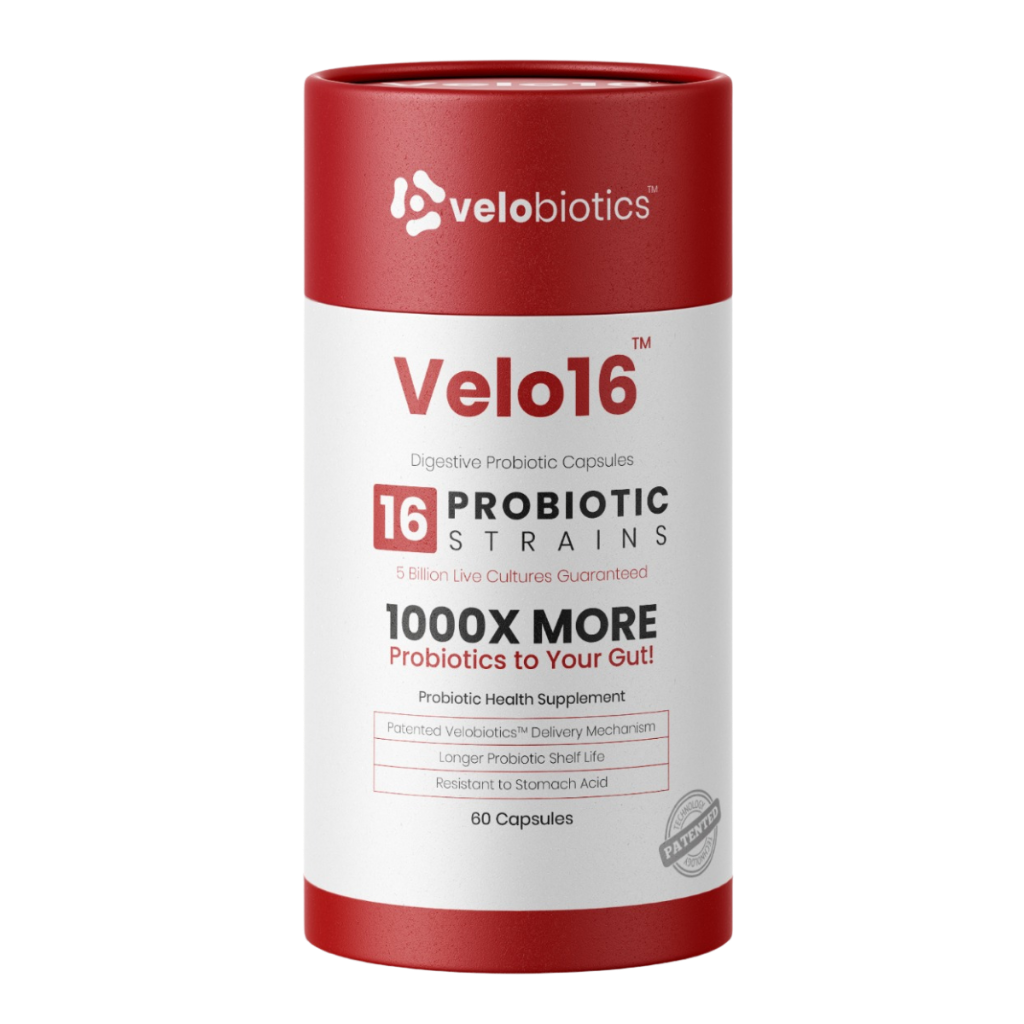
The Velo16™ Sports Performance Collection was built specifically to address that gap. Our Probiotics + Sport Recovery formulation is a 16-strain, high-potency probiotic complex designed around the evidence base for athletic performance, with each strain selected for its documented contribution to at least one of the following:
- Gut barrier integrity and reduction of exercise-induced permeability
- Systemic anti-inflammatory effects relevant to DOMS and recovery time
- Immune resilience during and after high training loads
- Enhanced protein and nutrient bioavailability
- Gastrointestinal comfort during prolonged exercise
- Gut-brain axis support for mood, motivation, and sleep quality
We use microencapsulation technology to ensure that live bacteria survive the acidic environment of the stomach and reach the colon intact — because a probiotic that doesn't survive transit delivers no benefit. Each capsule is manufactured under pharmaceutical-grade conditions, with third-party testing for potency and purity at the point of manufacture and at end of shelf life.
As a sport probiotic South Africa brand, we are also acutely aware of the environmental conditions that South African athletes train in — heat, altitude, dust, and the unique dietary patterns across our diverse population. Our formulation accounts for these variables in ways that generic international products simply cannot.
You can browse the full range on our Shop All Velo16™ Products page, or read the peer-reviewed evidence that underpins our formulation choices at The Velo16™ Science.
How to Use Velo16™ Probiotics + Sport Recovery
- Loading Phase (Weeks 1–4): Take two capsules daily with your first meal of the day. This establishes microbial colonisation and begins repairing any existing gut barrier dysfunction.
- Maintenance Phase (Ongoing): One to two capsules daily, timed around training where possible. On hard training days, taking a capsule within 30 minutes post-workout maximises the gut-barrier protective effect during the post-exercise inflammatory window.
- Pre-Race Protocol: In the two weeks before a major competition, return to the loading dose of two capsules daily to optimise gut barrier function and immune resilience heading into your event.
- Storage: Keep refrigerated or at room temperature below 25°C — our microencapsulation ensures stability, but cooler storage maximises potency over time.
For personalised guidance on which Velo16™ products are right for your specific health goals, visit the Velo16™ Health Journal for ongoing evidence-based content, or book a consultation with our functional medicine team.
Frequently Asked Questions
How long does it take for probiotics to improve sports performance and recovery?
Most peer-reviewed studies showing measurable performance and recovery benefits used supplementation periods of four to twelve weeks. In clinical practice, I typically tell athletes to allow a minimum of four weeks before expecting significant changes in recovery time, gut comfort during training, or immune resilience. Gut barrier repair and microbiome rebalancing are biological processes that cannot be rushed, but the benefits — once established — are cumulative and durable with continued supplementation and good dietary habits.
Can I take Velo16™ Probiotics + Sport Recovery alongside other supplements like protein powder or creatine?
Yes, absolutely. Velo16™ Probiotics + Sport Recovery is designed to complement — and in many cases enhance — the efficacy of other supplements by improving nutrient absorption and bioavailability. The one practical consideration is timing: take your probiotic at least 30 minutes before or after consuming very hot beverages, as extreme heat may reduce bacterial viability. There are no known adverse interactions with protein supplements, creatine, BCAAs, electrolytes, or caffeine-based pre-workouts.
Are probiotics safe for high-level competitive athletes? Will they appear on a banned substance list?
Probiotics are not on the World Anti-Doping Agency (WADA) prohibited list and are considered safe for competitive athletes at all levels. Velo16™ Probiotics + Sport Recovery contains only well-characterised, widely-studied bacterial strains with extensive safety profiles. They contain no stimulants, hormones, or other compounds of concern for anti-doping compliance. As always, athletes competing at elite level should verify any supplementation with their governing body's anti-doping authority, but probiotic supplementation has an excellent safety record in this context.
Do I need to cycle off probiotics periodically, or can I take them year-round?
Unlike some supplements, probiotics do not require cycling. The gut microbiome is a living ecosystem that benefits from consistent, sustained support. Year-round supplementation — aligned with a high-fibre, diverse diet — is the optimal strategy for maintaining the gut barrier integrity, anti-inflammatory capacity, and immune resilience that support consistent training and performance. Some athletes choose to increase their dose during particularly demanding training blocks or before key competitions, which is both safe and physiologically rational.
I'm based in South Africa — are there specific reasons local athletes might benefit more from probiotic supplementation?
This is a great question and one I'm asked frequently. South African athletes — particularly those training outdoors in high heat and humidity, or at altitude — face specific gut-permeability stressors that compound exercise-induced permeability. Heat stress accelerates tight junction disruption. Many South African athletes also train through the summer months on diets that may be lower in probiotic-rich fermented foods than European or East Asian dietary patterns. Additionally, our tap water quality varies significantly across provinces, and environmental pathogen exposure can subtly disrupt microbial balance. These factors make a high-quality sport probiotic South Africa formulation like Velo16™ particularly relevant for our local athletic community.
Ready to Train Harder, Recover Faster, and Perform Better?
The science is clear: your gut is one of the most powerful performance levers available to you, and it's one that most athletes leave completely unoptimised. Whether you're preparing for your next Comrades, building toward a cycling gran fondo, or simply trying to recover well enough to train four days a week without burning out, Velo16™ Probiotics + Sport Recovery gives your microbiome the multi-strain, evidence-based support it needs to do its job.
Explore the Velo16™ Sports Performance Collection →
And if you're curious about how your gut health might be affecting other aspects of your wellbeing — from skin clarity to energy levels — Take the Clear Skin Quiz for personalised insights into your microbiome health.