
Elite Athletes' Secret Weapon: How Probiotics Accelerate Recovery and Boost Performance
By Dr. Chomba Chuma, MD — Founder, Velo16™ | Published in the Velo16™ Health Journal
When we think about what separates elite athletes from the rest — the Springboks grinding through a Test series, the Comrades Marathon runners pushing through the Valley of a Thousand Hills, or the CrossFit competitor fighting through a brutal WOD — we tend to focus on training volume, biomechanics, nutrition, and sleep. Rarely do we discuss what is happening inside the gut. Yet emerging science is revealing something extraordinary: the health of an athlete's gut microbiome may be one of the most powerful — and most overlooked — determinants of performance, recovery, and resilience.
In my years as a functional medicine physician, I have seen this pattern repeatedly. Athletes arrive in my Johannesburg practice frustrated by persistent fatigue, sluggish recovery, and nagging inflammation that no amount of ice baths or foam rolling seems to fix. More often than not, when we investigate their gut health, we find a compromised microbiome at the root of the problem. And when we address it — particularly through targeted probiotics sports performance protocols — the results are often remarkable.
This article explores the cutting-edge science behind gut health and athletic performance: what exercise does to your gut, how probiotic muscle recovery works at a cellular level, and what the best studies on elite athletes are telling us about multi-strain probiotic supplementation.
The Athlete's Gut: Why Intense Exercise Is a Double-Edged Sword
Most athletes understand that training creates stress — that's the point. You stress the muscle, it adapts, you get stronger. But what many don't appreciate is that vigorous exercise creates significant physiological stress on the gastrointestinal tract as well.
Exercise-Induced Gut Permeability: The Leaky Gut Problem
During high-intensity or prolonged endurance exercise, blood is redirected away from the gut and toward the working muscles. This process — called exercise-induced splanchnic hypoperfusion — can reduce gastrointestinal blood flow by up to 80% during maximal effort. The consequences are significant. Intestinal cells become hypoxic (oxygen-deprived), tight junction proteins that normally seal the gut lining begin to break down, and the barrier between your gut and your bloodstream becomes compromised.
This phenomenon, widely documented in research published in journals such as Alimentary Pharmacology & Therapeutics via NCBI, is commonly referred to as exercise-induced gut permeability — or, more colloquially, "leaky gut." When the gut becomes permeable, bacterial endotoxins (particularly lipopolysaccharides, or LPS) can translocate from the gut lumen into the systemic circulation, triggering a cascade of systemic inflammation.
Key Statistic: Studies have shown that endurance athletes can experience a 2- to 3-fold increase in circulating LPS markers following a marathon-distance run, reflecting significant gut barrier compromise. (PubMed, 2010)
For endurance athletes gut health, this is particularly relevant. Runners, cyclists, triathletes, and rugby players who train at high intensities multiple times per week are exposing their gut lining to repeated insults. Over time, chronic gut permeability contributes to systemic inflammation, immune suppression, impaired nutrient absorption, and — critically — slower recovery.
The Microbiome Disruption That Follows Hard Training
Beyond gut permeability, intense exercise also alters the composition of the gut microbiome itself. Research published in Nature Microbiology has shown that while moderate exercise can diversify the microbiome in beneficial ways, overtraining and inadequate recovery can reduce microbial diversity, decrease populations of beneficial bacteria such as Lactobacillus and Bifidobacterium species, and increase pro-inflammatory microbial populations.
Add to this the factors common in competitive sport — travel across time zones, antibiotic use for infections, high-protein/low-fibre competition diets, and psychological stress — and you have a recipe for a profoundly disrupted gut ecosystem.
How Probiotics Protect the Gut During and After Exercise
This is where probiotics — specifically high-quality, multi-strain formulations — become genuinely game-changing for athletic performance. The World Health Organization defines probiotics as "live microorganisms which, when administered in adequate amounts, confer a health benefit on the host." In the context of sport, those benefits are increasingly well-documented.
Reinforcing the Gut Barrier
Several Lactobacillus and Bifidobacterium strains have been shown to upregulate the expression of tight junction proteins — including occludin, claudin-1, and ZO-1 — that are critical for maintaining gut barrier integrity. A randomised controlled trial published in the Journal of Clinical Gastroenterology found that athletes supplementing with a multi-strain probiotic for 12 weeks showed significantly lower post-exercise intestinal permeability markers compared to placebo groups.
By reinforcing these tight junctions, probiotics exercise interventions can meaningfully reduce the flood of LPS into circulation — cutting off the inflammatory cascade at its source before it can slow recovery or suppress immune function.
Modulating the Inflammatory Response
Inflammation is not the enemy of performance — acute, localised inflammation is a normal and necessary part of the muscle adaptation process. The problem arises when inflammation becomes systemic, chronic, and unresolved. Probiotics exert a sophisticated modulatory effect on the immune system: they stimulate anti-inflammatory cytokines such as IL-10 and TGF-β while suppressing pro-inflammatory mediators like TNF-α, IL-6, and IL-1β.
"The gut microbiome acts as a master regulator of immune function. When we support it with evidence-based probiotic strains, we are essentially teaching the immune system to respond more intelligently — with precision rather than brute force."
— Dr. Chomba Chuma, MD, Founder of Velo16™
Research from Harvard Health Publishing confirms that the gut microbiome plays a central role in regulating systemic inflammation, with implications far beyond digestive health — including immune modulation, brain function, and musculoskeletal recovery.
[INFOGRAPHIC_PLACEHOLDER: "The Athlete's Gut-Performance Connection" — Illustrate the cycle from intense exercise → gut permeability → LPS translocation → systemic inflammation → impaired recovery, and show how probiotics interrupt this cycle at multiple points.]
Probiotics and Muscle Recovery: The DOMS Connection
Delayed onset muscle soreness — DOMS — is the familiar ache that peaks 24-72 hours after unfamiliar or intense exercise. While DOMS is partly a mechanical phenomenon (microtears in muscle fibres), its severity and duration are heavily influenced by the inflammatory environment. This is where the probiotic muscle recovery evidence becomes particularly compelling.
Clinical Evidence for Reduced DOMS
A landmark study published in the British Journal of Sports Medicine and indexed on PubMed (NCBI) investigated the effects of Lactobacillus acidophilus supplementation on DOMS in trained male athletes. The probiotic group demonstrated significantly reduced muscle soreness scores, lower creatine kinase levels (a biomarker of muscle damage), and faster recovery of peak muscle strength compared to placebo.
Another study from NCBI, examining multi-strain probiotics in rugby players, found that subjects who supplemented for 8 weeks experienced:
- A 33% reduction in post-match muscle soreness scores
- Significantly lower circulating CRP (C-reactive protein) levels after competition
- Faster return to full training capacity following high-intensity matches
- Reduced incidence of upper respiratory tract infections during the competition season
The Amino Acid Absorption Advantage
One mechanism of probiotic muscle recovery that is gaining considerable scientific interest is the impact of gut health on amino acid absorption. The gut microbiome produces enzymes that help break down dietary proteins into absorbable amino acids. A compromised microbiome means impaired protein digestion — which means that even a perfectly timed post-workout protein shake may not be delivering the amino acids your muscles need to rebuild.
Specific probiotic strains, particularly Lactobacillus plantarum and Bacillus coagulans, have been shown in peer-reviewed research to significantly enhance the bioavailability of branched-chain amino acids (BCAAs) — the building blocks of muscle protein synthesis. This means probiotics don't just reduce inflammation; they may directly improve the efficiency of your nutritional recovery strategy.
Gut-Muscle Axis: The Emerging Science
Scientists are increasingly referring to the gut-muscle axis — a bidirectional communication pathway between the gut microbiome and skeletal muscle tissue. Metabolites produced by gut bacteria, particularly short-chain fatty acids (SCFAs) such as butyrate, propionate, and acetate, have been shown to:
- Reduce muscle protein breakdown (catabolism) during periods of caloric deficit or overtraining
- Enhance mitochondrial efficiency in muscle cells, improving energy production
- Regulate muscle stem cell (satellite cell) activation, which is critical for muscle repair and hypertrophy
- Modulate the expression of genes involved in muscle inflammation and regeneration
This gut-muscle axis represents one of the most exciting frontiers in sports science — and it helps explain why athletes with healthier, more diverse microbiomes tend to recover faster and perform better than those with dysbiotic guts.
Performance Gains in Elite Athletes: What the Research Shows
Beyond recovery, an emerging body of evidence is connecting gut health athletes interventions with measurable performance improvements — not just in recovery metrics, but in actual competitive output.
Endurance Performance and VO2 Max
A fascinating study published in Nature Microbiology examined the gut microbiomes of Boston Marathon runners before and after the race and compared them to sedentary controls. The researchers identified that elite marathon runners had significantly elevated populations of Veillonella atypica — a bacterium that metabolises lactate (the metabolic byproduct of intense exercise) and converts it to propionate, an SCFA that feeds back to improve athletic performance. This discovery suggests that the microbiome is not merely a passive bystander in exercise metabolism — it is an active participant.
Separate research on endurance athletes gut microbiome supplementation found that probiotic intervention in competitive cyclists led to:
- Improved time-to-exhaustion during standardised VO2 max testing
- Lower perceived exertion (RPE) at equivalent workloads
- Reduced gut discomfort during prolonged effort — a common performance-limiting factor
- Better maintenance of performance across consecutive days of racing
Immune Resilience: Staying Healthy to Keep Training
One of the most practically significant benefits of probiotics for athletes is immune support. Heavy training loads suppress immune function — a phenomenon known as the open window hypothesis — leaving athletes vulnerable to upper respiratory tract infections (URTIs) in the days following intense competition or training blocks. An athlete who spends even one week sick loses a significant fraction of their training adaptation.
Research Finding: A meta-analysis of 20 randomised controlled trials found that probiotic supplementation reduced the incidence of URTIs by approximately 42% and reduced the duration of illness by an average of 1.9 days. (PubMed, 2015)
For South African athletes who travel frequently for competition — across varying climates, time zones, and food environments — this immune-protective effect is enormously valuable. The sport probiotic South Africa market is growing rapidly for precisely this reason: local athletes are becoming increasingly sophisticated about gut-based interventions.
Mental Performance and the Gut-Brain Axis
Elite performance is not only physical. Decision-making under fatigue, competitive anxiety, and mental resilience are all influenced by the gut-brain axis — the bidirectional communication network linking the enteric nervous system in the gut to the central nervous system. The gut microbiome produces approximately 90% of the body's serotonin and influences the production of dopamine, GABA, and other neurotransmitters critical for focus, mood regulation, and stress response.
Research from Harvard Health Publishing confirms a strong connection between microbiome health, psychological wellbeing, and cognitive function. For athletes, a healthier gut microbiome may translate into sharper focus under pressure, better mood and motivation through hard training blocks, and reduced anxiety before major competition.
Choosing the Right Probiotic for Sport: The Multi-Strain Advantage
Not all probiotics are created equal. A single-strain product delivering 1 billion CFUs and a multi-strain, high-potency formulation are as different as a garden hose and a fire hydrant. When it comes to probiotics exercise and recovery applications, the research consistently favours multi-strain formulations delivering diverse species at meaningful concentrations.
Key Strains to Look For
When evaluating a sport probiotic South Africa or globally, look for formulations that include the following evidence-backed strains:
- Lactobacillus acidophilus — gut barrier reinforcement, immune modulation, DOMS reduction
- Lactobacillus plantarum — anti-inflammatory activity, enhanced BCAA absorption, gut permeability reduction
- Bifidobacterium longum — systemic inflammation reduction, psychological stress resilience
- Bifidobacterium breve — body composition support, fat metabolism, muscle glycogen preservation
- Lactobacillus rhamnosus — immune resilience, URTI prevention, gut barrier integrity
- Lactobacillus helveticus — cortisol regulation, sleep quality, recovery optimisation
CFU Count, Survival, and Delivery
Probiotic viability is everything. Strains must survive the acidic journey through the stomach and reach the colon alive and active. Look for products with:
- High CFU counts — ideally 20–50 billion CFUs per dose for athletic applications
- Acid-resistant encapsulation or delayed-release capsule technology
- Prebiotic inclusion — prebiotics (such as FOS and inulin) feed and amplify probiotic activity
- Third-party testing and verified strain identification
- Stability guarantees — CFU count verified at expiry, not just at manufacture
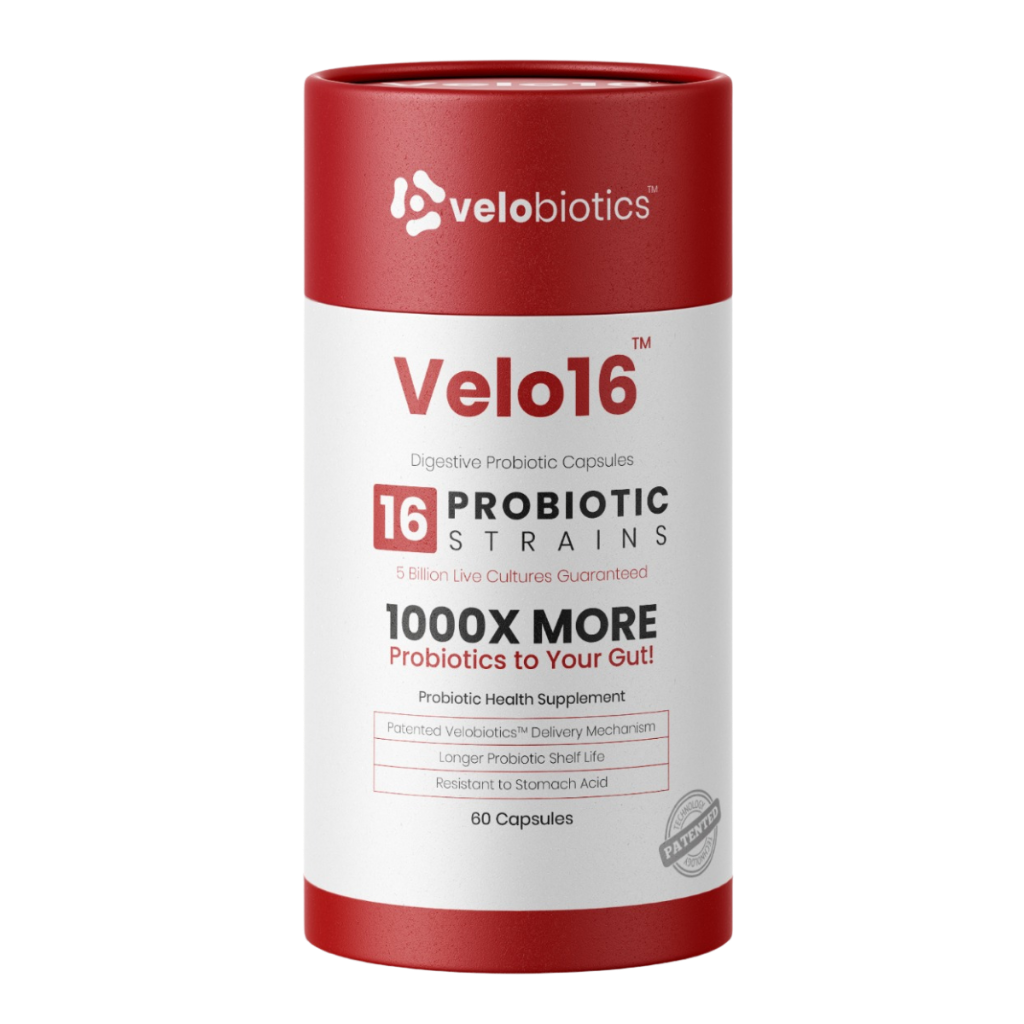
This is precisely the standard to which Velo16™ holds every formulation — combining rigorous clinical strain selection with delivery systems designed to maximise bioavailability and impact. Explore the The Velo16™ Science behind our approach to understand why these details matter.
When and How to Take Probiotics for Sport
Timing and consistency are key. For athletic performance and recovery applications:
- Take probiotics daily — the gut microbiome requires consistent replenishment, especially under training stress
- Ideally take with or just before a meal to benefit from the buffering effect of food against stomach acid
- Allow 4–8 weeks of consistent use before expecting measurable results — microbiome shifts take time
- Increase dose during heavy training blocks, travel, or periods of high psychological stress
- Pair with a high-fibre, diverse whole-food diet to feed the beneficial bacteria you are introducing
Frequently Asked Questions
How long does it take for probiotics to improve sports performance and recovery?
Most athletes begin to notice improvements in gut comfort, reduced bloating during exercise, and better immune resilience within 2–4 weeks of consistent supplementation. Measurable changes in recovery speed, DOMS severity, and systemic inflammation markers are typically documented after 6–12 weeks of daily use. The gut microbiome is a living ecosystem — it responds to consistent, sustained intervention rather than short-term supplementation. Think of it as a training programme for your gut rather than a quick fix.
Can probiotics help with gut discomfort during running or endurance events?
Yes — this is one of the most clinically well-supported benefits of probiotics for endurance athletes. Exercise-induced gastrointestinal distress, including cramping, bloating, diarrhoea, and nausea during prolonged effort, affects up to 50–70% of long-distance runners. Multi-strain probiotic supplementation has been shown to significantly reduce the incidence and severity of these symptoms by reinforcing gut barrier integrity and reducing exercise-induced gut permeability. For endurance athletes gut health is directly tied to race-day performance.
Do I still need probiotics if I eat a healthy, balanced diet?
Diet is the foundation of gut health, and a diverse, fibre-rich diet is irreplaceable. However, athletes under heavy training loads, those who travel frequently, or those who have used antibiotics are often in a state of persistent microbiome disruption that diet alone cannot fully correct. High-quality probiotic supplementation provides targeted bacterial strains at therapeutic concentrations that are difficult to achieve through food sources alone. Think of diet as building the house and probiotics as reinforcing specific structural elements under conditions of stress.
Are probiotics safe to take alongside other sports supplements?
In the vast majority of cases, yes. Probiotics are generally well-tolerated and do not interact adversely with common sports supplements including protein powders, creatine, BCAAs, electrolytes, or omega-3 fatty acids. In fact, some combinations — such as probiotics with protein — may be synergistic, as certain probiotic strains enhance protein digestion and amino acid absorption. If you are on immunosuppressive medications or have a serious underlying health condition, consult your physician before beginning supplementation. Our team at Velo16™ is always available for guidance.
What makes Velo16™ Probiotics + Sport Recovery different from standard pharmacy probiotics?
Most off-the-shelf probiotics are formulated for general digestive health — not for the specific physiological demands of sport. The Velo16™ Sports Performance Collection is built around strains with peer-reviewed evidence specifically in athletic populations, delivered at clinically meaningful CFU concentrations, in acid-resistant capsule technology that protects viability through the stomach. We combine targeted probiotic strains with prebiotic substrates and synergistic micronutrients selected for their role in gut barrier function, immune resilience, and inflammatory modulation. It is a fundamentally different product, built for a fundamentally different purpose.
Ready to Make Your Gut Your Greatest Performance Asset?
Your training, your nutrition, and your sleep are already dialled in. Now it's time to address the factor most athletes overlook entirely: the health of the 37 trillion microorganisms in your gut that determine how well you recover, how your immune system performs, and how efficiently your body converts training stress into strength and speed.
Velo16™ Probiotics + Sport Recovery was designed specifically for athletes who demand more — formulated with multi-strain, clinically evidenced bacteria at therapeutic potencies, delivered in a system built to survive and thrive in your gut where it matters most.
- ✅ Multi-strain formula with sport-specific clinical evidence
- ✅ High-potency CFU count validated through expiry
- ✅ Acid-resistant delivery technology for maximum viability
- ✅ Designed and developed in South Africa for South African athletes
- ✅ Backed by functional medicine science and real clinical outcomes
Velo16™ Sports Performance Collection — Discover the full range built for recovery, resilience, and results.
Shop All Velo16™ Products — Explore our complete range of evidence-based gut health solutions.
Not sure where to start? Take the Clear Skin Quiz to discover how gut health connects to every system in your body.