
Elite Athletes' Secret Weapon: How Probiotics Accelerate Recovery and Boost Performance
By Dr. Chomba Chuma, MD | Velo16™ Health Journal | Sports Performance & Gut Health
Every serious athlete knows the fundamentals: train hard, eat well, sleep enough. But there is a fourth pillar of performance that most South African athletes are still overlooking — and it lives inside your gut. Over the past decade, the science of probiotics sports performance has exploded, revealing that the 38 trillion microorganisms in your digestive tract are not just bystanders in your athletic journey. They are active participants, influencing everything from how quickly your muscles recover to how efficiently your body absorbs nutrients, manages inflammation, and even regulates your immune response under the stress of intense training.
In elite sports circles globally — from Tour de France cyclists to Springbok-level rugby players — gut health athletes is no longer a fringe conversation. It is a competitive edge. And the science backing it up has never been stronger.
In this article, I want to break down exactly what happens to your gut when you train hard, why that matters for your performance, and how targeted probiotics exercise supplementation — specifically multi-strain formulations — can be the difference between plateauing and performing at your peak. Whether you are a weekend trail runner in the Cape Winelands, a competitive cyclist in Joburg, or a professional team sport athlete, this information is directly relevant to you.
1. What Happens to Your Gut During Intense Exercise?
To understand why probiotics matter for athletes, you first need to understand the physiological stress that intense physical activity places on your gastrointestinal system. This is a story most coaches never tell — but it is one that fundamentally shapes your recovery and performance ceiling.
Exercise-Induced Gut Permeability: The "Leaky Gut" Problem in Athletes
During high-intensity or prolonged endurance exercise, blood is diverted away from the gut and redirected to the working muscles, heart, and lungs. This is a normal survival mechanism. However, when blood flow to the intestinal lining is significantly reduced — a phenomenon called exercise-induced splanchnic hypoperfusion — the consequences can be serious.
The intestinal epithelium is held together by structures called tight junctions. These microscopic gatekeepers regulate what passes from your gut into your bloodstream. Under the combined stress of reduced blood flow, elevated core temperature, and the mechanical jostling of running or cycling, these tight junctions begin to loosen. The result is increased intestinal permeability — colloquially known as "leaky gut."
"Strenuous exercise is one of the most potent triggers of acute intestinal permeability. Studies have shown that markers of gut barrier disruption, including intestinal fatty acid binding protein (I-FABP) and lipopolysaccharides (LPS), are significantly elevated in endurance athletes after prolonged competition." — Gill et al., 2016, Alimentary Pharmacology & Therapeutics
When the gut barrier is compromised, bacterial endotoxins — particularly lipopolysaccharides (LPS) from gram-negative bacteria in the gut — can translocate into the bloodstream. This triggers a systemic inflammatory response that goes far beyond normal post-exercise inflammation. It contributes to prolonged fatigue, increased illness susceptibility, and impaired muscle repair.
The Athlete's Gut Microbiome: A Different Ecosystem
Research published in Nature Microbiology demonstrated that elite athletes harbour a distinctly different gut microbiome composition compared to sedentary individuals. Athletes tend to show greater microbial diversity and higher abundance of specific species like Veillonella atypica, which converts exercise-generated lactate into propionate — a short-chain fatty acid that directly fuels physical performance.
This is extraordinary: your gut bacteria are not just responding to exercise. They are metabolically participating in it. But here is the catch — the very training that shapes this advantageous microbiome can also, at high intensities, disrupt it. This is the paradox at the heart of elite athletic gut health, and it is precisely why strategic probiotic supplementation matters.
2. The Science Behind Probiotics and Muscle Recovery
Let us talk about the recovery side of the equation, because this is where the clinical evidence for probiotic muscle recovery is particularly compelling — and where athletes typically feel the most immediate benefit from supplementation.
Reducing Delayed Onset Muscle Soreness (DOMS)
Delayed Onset Muscle Soreness, or DOMS, is the familiar ache that peaks 24–72 hours after intense exercise. It results from microscopic tears in muscle fibres and the subsequent inflammatory response. While some inflammation is necessary for adaptation and growth, excessive or prolonged inflammation impairs recovery and reduces training frequency.
A landmark randomised controlled trial published in the Journal of the International Society of Sports Nutrition found that athletes supplementing with a multi-strain probiotic formulation experienced significantly reduced DOMS scores, lower creatine kinase levels (a biomarker of muscle damage), and faster return to peak force production compared to placebo groups.
The mechanism here is elegant. Probiotics, particularly strains of Lactobacillus acidophilus, Lactobacillus helveticus, and Bifidobacterium longum, modulate the gut immune interface. They stimulate regulatory T-cells, reduce pro-inflammatory cytokines such as IL-6 and TNF-α, and increase anti-inflammatory signals. This systemic immune modulation translates directly into faster tissue repair and reduced soreness.
Protein Absorption and Amino Acid Bioavailability
Here is a fact that might surprise even experienced athletes: consuming protein is not the same as absorbing protein. Your gut microbiome plays a direct role in how efficiently you extract amino acids from dietary sources and supplementation.
Research from Harvard Health Publishing and subsequent sports nutrition studies have demonstrated that specific probiotic strains enhance intestinal enzyme activity and improve the breakdown and absorption of dietary proteins. For strength athletes and bodybuilders, this means more of that expensive protein shake actually ends up in your muscles rather than being excreted.
A 2020 study found that athletes supplementing with Bacillus coagulans and Lactobacillus plantarum showed a 20% improvement in protein digestibility and significantly greater lean muscle gains over a 12-week resistance training programme compared to controls.
Immune System Resilience: Staying in the Game
Overreaching in training — training harder than your body can recover from — is one of the primary drivers of illness in competitive athletes. The physiological stress of intense training transiently suppresses immune function, a window known as the "open window theory." During this window, athletes are disproportionately susceptible to upper respiratory tract infections (URTIs), which are the number one cause of missed training days globally.
A systematic review and meta-analysis published via PubMed examining probiotic supplementation across multiple athlete cohorts concluded that probiotic use was associated with a significant reduction in both the incidence and duration of URTIs in physically active individuals. Given that approximately 70% of your immune system resides in and around your gut — what immunologists call the gut-associated lymphoid tissue (GALT) — this finding is biologically intuitive, not surprising.
3. Endurance Athletes and the Gut: A Special Relationship
If any athletic population has the most to gain from probiotic supplementation, it is endurance athletes. Marathoners, ultramarathon runners, Ironman triathletes, cyclists, and rowers subject their gastrointestinal systems to sustained physiological stress that team sport athletes rarely experience.
GI Distress: The Performance Killer Nobody Talks About
Up to 70% of endurance athletes report gastrointestinal symptoms during or after prolonged training and competition. These include nausea, bloating, cramping, diarrhoea, and the dreaded "runner's gut." For South African ultra-distance athletes competing in events like the Comrades Marathon, the Cape Town Cycle Tour, or IRONMAN South Africa, GI distress is not merely uncomfortable — it is a race-ending emergency.
The endurance athletes gut is under pressure from multiple angles simultaneously: splanchnic hypoperfusion, high-carbohydrate gels and drinks that alter osmolarity, heat stress elevating core temperature, and the mechanical trauma of sustained impact. Probiotic supplementation addresses this from the inside out by fortifying the gut lining, improving barrier integrity, and rebalancing the microbial ecosystem that regulates intestinal motility and secretion.
Lactate Metabolism and the Gut-Performance Connection
The Nature Microbiology research mentioned earlier deserves deeper exploration. The discovery that gut bacteria — specifically Veillonella atypica — convert blood lactate to propionate, which is then reabsorbed and used as an additional energy substrate, fundamentally changes how we think about the performance ceiling for endurance athletes.
Propionate signals through specific receptors in muscle tissue and the liver, improving gluconeogenesis efficiency and potentially extending the duration athletes can sustain high-intensity effort. While this research is still evolving, it suggests that cultivating the right microbial ecosystem — through diet, lifestyle, and targeted probiotic supplementation — could directly improve VO₂ max and lactate threshold, two of the most important determinants of endurance performance.
4. The Case for Multi-Strain Probiotics: Why Diversity Wins
Not all probiotics are created equal. This is perhaps the most important nuance in this entire article, and it is the principle at the heart of how Velo16™ formulates its sport-specific probiotic products. When you walk into a pharmacy and grab a single-strain probiotic, you are getting a fraction of the benefit that a scientifically formulated multi-strain product can deliver.
Why Single-Strain Products Fall Short
Your gut microbiome is an ecosystem of hundreds of species operating in intricate synergy. Different microbial strains occupy different niches in your gastrointestinal tract, perform different metabolic functions, and interact with the immune system in complementary ways. Supplementing with a single strain is the ecological equivalent of introducing one species into a depleted forest and expecting full ecosystem restoration.
The World Health Organization defines probiotics as "live microorganisms which when administered in adequate amounts confer a health benefit on the host." The critical phrase here is "adequate amounts" — but for athletes with specific performance goals, adequate amounts of the right strains is equally non-negotiable.
Key Strains Supported by Athletic Performance Research
- Lactobacillus acidophilus — Reduces gut permeability, improves lactose digestion, and modulates inflammatory cytokine production post-exercise
- Lactobacillus plantarum — Demonstrated to reduce DOMS markers, lower CRP (C-reactive protein), and improve antioxidant enzyme activity in trained athletes
- Bifidobacterium longum — Associated with reduced anxiety and improved sleep quality — critical recovery variables often overlooked by athletes
- Lactobacillus helveticus — Supports nitrogen balance and protein utilisation, with specific research in strength and power athletes
- Bacillus coagulans — A spore-forming strain with exceptional stability that has demonstrated improvements in protein digestibility and lean mass accretion
- Lactobacillus rhamnosus — Extensively researched for immune modulation and reduction of URTI frequency in endurance-trained athletes
- Streptococcus thermophilus — Supports intestinal enzyme production and helps maintain mucosal immunity during heavy training phases
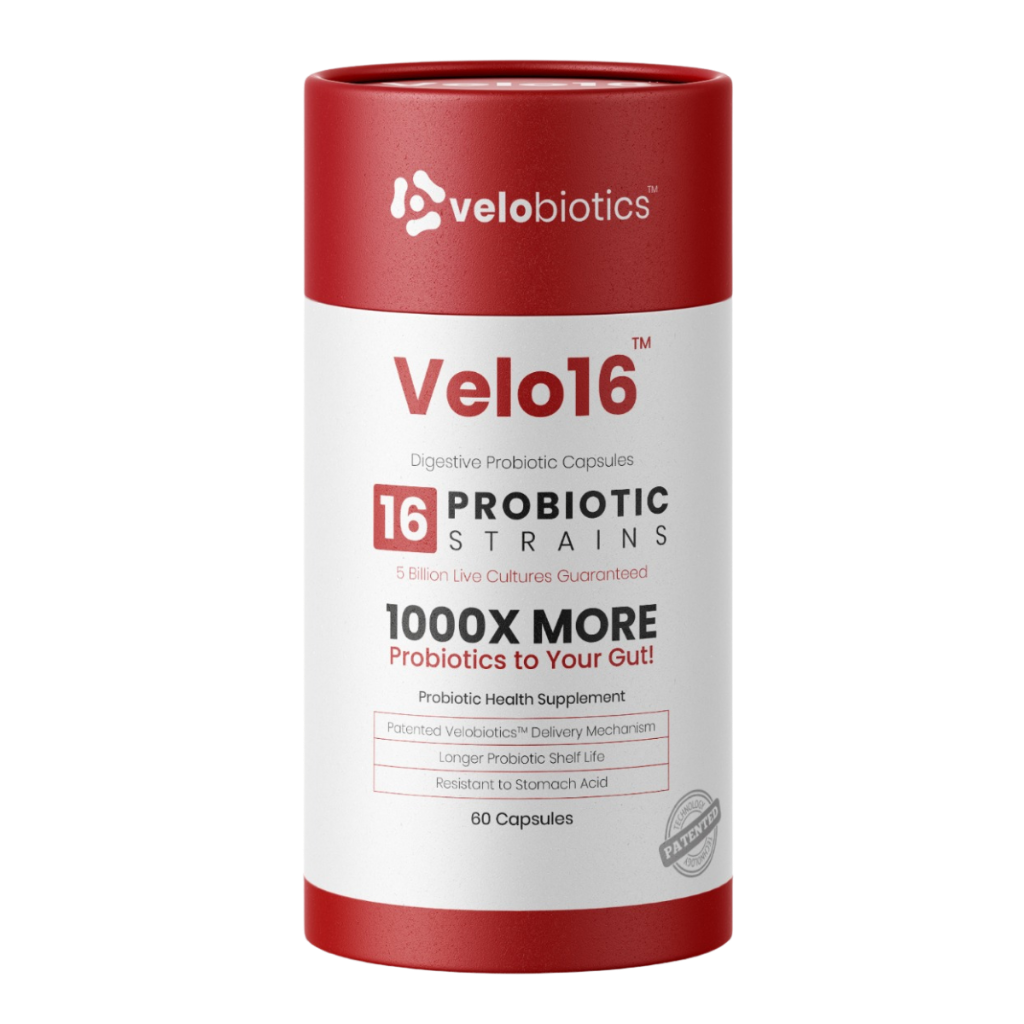
The Velo16™ Sports Performance Collection incorporates a synergistic blend of clinically validated strains at therapeutic CFU counts, specifically formulated to address the unique gut health demands of active individuals. This is not off-the-shelf supplementation — it is precision gut medicine for performance.
CFU Count: How Much Is Enough?
Colony Forming Units (CFUs) measure the quantity of viable probiotic organisms in a dose. The research literature on athlete-specific probiotic benefits has consistently used doses ranging from 1 billion to 50 billion CFUs per day, with most significant performance and recovery outcomes clustered in the 10–30 billion CFU range. Products with fewer than 1 billion CFUs are unlikely to produce meaningful clinical benefit in athletes with significant gut microbiome disruption from heavy training loads.
Equally important is survival — the probiotic organisms must be viable when they reach the large intestine. This requires either acid-resistant strains, enteric-coated delivery systems, or spore-forming bacteria like Bacillus coagulans that survive gastric transit naturally. You can learn more about the delivery technology and formulation science at The Velo16™ Science page.
5. Practical Implementation: How Athletes Should Use Probiotics
Understanding the science is one thing. Translating it into a practical supplementation protocol that fits your training life is another. Here is how I guide athletes in my clinical practice when integrating sport probiotic South Africa supplementation into their programmes.
Timing Your Probiotic Supplementation
- Daily consistency over episodic use — Probiotics are not an acute intervention like caffeine or creatine. They work through cumulative colonisation and immune priming. Studies demonstrating significant performance benefits have all involved daily supplementation for a minimum of 4 weeks.
- Take with or just before meals — Food provides a buffering environment that reduces gastric acid exposure and improves probiotic survival. Taking your probiotic with breakfast or your pre-training meal is ideal for most athletes.
- Separate from antibiotics by at least 2 hours — If you need antibiotic treatment, do not discontinue probiotics. Instead, take them 2 hours apart. Research consistently shows that co-administration of probiotics during antibiotic courses significantly reduces antibiotic-associated gut dysbiosis.
- Ramp up before key competition blocks — For athletes preparing for major events — a marathon, a stage race, or a tournament — beginning targeted probiotic supplementation 6–8 weeks before competition maximises immune resilience and gut barrier integrity at the moment it matters most.
Stack With These Gut-Supportive Strategies
Probiotics work best within a broader gut health ecosystem. In my clinical practice, I combine probiotic therapy with the following evidence-based strategies for athletes:
- Prebiotic fibre intake — Fermentable fibres from foods like garlic, onions, leeks, asparagus, and green bananas feed your probiotic organisms. Think of fibre as fertiliser for your microbiome.
- Adequate hydration around training — Dehydration accelerates exercise-induced gut permeability. Maintaining euhydration before, during, and after training is one of the simplest ways to protect gut barrier integrity.
- Strategic carbohydrate management — High osmolarity carbohydrate drinks during exercise are a leading driver of GI distress in endurance athletes. Blending carbohydrate sources (glucose + fructose) improves gut tolerance significantly.
- Sleep quality — The gut-brain axis is bidirectional. Poor sleep disrupts the microbiome; a disrupted microbiome impairs sleep. Protecting your sleep is protecting your gut. Bifidobacterium longum supplementation has demonstrated measurable improvements in sleep quality scores in clinical trials.
- Managing training load progression — No supplement can fully compensate for chronic overtraining. Respecting progressive overload principles and building in appropriate recovery weeks is fundamental to maintaining gut health across a competitive season.
Who Benefits Most?
Based on the evidence and my clinical experience working with South African athletes, the following populations have the most to gain from targeted probiotic sport supplementation:
- Endurance athletes training more than 8 hours per week
- Athletes who have recently completed or are preparing for A-priority events
- Athletes with a history of recurrent URTIs during training peaks
- Athletes who experience regular GI distress during training or competition
- Athletes returning from antibiotic treatment or significant illness
- Strength and physique athletes seeking to optimise protein utilisation
- Masters athletes (40+) whose microbiome diversity naturally declines with age
If any of these profiles resonates with you, exploring the Shop All Velo16™ Products range is a logical next step. And if you are curious about how gut health intersects with other aspects of your wellbeing — including skin health — I also encourage you to Take the Clear Skin Quiz, because the gut-skin axis is another fascinating frontier in microbiome medicine.
6. The South African Athletic Context: Local Performance, Global Science
As a physician practising in Johannesburg, I am acutely aware that the South African athletic environment has some unique considerations that make gut health even more critical for local athletes than their international counterparts.
Heat, Altitude, and Environmental Stress
South African athletes frequently train and compete in high-heat, high-altitude, and high-UV environments. Heat stress is one of the most potent triggers of exercise-induced gut permeability — compounding the already significant challenges of high-intensity training. Athletes training in Joburg's altitude (1,750m above sea level), in the heat of KwaZulu-Natal, or the dry conditions of the Northern Cape face disproportionate gut barrier challenges that make strategic probiotic support not a luxury but a physiological necessity.
Dietary Patterns and Microbiome Diversity
Traditional South African diets, rich in fermented foods like amasi (fermented milk), provide naturally occurring probiotic organisms that have supported gut health for generations. However, the shift toward ultra-processed western dietary patterns among urban South African athletes has significantly eroded this natural microbiome support. Strategic supplementation with a clinically formulated sport probiotic South Africa product bridges this gap effectively.
For more articles on gut health, performance nutrition, and microbiome science tailored to South African health needs, explore the Velo16™ Health Journal where I publish regularly on these topics.
"The gut microbiome is increasingly recognised as an organ of athletic performance in its own right — one that can be trained, supported, and optimised just as deliberately as cardiovascular fitness or muscular strength." — Dr. Chomba Chuma, MD, Founder of Velo16™
Frequently Asked Questions
How long does it take for probiotics to improve athletic performance and recovery?
Most clinical studies demonstrating significant performance and recovery benefits in athletes use supplementation periods of 4–12 weeks. While some athletes notice improvements in GI comfort and energy within 2–3 weeks, the deeper benefits — immune resilience, reduced DOMS, improved protein absorption — typically emerge after 4–6 weeks of consistent daily use. Think of it as a training adaptation: the longer and more consistently you supplement, the more robust the benefit.
Can I take probiotics during heavy training phases, or should I cycle them?
Continuous daily supplementation is supported by the research evidence and is generally recommended for athletes in active training. Unlike some supplements that benefit from cycling, probiotics work through sustained microbiome modulation. The periods of heaviest training — when gut permeability and immune suppression risk are highest — are precisely when you need probiotic support most. Cycling off probiotics during peak training blocks is counterproductive based on current evidence.
Are there any side effects of probiotic supplementation for athletes?
Probiotics are exceptionally well-tolerated in healthy individuals. The most commonly reported initial side effects — mild bloating or increased gas — typically resolve within 7–10 days as the gut microbiome adjusts. These symptoms are more common when starting at very high CFU doses. A sensible approach is to start at a moderate dose and build up over 2 weeks. Athletes with severe immunocompromise or serious underlying health conditions should consult a physician before beginning supplementation.
Do I need different probiotics for endurance sports versus strength training?
There is emerging evidence that different athletic profiles may benefit from strain-specific emphasis. Endurance athletes tend to benefit most from strains targeting gut barrier integrity and immune function (e.g., L. rhamnosus, L. plantarum), while strength and power athletes may derive the greatest benefit from strains that enhance protein digestibility and reduce inflammation from muscle damage (e.g., B. coagulans, L. helveticus). Multi-strain formulations like Velo16™ Probiotics + Sport Recovery are designed to address both axes simultaneously, making them suitable for all athletic disciplines.
Should I take probiotics with my protein shake or other supplements?
Taking probiotics with food — including protein shakes — is generally beneficial because the food matrix buffers gastric acid and improves probiotic survival through the stomach. However, avoid mixing your probiotic supplement directly into very hot liquids (above 40°C), which can reduce viability of live organisms. Room temperature or cold protein shakes are ideal companions. There are no significant negative interactions between probiotics and standard sports supplements like creatine, BCAAs, or electrolytes.
Ready to Make Your Gut Your Competitive Edge?
The science is clear: your gut microbiome is not a passive bystander in your athletic performance — it is an active determinant of how fast you recover, how effectively you absorb nutrition, how resilient your immune system is, and ultimately, how consistently you can perform at your best.
Velo16™ Probiotics + Sport Recovery has been formulated specifically for the demands of active individuals, drawing on the clinical evidence reviewed in this article. Every strain selected. Every CFU count calibrated. Every delivery mechanism optimised for real-world athletic conditions — including the unique heat, altitude, and training environments of South African sport.
Explore the Velo16™ Sports Performance Collection and discover the full science behind our formulation. Or, if you are ready to start, Shop All Velo16™ Products today and begin building your gut health foundation for the season ahead.
Your next personal best might just begin in your gut.