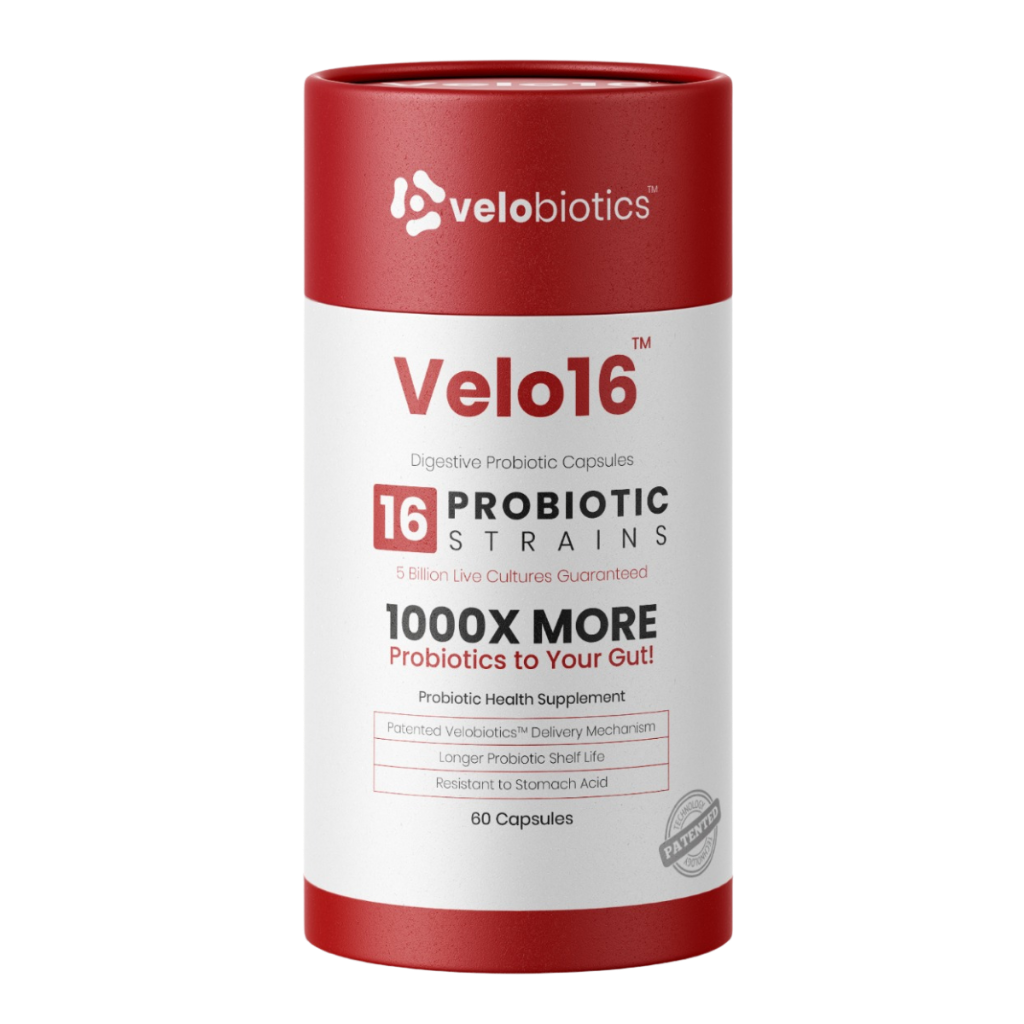
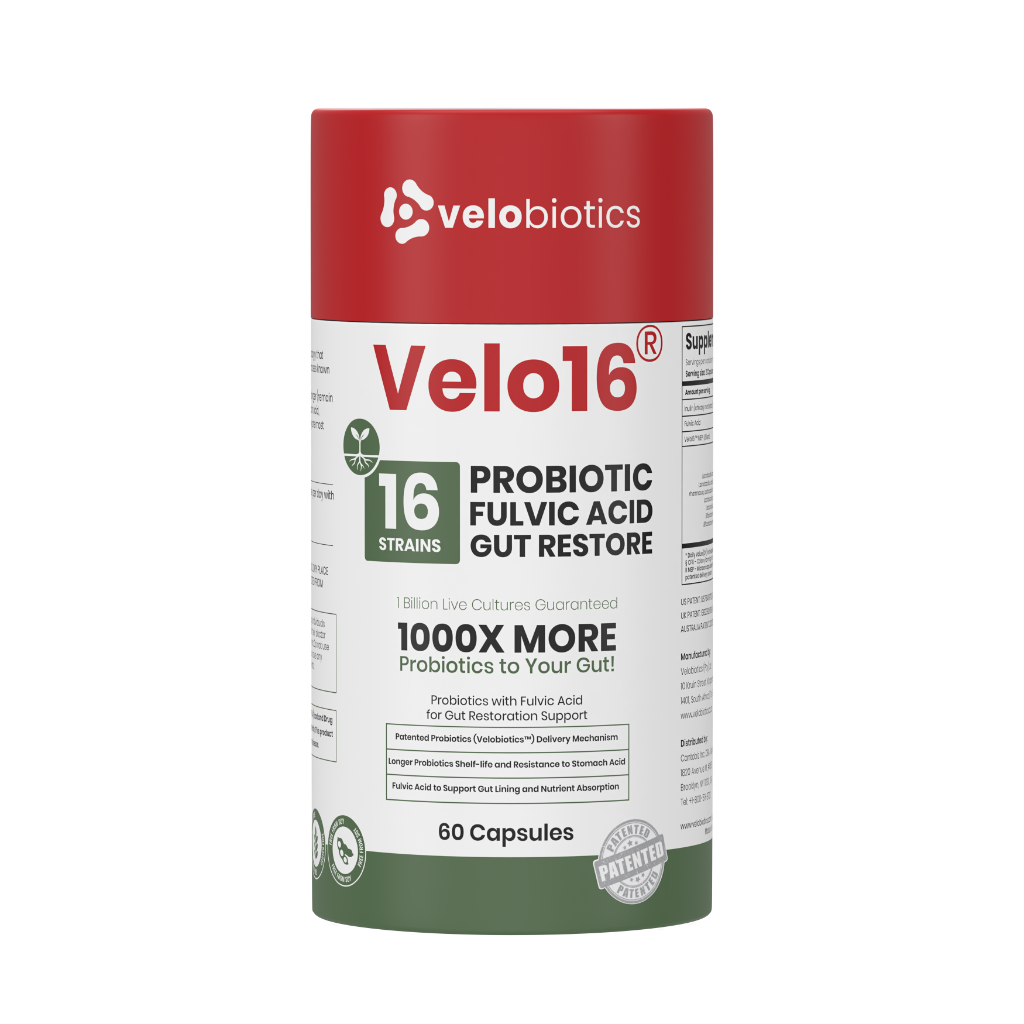
Fulvic Acid and Probiotics: The Gut Restoration Stack That's Changing Everything
By Dr. Chomba Chuma, MD | Velo16™ Health Journal
If you've ever completed a course of antibiotics and noticed that your digestion never quite returned to normal, or if you've been dealing with persistent bloating, skin flare-ups, fatigue, or food sensitivities that your doctor can't fully explain — your gut is likely sending you an urgent message. And in my years of practising functional medicine in Johannesburg, I've found that two of the most powerful tools for answering that message are fulvic acid and probiotics — especially when used together.
This isn't about following a wellness trend. This is about understanding the deep, evidence-supported biology of gut restoration and why combining fulvic acid with a high-quality probiotic formulation creates a synergy that neither can achieve alone. In this article, I'm going to walk you through exactly how this works — the science, the clinical reasoning, and why the Velo16™ Gut Health Collection was built around this precise combination.
1. The Gut Crisis Nobody Is Talking About Clearly Enough
Let's start with context. The human gut is not simply a digestive tube. It is a 27-foot ecosystem — home to approximately 38 trillion microbial cells, a semi-permeable barrier that interfaces with 70–80% of your immune system, and a communication superhighway to your brain via the gut-brain axis. When this ecosystem is disrupted, the consequences ripple far beyond your stomach.
According to the World Health Organization, antibiotic overuse is one of the greatest threats to global health — and one of the most underappreciated consequences of antibiotic use is the devastation of healthy gut flora. A single course of broad-spectrum antibiotics can reduce gut microbial diversity by up to 30%, with some species failing to recover for months or even years.
"The gut microbiome influences immunity, metabolism, mental health, and even genetic expression. Disruption of this community is not a minor inconvenience — it is a systemic health event."
— Nature Microbiology, 2019
In South Africa, we face a particular combination of pressures: high antibiotic prescription rates, diets increasingly high in processed foods, significant psychological stress loads, and environmental toxin exposure. The result? A population quietly suffering from compromised gut barrier function — what functional medicine practitioners commonly refer to as leaky gut, or more formally, intestinal hyperpermeability.
What Is Leaky Gut and Why Does It Matter?
The gut lining is composed of a single layer of epithelial cells bound together by tight junction proteins. These proteins act like gatekeepers — allowing nutrients to pass through into the bloodstream while keeping bacteria, toxins, and undigested food particles out. When those tight junctions become compromised, the gut lining becomes permeable in ways it shouldn't be.
Undigested food particles, lipopolysaccharides (LPS) from gram-negative bacteria, and environmental toxins begin crossing into systemic circulation. The immune system responds with inflammation — and that inflammation can manifest as:
- Chronic bloating, cramping, or irregular bowel movements
- Skin conditions like acne, eczema, or rosacea
- Brain fog and cognitive sluggishness
- Autoimmune flare-ups
- Fatigue that doesn't resolve with rest
- Nutrient deficiencies despite a seemingly adequate diet
Research published by Harvard Health Publishing acknowledges that while the medical community continues to study the mechanisms of intestinal permeability, there is growing consensus that gut barrier dysfunction plays a significant role in inflammatory and autoimmune conditions.
So the question becomes: what actually repairs the gut barrier? And this is exactly where the fulvic acid and probiotic combination becomes remarkable.
2. Understanding Fulvic Acid: More Than a Mineral Supplement
Most people haven't heard of fulvic acid — and those who have often think of it merely as a trace mineral delivery vehicle. That's an enormous underestimation of what this compound actually does.
Fulvic acid is a naturally occurring organic compound produced when microorganisms in soil decompose plant matter over millions of years. It is part of the humic substance family and is found in rich, organic soils, shilajit, and certain geological deposits. It is one of the most biologically active substances in nature — a complex of small molecular weight molecules that carry a powerful negative charge, making them uniquely capable of binding and transporting minerals, neutralising free radicals, and penetrating cell membranes with extraordinary ease.
The Science of Fulvic Acid and Gut Barrier Integrity
Here is where the evidence becomes genuinely compelling. Several peer-reviewed studies have demonstrated that fulvic acid gut health benefits extend directly to the epithelial lining of the intestine.
A study published in the Journal of Clinical Gastroenterology examined the effects of a fulvic acid-rich preparation on patients with gastrointestinal inflammation. Researchers found significant improvement in gut barrier function markers, including reduced intestinal permeability and decreased systemic LPS levels — suggesting fulvic acid directly supports the integrity of tight junction proteins.
Additionally, research indexed on PubMed/NCBI has identified several key mechanisms through which fulvic acid supports gut health:
- Anti-inflammatory modulation: Fulvic acid inhibits NF-κB signalling, one of the primary inflammatory pathways activated in leaky gut conditions.
- Prebiotic-like activity: Fulvic acid appears to selectively support the growth of beneficial microbial species while inhibiting pathogenic bacterial proliferation.
- Reactive oxygen species (ROS) scavenging: Oxidative stress is a significant driver of gut lining damage. Fulvic acid's electron-donating capacity makes it a potent antioxidant directly within the gut environment.
- Heavy metal chelation: Fulvic acid binds heavy metals and environmental toxins in the gut, preventing their absorption and reducing the toxic burden on the intestinal lining.
Fulvic Acid and Mineral Absorption: The Overlooked Mechanism
One of the most clinically significant — yet least discussed — fulvic acid benefits is its role in mineral and nutrient transport. Because of its unique ionic charge and small molecular size, fulvic acid can chelate minerals (bind them in an organic form) and escort them directly into cells. This means that minerals like magnesium, zinc, iron, and selenium — all critical for gut lining repair — are not just ingested but actually delivered to where they are needed.
In a population where zinc and magnesium deficiency is remarkably common, this transport function alone makes fulvic acid an extraordinary addition to any gut restoration protocol. Zinc, for instance, is directly involved in the synthesis and maintenance of tight junction proteins — and without adequate cellular zinc, gut repair is fundamentally impaired regardless of diet or supplementation.
3. The Probiotic Foundation: Rebuilding Your Microbial Ecosystem
Probiotics are live microorganisms that, when administered in adequate amounts, confer a health benefit on the host. This definition, established by the WHO and FAO jointly, has become the foundational framework for probiotic research and clinical application.
But not all probiotics are created equal. The therapeutic value of a probiotic depends on:
- Strain specificity: Different strains of even the same bacterial species have profoundly different effects on the body.
- Colony-forming unit (CFU) count: Too few CFUs and the organisms are simply overwhelmed before they can colonise.
- Survivability: Probiotics must survive stomach acid, bile, and enzymatic degradation to reach the colon alive and functional.
- Ecosystem compatibility: Probiotic strains must be able to interact constructively with the existing microbial community.
Restoring Microbial Diversity After Antibiotics
Post-antibiotic dysbiosis is one of the most common clinical presentations I see in my practice. Patients report a shift in bowel habits, increased bloating, recurring infections (particularly candida overgrowth), and a general sense of being "off" for weeks or months after completing an antibiotic course.
Research published in Nature Microbiology showed that following antibiotic treatment, spontaneous microbiome recovery was incomplete in many individuals at the six-month follow-up, with persistent depletion of key species including Bifidobacterium and Lactobacillus strains. Strategic probiotic supplementation significantly accelerated recovery and improved the return of microbial diversity.
Key probiotic strains with strong evidence for post-antibiotic gut restoration include:
- Lactobacillus rhamnosus GG: Among the most studied probiotic strains globally, with demonstrated ability to reduce antibiotic-associated diarrhoea and restore mucosal immune function.
- Bifidobacterium longum: A critical commensal species that produces short-chain fatty acids (SCFAs), particularly butyrate, which is the primary fuel source for colonocytes (gut lining cells).
- Saccharomyces boulardii: A beneficial yeast that competes with pathogenic organisms, supports IgA secretion, and has specific anti-inflammatory effects on the gut mucosa.
- Lactobacillus plantarum: Shown in multiple studies to directly enhance tight junction protein expression, making it particularly relevant for leaky gut repair.
"Probiotic supplementation following antibiotic therapy is one of the most evidence-supported interventions for microbiome recovery currently available in clinical practice."
— Journal of Clinical Gastroenterology, 2020
4. The Synergy: Why Fulvic Acid and Probiotics Work Better Together
This is the section I am most excited to share with you, because it represents the clinical insight that drove the formulation of the Velo16™ Probiotics + Fulvic Acid Gut Restore.
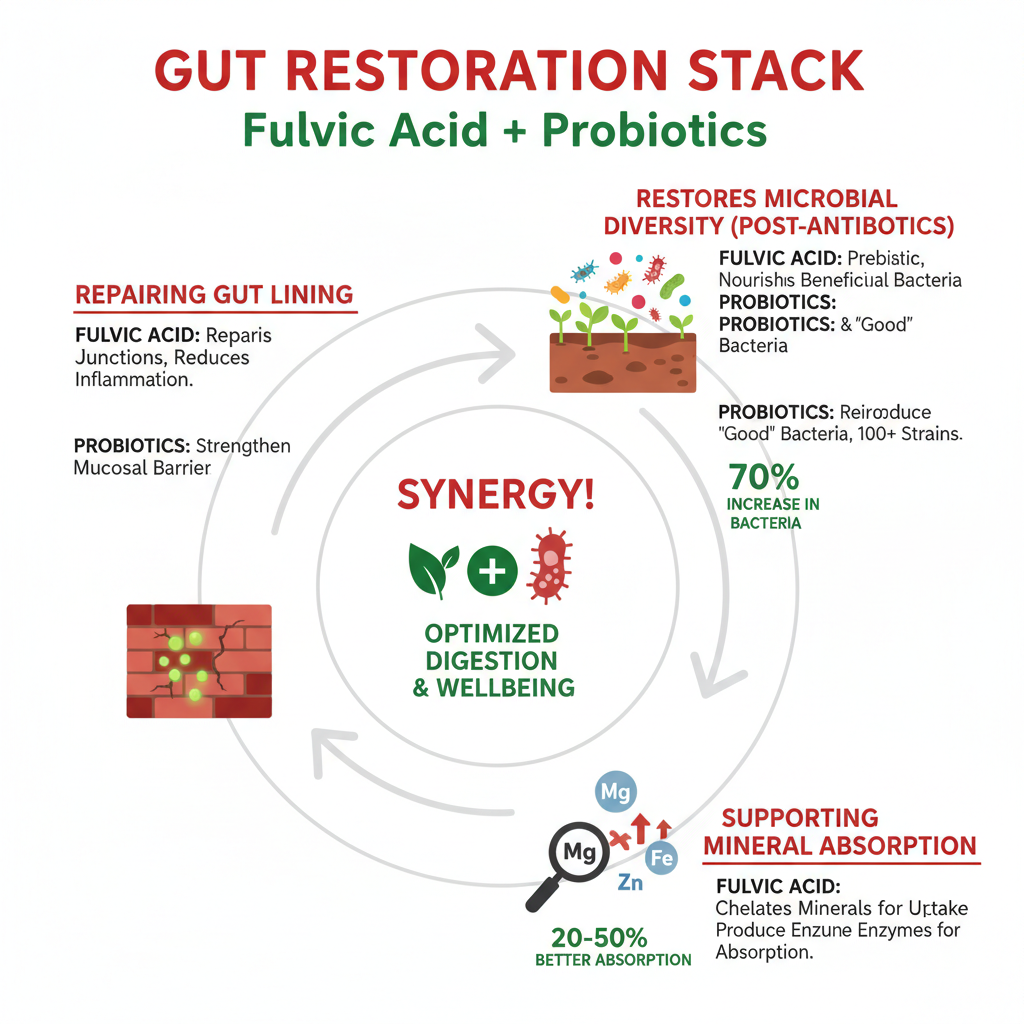
Most gut health protocols treat fulvic acid and probiotics as separate interventions — one for mineral support, the other for microbiome restoration. But when you examine the biology closely, these two compounds are deeply complementary in ways that create a therapeutic effect greater than the sum of their parts.
Fulvic Acid as a Probiotic Potentiator
Here's a mechanism that most practitioners miss: fulvic acid creates a more hospitable environment in the gut for probiotic colonisation. Its anti-inflammatory and antimicrobial properties selectively suppress pathogenic bacteria and opportunistic fungi (like Candida albicans), effectively clearing ecological "space" for beneficial probiotic species to establish themselves. Think of it as preparing the soil before planting seeds.
Additionally, the prebiotic-like activity of fulvic acid — specifically its capacity to stimulate the production of certain short-chain fatty acids — provides direct nutritional support to newly introduced probiotic organisms, improving their survival and colonisation rates.
Probiotics Enhance the Gut's Capacity to Utilise Fulvic Acid
The relationship works in the opposite direction too. When the gut microbiome is healthy and diverse, it produces enzymes and metabolites that enhance the processing and absorption of fulvic acid compounds. A dysbiotic gut — characterised by reduced microbial diversity — has impaired capacity to biotransform these complex organic molecules into their most bioavailable forms.
This creates a virtuous cycle: fulvic acid supports probiotic colonisation, and a restored probiotic community enhances fulvic acid utilisation, which further improves mineral absorption and barrier repair.
Joint Support for Tight Junction Proteins
Perhaps the most clinically significant point of synergy is around gut barrier integrity. Both fulvic acid and specific probiotic strains have independent, evidence-supported mechanisms for improving tight junction protein expression — particularly claudin-1, occludin, and ZO-1. When combined, these mechanisms appear to be additive.
Lactobacillus plantarum has been shown to upregulate occludin and claudin-1 expression in intestinal epithelial cells. Fulvic acid, simultaneously, delivers the zinc cofactors required for tight junction protein synthesis. The result is a more comprehensive, multi-pathway approach to sealing a leaky gut than either compound achieves independently.
To understand the full scientific rationale behind our formulation choices, visit The Velo16™ Science page, where we've detailed the research behind every ingredient decision.
5. Who Needs This Stack? Clinical Indicators for Gut Restoration
In functional medicine, we don't wait for disease before intervening. We look for patterns — clusters of symptoms and lifestyle factors that indicate the gut ecosystem is under strain. Based on my clinical experience, the following presentations are strong indicators that a fulvic acid and probiotic gut restore protocol is appropriate:
Post-Antibiotic Dysbiosis
If you've taken antibiotics in the last 12 months and noticed changes in digestion, energy, skin, or immunity, your microbiome is likely still recovering. The spontaneous recovery window is narrow and often incomplete without targeted support.
Persistent Digestive Symptoms
- Bloating that worsens with meals or at the end of the day
- Alternating constipation and loose stools
- Excessive gas or belching
- Abdominal discomfort without a structural diagnosis
Skin Conditions With No Clear External Cause
The gut-skin axis is well-established in the literature. Acne vulgaris, rosacea, eczema, and psoriasis have all been linked to gut dysbiosis and intestinal permeability. If your skin hasn't responded to topical treatments, the origin may be internal. In fact, our Take the Clear Skin Quiz was designed specifically to help you identify whether your skin concerns have a gut health root cause.
Chronic Fatigue and Brain Fog
Mitochondrial function, neurotransmitter synthesis, and inflammation are all profoundly influenced by gut health. Fulvic acid, in particular, has demonstrated capacity to support mitochondrial electron transport — making it a compound of interest not just for gut repair but for cellular energy production more broadly.
Nutrient Deficiency Despite Adequate Diet
If your blood work consistently shows low iron, zinc, magnesium, or B12 despite dietary intake, impaired gut absorption is the likely culprit. Fulvic acid's mineral transport capacity makes it particularly valuable in this presentation.
6. How to Use the Velo16™ Gut Restore Stack: Practical Protocol
Supplement stacking only works when timing, dosage, and context are considered. Here is the clinical framework I use when recommending the Velo16™ Probiotics + Fulvic Acid Gut Restore combination as a gut restore supplement protocol:
Phase 1: Prepare (Weeks 1–2)
Begin with fulvic acid alone to start reducing gut inflammation, clearing pathogenic overgrowth, and improving the mucosal environment. This prepares the gut to receive and retain probiotic colonies more effectively. Take fulvic acid on an empty stomach in the morning with clean, filtered water for optimal absorption.
Phase 2: Restore (Weeks 3–8)
Introduce the probiotic formulation alongside the continued fulvic acid. Take probiotics at least 30 minutes before or after any meal to maximise survival through the gastric environment. Continue fulvic acid in the morning; probiotics can be taken in the morning or evening depending on individual tolerance.
Phase 3: Maintain (Week 9 Onwards)
Transition to a maintenance protocol based on individual response. Many patients do well with fulvic acid 5 days per week and probiotics daily. Others require sustained daily support for both, particularly those with ongoing stress, dietary challenges, or recurrent antibiotic exposure.
Dietary Support for Maximum Effect
- Increase dietary fibre from diverse plant sources — this is the substrate your probiotic community needs to thrive (prebiotics)
- Reduce processed sugar and refined carbohydrates, which fuel pathogenic bacterial and fungal species
- Include fermented foods where tolerated: kefir, natural yoghurt, sauerkraut, and kombucha
- Prioritise adequate hydration — fulvic acid requires water for its ionic activity
- Minimise alcohol and non-steroidal anti-inflammatory drugs (NSAIDs), which directly damage the gut lining
For a full list of products that support your gut health journey, explore the Shop All Velo16™ Products page, or browse other evidence-based articles on the Velo16™ Health Journal.
"Dietary fibre, fermented foods, and targeted probiotic supplementation are among the most evidence-backed strategies for improving gut microbial diversity and function."
— Harvard Health Publishing, The Gut-Brain Connection
A Note on Probiotics and Fulvic Acid in South Africa
For those searching specifically for probiotics fulvic acid South Africa, the landscape of supplement quality is unfortunately inconsistent. Many products available locally either underdose their probiotic strains (making them clinically ineffective), use non-viable organisms (killed by heat or poor storage), or provide fulvic acid in forms that haven't been adequately standardised for bioavailability.
At Velo16™, every batch of our Gut Restore formulation is tested for potency, purity, and viability. We use clinically dosed, research-supported probiotic strains combined with a pharmaceutical-grade fulvic acid extract standardised to a precise concentration of active humic compounds. This is the standard of evidence-based supplementation — and it's the standard South Africans deserve.
Frequently Asked Questions
Can I take fulvic acid and probiotics at the same time?
Yes, and in fact this combination is synergistic. Fulvic acid supports the gut environment in ways that improve probiotic colonisation and survival. However, for optimal results, I recommend taking fulvic acid on an empty stomach in the morning and spacing probiotics by at least 30 minutes from meals. This allows each compound to work within its optimal conditions while still providing complementary benefits throughout the day.
How long does it take to see results from a gut restore supplement protocol?
Most patients report noticeable improvements in bloating, bowel regularity, and energy within 2–4 weeks of consistent use. Gut barrier repair and microbial diversity restoration are longer processes — typically requiring 8–12 weeks of sustained supplementation. Skin and systemic inflammation improvements often follow gut improvement by 2–4 weeks, as the gut-skin axis responds to reduced intestinal permeability and improved immune regulation.
Is fulvic acid safe for long-term use?
Current evidence supports fulvic acid as safe for long-term use at recommended doses. It is a naturally occurring organic compound with a long history of use in Ayurvedic medicine (as a component of shilajit) and in agricultural science. As with all supplements, quality matters — ensure you are using a product from a reputable manufacturer with third-party testing for heavy metals, as low-quality fulvic acid sources can be contaminated with the very toxins they are purported to bind. Velo16™ tests all fulvic acid batches rigorously for purity.
Can children take fulvic acid and probiotics?
Probiotics have an excellent safety record in paediatric populations and are frequently recommended by paediatricians for digestive support and post-antibiotic recovery. Fulvic acid use in children is less extensively studied, and I recommend consulting a healthcare practitioner before introducing it in those under 12 years of age. The Velo16™ Gut Restore formulation is designed and dosed for adults.
Do I need a leaky gut diagnosis before starting this protocol?
A formal diagnosis of intestinal hyperpermeability (leaky gut) is not required to benefit from gut restoration support. If you are experiencing persistent digestive symptoms, post-antibiotic recovery challenges, skin conditions, nutrient deficiencies, or chronic fatigue, your gut barrier and microbiome likely need support regardless of a specific diagnosis. That said, I always encourage working with a functional medicine practitioner to develop a personalised protocol based on your individual health history and goals.
Ready to Restore Your Gut From the Inside Out?
Your gut health is the foundation of your energy, immunity, skin clarity, and long-term wellbeing. The evidence is clear: fulvic acid and probiotics, used together in the right formulations and doses, represent one of the most powerful gut restoration strategies available today.
The Velo16™ Probiotics + Fulvic Acid Gut Restore was formulated with exactly this science in mind — designed for South Africans who are ready to move beyond symptom management and address the root cause of their health challenges.
- ✓ Clinically dosed, multi-strain probiotic blend
- ✓ Pharmaceutical-grade, standardised fulvic acid extract
- ✓ Formulated for post-antibiotic recovery, leaky gut repair, and mineral absorption support
- ✓ Third-party tested for purity, potency, and viability
- ✓ Developed by a functional medicine physician
Explore the Velo16™ Gut Health Collection →
Not sure where to start? If your gut issues are showing up on your skin, Take the Clear Skin Quiz to get personalised recommendations based on your symptoms.