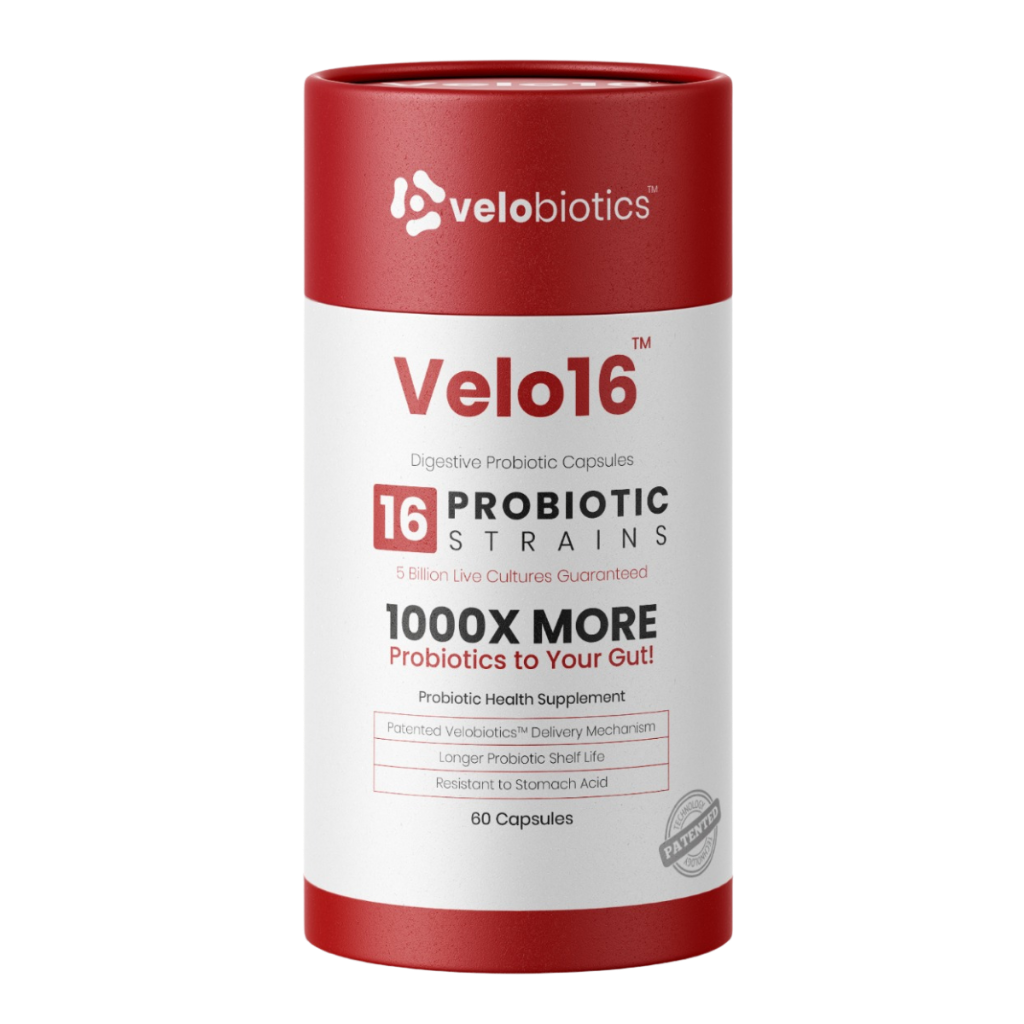
Fulvic Acid and Probiotics: The Gut Restoration Stack That's Changing Everything
By Dr. Chomba Chuma, MD — Founder, Velo16™ | Published in the Velo16™ Health Journal
Every week in my functional medicine practice in Johannesburg, I see the same pattern. A patient comes in — bloated, exhausted, battling recurring infections, struggling with skin flares or unexplained mood dips — and when we dig into their history, there's almost always a common thread: a disrupted gut. Sometimes it's the aftermath of a course of antibiotics. Sometimes it's years of stress, processed food, or a chlorinated water supply silently eroding the gut lining. And increasingly, it's a combination of all of the above.
What's changed in my clinical approach over the past several years isn't just what I recommend — it's the order and combination in which I recommend it. And one of the most transformative shifts has been understanding the profound synergy between fulvic acid and probiotics. Together, these two compounds don't just address gut symptoms — they work at the cellular and microbial level to restore the gut environment from the inside out.
This article is going to take you deep into the science. We'll explore what fulvic acid actually does in the gut, why it works so powerfully alongside probiotics, and how this combination directly addresses the root causes of leaky gut, post-antibiotic microbiome collapse, and the mineral deficiencies that quietly undermine your recovery. If you've tried probiotics before and felt underwhelmed, this may explain exactly why — and what you were missing.
Understanding the Modern Gut Crisis
Before we get into the solution, we need to understand the problem — because it is genuinely a crisis. According to the World Health Organization, antibiotic resistance is one of the greatest threats to global health, and antibiotic overuse has left millions of people with severely depleted gut microbiomes. But antibiotics are just one chapter of a longer story.
The modern lifestyle is a perfect storm for gut dysfunction:
- Highly processed, low-fibre diets that starve beneficial bacteria
- Chronic psychological stress that alters gut motility and permeability
- Environmental toxins — pesticides, heavy metals, plastics — that damage the gut epithelium
- Overuse of NSAIDs, antibiotics, and proton pump inhibitors
- Mineral-depleted soils producing mineral-depleted food
- Dysbiosis — an imbalance of gut bacteria that perpetuates inflammation
The result? A condition that clinicians and researchers increasingly refer to as increased intestinal permeability — or, more colloquially, leaky gut. Research published in the Journal of Clinical Gastroenterology has linked increased intestinal permeability to a spectrum of conditions including irritable bowel syndrome, inflammatory bowel disease, autoimmune conditions, depression, and metabolic syndrome.
What Actually Happens in a Leaky Gut?
Your gut lining is an extraordinary structure — a single layer of epithelial cells stretching roughly 400 square metres when fully extended, held together by specialised protein complexes called tight junctions. These tight junctions act as the gatekeepers of your entire body. When they function properly, they allow nutrients, water, and electrolytes to pass through while keeping pathogens, undigested food particles, and bacterial endotoxins on the other side.
When tight junctions become compromised — through inflammation, toxin exposure, dysbiosis, or nutritional deficiency — those gates start to fail. Bacterial lipopolysaccharides (LPS), partially digested proteins, and microbial fragments leak into the bloodstream. The immune system responds with systemic low-grade inflammation, and the downstream consequences can affect virtually every system in the body.
This is the environment that fulvic acid and probiotics are uniquely positioned to repair — not by masking symptoms, but by addressing the structural and microbial foundations of gut health.
Fulvic Acid: The Ancient Molecule Modern Science Is Finally Catching Up To
If you haven't heard of fulvic acid, you're not alone — and if you have heard of it but dismissed it as a wellness trend, I'd encourage you to look more closely at the literature. Fulvic acid is a naturally occurring organic compound found in humus — the decomposed organic matter in healthy soils. It's produced by the microbial breakdown of plant material over thousands of years and represents one of the most complex molecular structures in nature.
For most of human history, we consumed fulvic acid passively through food grown in rich, microbe-dense soil. But modern intensive agriculture has stripped our topsoils of the microbial life necessary to produce fulvic compounds. As Harvard Health Publishing has noted, the nutritional density of our food supply has declined measurably over the past 70 years — and fulvic acid deficiency is increasingly recognised as part of this picture.
The Molecular Magic of Fulvic Acid in the Gut
What makes fulvic acid so remarkable is its unique molecular architecture. It is an exceptionally small, low-molecular-weight organic acid — small enough to penetrate cell membranes — that carries an extraordinary number of functional groups capable of chelating minerals, transporting nutrients, and modulating cellular signalling.
Here is what the science tells us about fulvic acid gut health specifically:
- Tight Junction Support: Fulvic acid has been shown in preclinical studies to upregulate the expression of tight junction proteins, including occludin and claudin-1, directly strengthening the gut barrier against permeability. A 2020 study in Frontiers in Immunology (NCBI/PubMed) highlighted fulvic acid's capacity to modulate intestinal epithelial integrity through anti-inflammatory pathways.
- Anti-inflammatory Activity: Fulvic acid inhibits the NF-κB inflammatory pathway, one of the primary drivers of gut mucosal inflammation. This reduces the cytokine cascade that perpetuates leaky gut.
- Antioxidant Properties: As both a donor and acceptor of electrons, fulvic acid functions as a powerful redox agent, neutralising free radicals that damage the gut epithelium.
- Prebiotic Effect: Emerging research suggests that fulvic acid may act as a selective prebiotic, supporting the growth of beneficial microbial communities in the colon.
- Detoxification: Fulvic acid chelates heavy metals and environmental toxins in the gut, preventing them from accumulating in the epithelium or entering systemic circulation.
"Humic substances, including fulvic acid, demonstrate significant potential as nutraceutical agents for modulating intestinal inflammation and barrier function, with mechanistic pathways distinct from conventional anti-inflammatory drugs."
— PubMed Review, Journal of Nutritional Biochemistry
Fulvic Acid and Mineral Absorption: The Missing Link
One of the most clinically significant fulvic acid benefits — and one that is often overlooked — is its extraordinary capacity to enhance mineral absorption. Fulvic acid forms chelate complexes with minerals, transforming them into bioavailable organic forms that the body can absorb far more efficiently than inorganic mineral salts found in most supplements.
This matters enormously for gut repair. Zinc, magnesium, iron, and selenium are all critical cofactors for epithelial cell regeneration, immune function, and the synthesis of tight junction proteins. Many patients with leaky gut are simultaneously deficient in these minerals — partly because the damaged gut lining cannot absorb them effectively. Fulvic acid breaks this vicious cycle by improving mineral uptake even in a compromised gut environment.
Probiotics: What They Do — and Why They Often Underperform Alone
Probiotics have become one of the most widely recommended supplements globally, and for good reason. The research base supporting their benefits for gut health, immune modulation, and even mental health via the gut-brain axis is extensive and growing. A landmark series of studies published in Nature Microbiology has transformed our understanding of how specific probiotic strains interact with host physiology, from modulating immune cell populations to influencing neurotransmitter production.
However, in clinical practice, I frequently encounter patients who have tried multiple probiotic products with limited results. There are several reasons for this:
- An inhospitable gut environment: If the gut lining is inflamed, the mucus layer is depleted, and the pH is imbalanced, probiotic bacteria cannot colonise effectively — they pass through without taking hold.
- Inadequate prebiotic support: Probiotics need fermentable fibre and appropriate substrates to thrive. Without them, even high-quality strains struggle to establish themselves.
- Inflammatory load: High levels of gut inflammation actively suppress the proliferation of Lactobacillus and Bifidobacterium species, the cornerstone strains of most probiotic formulas.
- Post-antibiotic ecosystem collapse: After a course of antibiotics, the gut isn't just depleted of bacteria — its physical architecture, pH, motility, and immune tone are all disrupted. Probiotics alone cannot address this systemic disruption.
This is precisely where the combination with fulvic acid becomes transformative.
[INFOGRAPHIC_PLACEHOLDER: "The Fulvic Acid + Probiotic Synergy Cycle — How These Two Compounds Rebuild the Gut from the Inside Out: Fulvic acid reduces inflammation → Tight junctions are restored → Gut environment becomes hospitable → Probiotics colonise effectively → Microbial diversity increases → Short-chain fatty acids produced → Gut lining further repaired → Mineral absorption improves → Systemic health restored"]
The Synergy: Why Fulvic Acid and Probiotics Work Exponentially Better Together
This is the core of what I want every patient — and every reader — to understand. Fulvic acid and probiotics are not simply two good things that happen to be in the same capsule. They operate through complementary and mutually reinforcing mechanisms that create a restoration cascade far more powerful than either compound alone.
Mechanism 1: Fulvic Acid Prepares the Terrain
Think of the gut as a garden. If the soil is toxic, compacted, and depleted of minerals, planting seeds — however high-quality — will produce poor results. Fulvic acid is, quite literally, a soil conditioner for your intestinal environment. By reducing inflammation, neutralising toxins, restoring tight junction integrity, and improving the mineral profile of the gut, it creates the optimal terrain for probiotic bacteria to take root and flourish.
Research from the NCBI database has demonstrated that fulvic acid can modulate the gut mucosal immune environment in ways that are specifically permissive to commensal (beneficial) bacterial colonisation while being hostile to pathogenic species — a distinction that standard anti-inflammatory agents do not make.
Mechanism 2: Enhanced Probiotic Viability and Colonisation
Fulvic acid's unique electrochemical properties appear to support the survival of probiotic bacteria through the harsh acidic environment of the stomach and upper digestive tract. Early research suggests that the organic matrix provided by fulvic acid may function as a protective carrier for delicate probiotic organisms, improving the number of viable bacteria that reach the colon where they are most needed.
Once in the colon, the anti-inflammatory environment created by fulvic acid allows Lactobacillus, Bifidobacterium, and other beneficial strains to adhere to the gut mucosa and begin colonising — something that is significantly impaired in an inflamed, high-oxidative-stress gut environment.
Mechanism 3: Restoring Microbial Diversity After Antibiotics
Post-antibiotic gut restoration is one of the most clinically challenging situations I encounter. A single standard course of broad-spectrum antibiotics can reduce gut microbial diversity by 25–50%, and in some patients, the microbiome does not spontaneously recover for months — or even years — without targeted intervention.
The combination of fulvic acid and probiotics addresses post-antibiotic recovery from multiple angles simultaneously:
- Fulvic acid helps clear residual toxins and reduce the endotoxin burden from dead bacterial cell walls (Herxheimer-type reactions)
- Its prebiotic properties provide fermentable substrates for re-establishing bacterial communities
- Probiotic strains reintroduce key species and produce short-chain fatty acids (SCFAs) like butyrate that are critical for colonocyte health
- Fulvic acid's mineral-carrying capacity replenishes the zinc, magnesium, and selenium depleted by both illness and antibiotic treatment
- Together, they accelerate the restoration of the mucus layer — the physical habitat of the gut microbiome
"Antibiotic-associated dysbiosis is not merely a quantitative reduction in bacteria — it represents a qualitative collapse of ecological function. Effective recovery requires simultaneous attention to the physical gut environment, the nutritional milieu, and the reintroduction of key functional species."
— Dr. Chomba Chuma, MD, Velo16™ Functional Medicine Practice, Johannesburg
Mechanism 4: The Mineral-Microbiome Connection
Gut barrier integrity is not just a structural issue — it's a nutritional one. The tight junction proteins that seal your gut lining require zinc as a cofactor for their synthesis and maintenance. The immune cells patrolling your gut mucosa are dependent on selenium and iron. The beneficial bacteria producing butyrate to nourish your colonocytes need magnesium for their enzymatic processes.
When fulvic acid dramatically improves the bioavailability of these minerals, it doesn't just benefit cells in isolation — it creates a better-nourished environment for the entire microbial community. This is the mineral-microbiome connection, and it's one of the most under-appreciated aspects of gut restoration in conventional medicine.
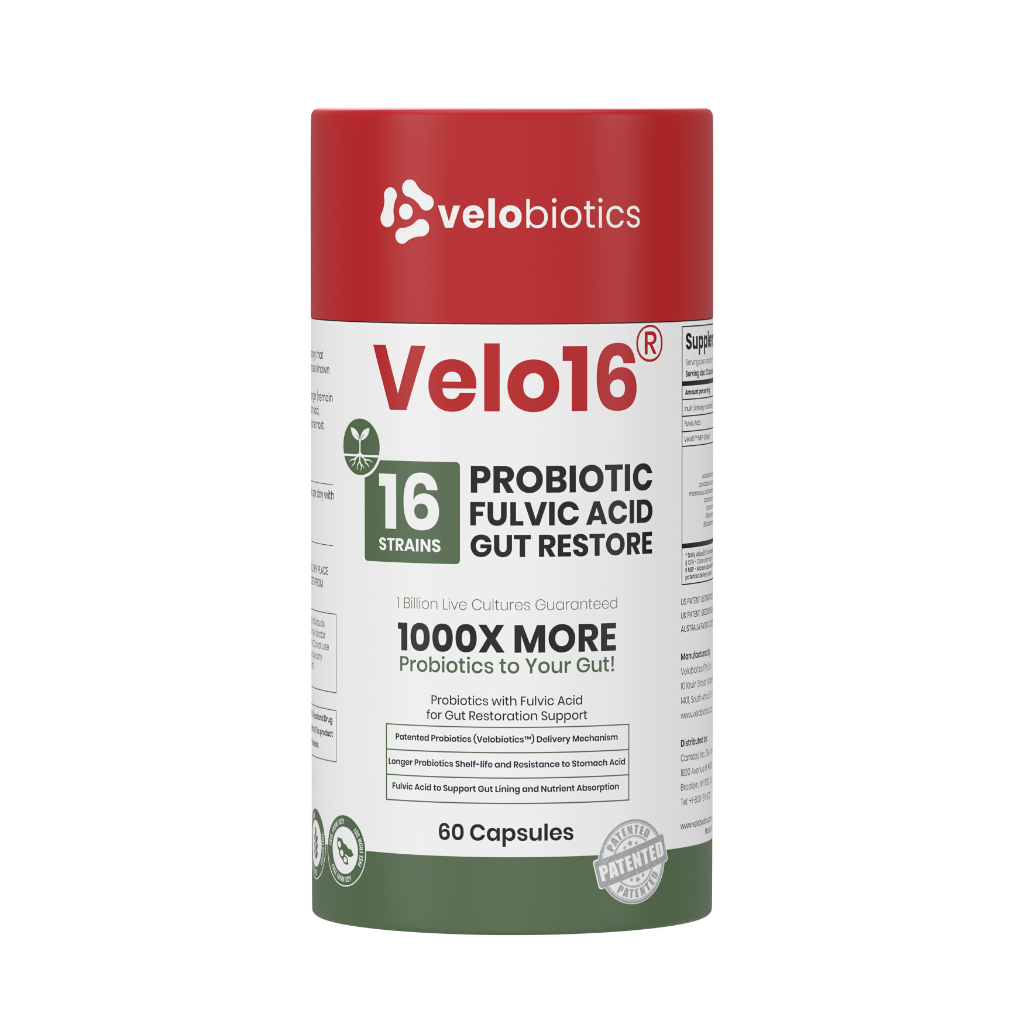
Introducing Velo16™ Probiotics + Fulvic Acid Gut Restore
Understanding this synergy is exactly what drove the formulation of the Velo16™ Gut Health Collection — specifically the Probiotics + Fulvic Acid Gut Restore formula. As a clinician, I was frustrated by the fragmented approach of the supplement market: fulvic acid products on one shelf, probiotic capsules on another, with patients trying to navigate the timing, dosing, and compatibility of multiple products themselves.
The Velo16™ Gut Restore formula was designed from the ground up around the mechanisms described in this article:
- High-potency, multi-strain probiotic complex — selected for clinical evidence of gut mucosal colonisation and immune modulation
- Premium South African fulvic acid — sourced from verified, mineral-rich humic deposits and standardised for bioactive compound concentration
- Synbiotic architecture — the fulvic acid component provides prebiotic support for the probiotic strains within the same capsule matrix
- Formulated for the South African context — taking into account the high antibiotic prescription rates, dietary patterns, and mineral-depleted agricultural soils specific to our region
The science behind every ingredient choice is documented in detail at The Velo16™ Science — I encourage you to read it if you want the full mechanistic picture.
Who Is This For?
The Velo16™ Gut Restore formula is specifically designed for:
- Anyone recovering from a course of antibiotics in the past 6–12 months
- Individuals with diagnosed or suspected leaky gut or intestinal permeability
- Those experiencing chronic bloating, gas, irregular bowel movements, or food intolerances
- People with skin conditions like acne, eczema, or rosacea (the gut-skin axis is well established — Take the Clear Skin Quiz to understand your individual profile)
- Anyone with fatigue, brain fog, or mood irregularities that may be linked to gut health
- Health-conscious individuals wanting to proactively maintain a healthy, diverse microbiome
For context on how gut health intersects with other conditions I see in my practice — from hormonal imbalances to autoimmune flares — browse the full Velo16™ Health Journal where we regularly publish evidence-based clinical insights.
Frequently Asked Questions
What is fulvic acid and is it safe to take daily?
Fulvic acid is a naturally occurring organic compound derived from the decomposition of plant material in humus-rich soil. It has been consumed by humans throughout history via food grown in mineral-rich soil. Modern research — including studies catalogued in PubMed/NCBI — supports its safety profile for daily use at appropriate doses. It is well-tolerated by most adults. As with any supplement, pregnant or breastfeeding individuals and those on immunosuppressive medications should consult their physician before use.
How long does it take to see results with the Gut Restore formula?
This depends significantly on the individual's starting point. Patients recovering from acute antibiotic use often notice improvements in digestion and energy within 2–4 weeks of consistent use. Those with longer-standing gut dysfunction — including established leaky gut or significant dysbiosis — should expect a 6–12 week restoration window for meaningful clinical change. The gut microbiome does not rebuild overnight, and sustainable restoration requires consistency. We recommend a minimum 90-day commitment for optimal results.
Can I take Velo16™ Gut Restore while on antibiotics?
Generally, it is best to take probiotics at least 2 hours away from antibiotic doses to avoid the antibiotic killing the probiotic bacteria before they reach the gut. The fulvic acid component can be taken concurrently as it is not affected by antibiotics. Completing the antibiotic course as prescribed and then beginning an intensive restoration protocol with the Gut Restore formula is the approach I recommend in clinical practice. Always inform your prescribing physician about any supplements you are taking.
Is there specific evidence supporting probiotics and fulvic acid for leaky gut in South African populations?
While large-scale population-specific trials are still limited, the mechanistic evidence for this combination is robust and applies cross-population. What is particularly relevant for South African adults is the documented high antibiotic prescription rate, the increasing prevalence of Western dietary patterns, and the mineral depletion of South African agricultural soils — all of which compound gut barrier vulnerability. The Velo16™ Gut Restore formulation was developed specifically with this context in mind. For the full evidence base, visit The Velo16™ Science.
How does gut health relate to skin conditions like acne and eczema?
The gut-skin axis is one of the most active areas of microbiome research. A compromised gut barrier allows bacterial endotoxins and undigested proteins to enter systemic circulation, triggering immune activation that manifests as skin inflammation. Studies published in Nature Microbiology and reviewed by Harvard Health Publishing have documented associations between gut dysbiosis and acne vulgaris, eczema, psoriasis, and rosacea. Restoring gut barrier integrity and microbial diversity often produces significant skin improvements as a downstream effect — which is why many of my patients initially presenting for skin concerns ultimately benefit most from gut-first intervention. Take the Clear Skin Quiz to assess your gut-skin connection.
Ready to Restore Your Gut from the Inside Out?
If anything in this article resonated with your health experience — the bloating, the post-antibiotic fatigue, the skin flares, the brain fog — please know that these are not things you simply have to live with. They are signals from a gut that needs targeted, science-backed support.
The Velo16™ Gut Health Collection was built for exactly this purpose — combining the terrain-restoring power of fulvic acid with clinically selected probiotics to give your gut what it genuinely needs to rebuild.
Shop All Velo16™ Products and explore our full range of evidence-based functional health solutions — or start by visiting The Velo16™ Science to understand the research behind everything we formulate.
Your gut is the foundation of everything. It's time to treat it that way.