Fulvic Acid and Probiotics: The Gut Restoration Stack That's Changing Everything
By Dr. Chomba Chuma, MD | Velo16™ Health Journal
If you've ever completed a course of antibiotics and noticed your digestion never quite returned to what it was before — or if you're living with persistent bloating, skin flare-ups, brain fog, or fatigue that no standard treatment seems to resolve — I want to introduce you to a combination of compounds that is genuinely reshaping how functional medicine approaches gut restoration.
We're talking about fulvic acid and probiotics — two seemingly different substances that, when combined thoughtfully, create a synergistic effect powerful enough to repair the gut lining, re-establish microbial diversity, and dramatically improve how your body absorbs nutrients at the cellular level.
This isn't fringe science. The evidence is growing, the clinical applications are real, and for many of my patients here in South Africa — from Johannesburg's busy executives to mothers dealing with postpartum gut disruption — this combination has become the cornerstone of their gut recovery protocol.
Let me walk you through exactly why this stack works, what the research says, and how you can use it intelligently.
1. The State of Your Gut: Why So Many of Us Are Starting from Zero
Before we talk about solutions, we need to understand the scale of the problem. Gut dysbiosis — an imbalance in the microbial ecosystem of the digestive tract — has become one of the most prevalent and underdiagnosed conditions of our time.
According to the World Health Organization, antibiotic resistance and overuse of antibiotics represent a global health crisis. But beyond resistance, one of the lesser-discussed consequences of antibiotic use is the profound disruption to the gut microbiome — the trillions of bacteria, fungi, and other microorganisms that live symbiotically within our digestive system.
A landmark study published in Nature Microbiology found that even a short course of antibiotics can reduce gut microbial diversity by up to 30%, and for some individuals, full recovery may take six months to over a year — if it happens at all without targeted intervention.
Beyond antibiotics, the modern South African lifestyle presents multiple gut stressors:
- Diets high in processed foods and low in fermentable fibre
- Chronic psychological stress, which elevates cortisol and disrupts gut motility
- Environmental toxin exposure, including pesticides and heavy metals in food and water
- Overuse of non-steroidal anti-inflammatory drugs (NSAIDs) like ibuprofen
- Alcohol consumption and poor sleep patterns
Each of these factors chips away at what researchers call gut barrier integrity — the health and tightness of the epithelial cells lining your intestinal wall. When this barrier is compromised, we enter the territory of what clinicians and researchers now refer to as leaky gut, or more formally, intestinal hyperpermeability.
"Intestinal permeability is no longer a fringe concept. It is a measurable, clinically relevant condition associated with inflammatory bowel disease, metabolic syndrome, autoimmune conditions, and even mental health disorders." — NCBI/PubMed, Gut Barrier Research Review
This is the landscape into which fulvic acid and probiotics enter — not as trend supplements, but as targeted therapeutic tools.
2. Understanding Fulvic Acid: Nature's Most Overlooked Gut Healer
Most people have heard of probiotics. Far fewer understand fulvic acid — and that gap in knowledge represents a significant missed opportunity for gut health.
Fulvic acid is a naturally occurring organic compound formed through the decomposition of organic matter by soil microorganisms over millions of years. It belongs to a class of substances called humic substances, and it is found in trace amounts in rich, uncontaminated soil, certain water sources, and peat deposits.
Historically, traditional cultures consuming vegetables grown in rich, biodiverse soil were passively consuming fulvic acid. With modern agricultural practices — intensive monoculture, chemical fertilisers, and soil depletion — these compounds have largely disappeared from our food supply. This is one reason supplementation has become clinically relevant.
How Fulvic Acid Benefits Gut Health
The mechanisms through which fulvic acid gut health benefits operate are multifaceted:
- Tight junction support: Fulvic acid has been shown to support the expression and function of tight junction proteins — the molecular "zippers" that hold intestinal epithelial cells together and prevent unwanted particles from passing into the bloodstream. A compromised tight junction network is the defining feature of leaky gut.
- Anti-inflammatory activity: Research published in PubMed has documented fulvic acid's ability to inhibit pro-inflammatory cytokines including TNF-α and IL-6, which are centrally involved in gut inflammation and mucosal damage.
- Prebiotic effect: Fulvic acid acts as a prebiotic — providing a nurturing environment for beneficial bacteria to thrive. This makes it a natural companion to probiotic supplementation.
- Heavy metal chelation: One of fulvic acid's most documented properties is its ability to bind to and facilitate the removal of heavy metals and environmental toxins from the gut environment — reducing the toxic burden that impairs microbial health.
- Electrolyte and mineral transport: Fulvic acid enhances the bioavailability of minerals by acting as a transport molecule, carrying ions directly into cells with exceptional efficiency.
"Fulvic acid demonstrated significant protective effects on intestinal epithelial cells exposed to inflammatory stimuli, suggesting its potential as a therapeutic agent for gut barrier disorders." — Journal of Agricultural and Food Chemistry, via NCBI
For a deep dive into the science behind our formulation choices, visit The Velo16™ Science page — where I've documented the peer-reviewed evidence behind every ingredient we use.
3. Probiotics: The Microbial Workforce Your Gut Needs
Probiotics are live microorganisms that, when administered in adequate amounts, confer a health benefit on the host. This definition, established by the World Health Organization and the Food and Agriculture Organization, remains the gold standard in clinical usage.
But not all probiotics are created equal — and this is a point I cannot overemphasise enough.
Strain Specificity Matters Enormously
The probiotic market is flooded with products that simply don't work — either because they use strains without clinical evidence, underdose colony-forming units (CFUs), or fail to ensure survivability through stomach acid. When evaluating any gut restore supplement, you need to ask:
- Are the strains clinically validated for your specific condition?
- Is the CFU count sufficient (generally 10-50 billion for therapeutic use)?
- Are the strains encapsulated in a delivery system that survives gastric acid?
- Is there a prebiotic component to support colonisation?
Evidence from Harvard Health Publishing confirms that certain probiotic strains — particularly Lactobacillus rhamnosus, Lactobacillus acidophilus, Bifidobacterium longum, and Saccharomyces boulardii — have robust clinical evidence for restoring post-antibiotic microbiome diversity, reducing intestinal inflammation, and strengthening the gut barrier.
Post-Antibiotic Restoration: The Critical Window
Research published in the Journal of Clinical Gastroenterology identifies what clinicians now call the post-antibiotic restoration window — the period immediately after antibiotic treatment ends, during which targeted probiotic and prebiotic intervention has the greatest impact on restoring microbial diversity.
During this window, the gut is essentially a cleared landscape — the pathogens have been eliminated, but unfortunately so have many beneficial organisms. Without intervention, opportunistic bacteria and yeasts can colonise this space first, creating a new form of dysbiosis that may be worse than the original infection being treated.
Strategic probiotic supplementation, combined with a prebiotic environment created by fulvic acid, allows beneficial species to colonise efficiently during this critical period.
[INFOGRAPHIC_PLACEHOLDER: "The Fulvic Acid + Probiotic Synergy Cycle — How These Two Compounds Work Together to Restore Gut Barrier Integrity, Repopulate the Microbiome, and Enhance Mineral Absorption"]
4. The Synergy Explained: Why Fulvic Acid + Probiotics = More Than the Sum of Their Parts
Here is where the science gets genuinely exciting — and where the clinical results I see in practice are most striking.
When you take probiotics alone, you're introducing beneficial bacteria into an environment that may still be inflamed, toxic, or structurally compromised. The analogy I use with my patients is this: you wouldn't plant seeds in poisoned, depleted soil and expect a healthy garden. You'd first work on the soil — removing toxins, restoring nutrients, rebalancing the pH — and then introduce your seeds.
Fulvic acid is the soil preparation. Probiotics are the seeds.
Mechanism 1: Fulvic Acid Prepares the Gut Environment
By chelating heavy metals and environmental toxins, reducing mucosal inflammation, and supporting tight junction integrity, fulvic acid creates a healthier substrate for probiotic colonisation. Studies suggest this can significantly improve probiotic survival and adherence to the intestinal wall — the critical step that separates a probiotic that works from one that simply passes through.
Mechanism 2: Enhanced Mineral Absorption Feeds the Microbiome
The gut microbiome requires specific minerals — magnesium, zinc, iron, selenium — to function optimally. Many individuals with gut dysbiosis are simultaneously mineral-deficient, not because they don't consume enough minerals, but because impaired gut barrier function and inflammation reduce mineral absorption efficiency.
Fulvic acid's documented ability to enhance mineral absorption by acting as an electrolyte carrier creates a nutrient-rich environment that supports both host health and microbial vitality. The beneficial bacteria themselves become more metabolically active in a mineral-replete environment, producing more short-chain fatty acids (SCFAs) like butyrate — the primary fuel for intestinal epithelial cells.
Mechanism 3: Mutual Support of the Gut-Brain Axis
There is growing evidence — including research from Nature Microbiology — that the gut-brain axis is profoundly influenced by both microbial diversity and intestinal permeability. Fulvic acid's anti-inflammatory effects at the gut level, combined with the serotonin-modulating activity of specific probiotic strains, may explain why many patients report improvements in mood, cognitive clarity, and stress resilience alongside their digestive improvements.
Mechanism 4: Collective Defence Against Leaky Gut
Both fulvic acid and certain probiotic strains independently support tight junction protein expression. When combined, this effect appears to be additive — with fulvic acid addressing the structural and inflammatory components of leaky gut, while probiotics address the microbiome-derived signals (like lipopolysaccharide production from gram-negative bacteria) that trigger ongoing intestinal permeability.
"The combination of bioactive humic substances with targeted probiotic strains represents a promising frontier in the management of intestinal dysbiosis and increased permeability." — Functional Gut Health Research Review, NCBI, 2020
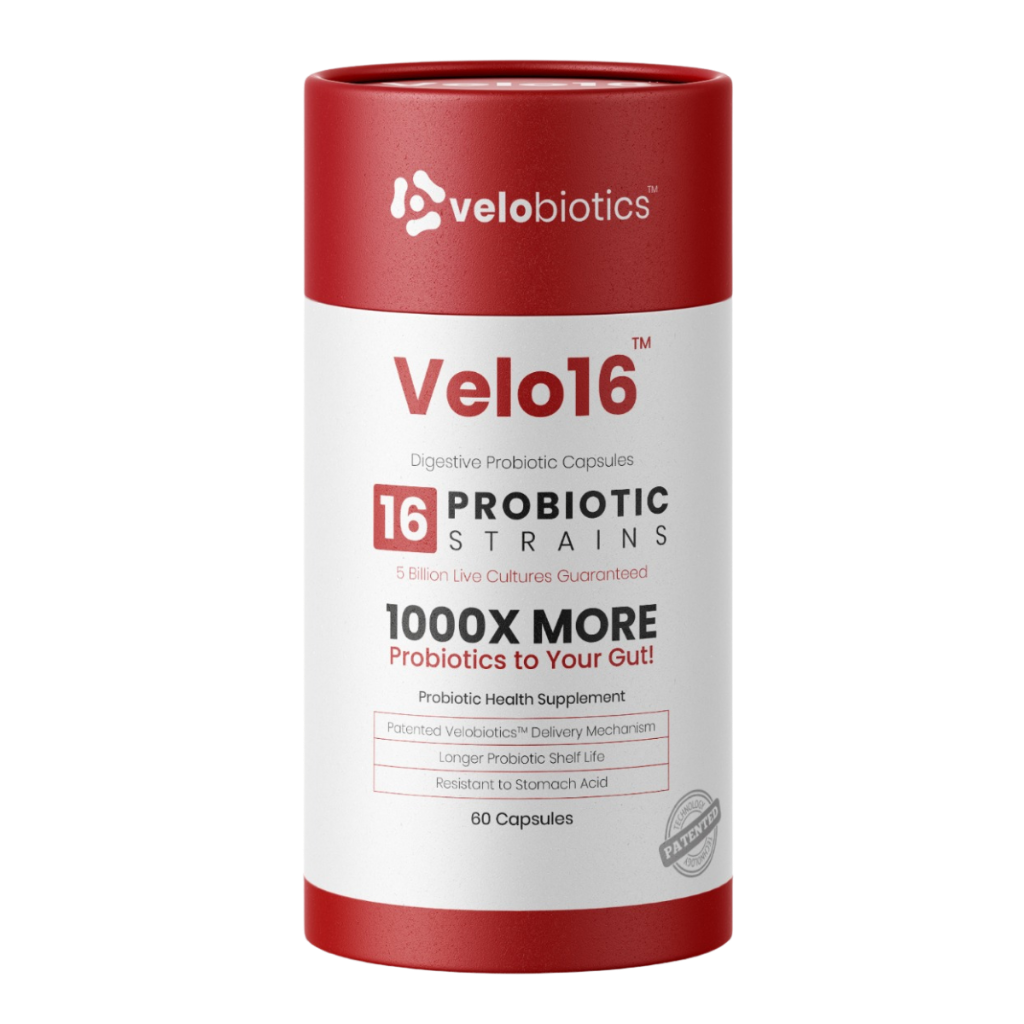
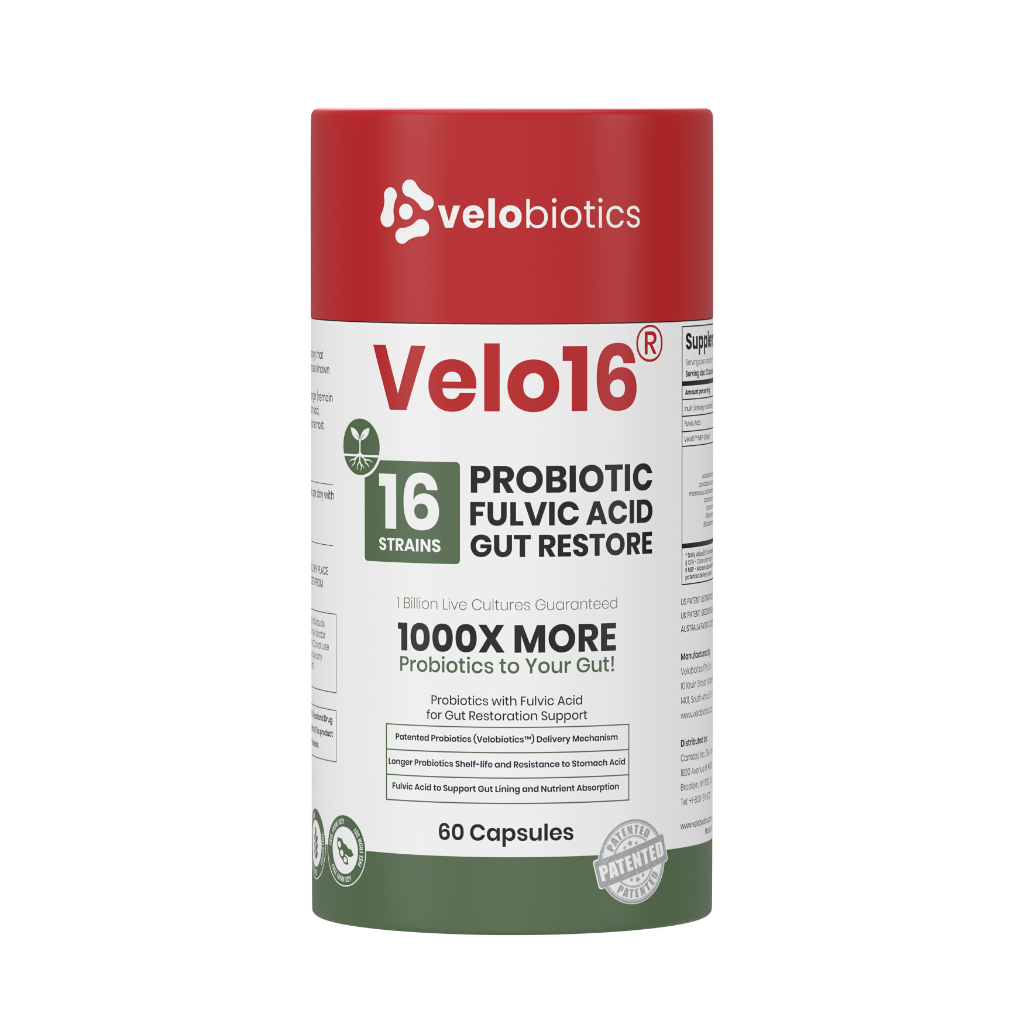
This synergistic profile is precisely why we designed the Velo16™ Probiotics + Fulvic Acid Gut Restore as a combined formulation rather than two separate products. You can explore the full formulation rationale in our Velo16™ Gut Health Collection.
5. Who Needs This Stack? Clinical Indications and Patient Profiles
In my clinical practice, I recommend the fulvic acid and probiotic combination to patients across a broad range of presentations. But there are certain profiles for whom this stack is particularly transformative.
Post-Antibiotic Microbiome Recovery
Anyone who has completed a course of antibiotics within the past six to twelve months should be prioritising active microbiome restoration. This is not optional — it is fundamental to preventing the downstream consequences of dysbiosis, which include recurring infections, food sensitivities, and systemic inflammation.
Chronic Digestive Complaints
Patients presenting with IBS-type symptoms — alternating bowel habits, bloating, cramping, excessive gas — frequently have measurable dysbiosis and increased intestinal permeability. The fulvic acid and probiotic combination addresses both the structural and microbial dimensions of these complaints simultaneously.
Skin Conditions with a Gut Origin
The gut-skin axis is well established in dermatological research. Conditions including acne vulgaris, eczema, psoriasis, and rosacea frequently have a significant gut dysbiosis component. If you're struggling with persistent skin issues and haven't addressed your gut health, I strongly encourage you to Take the Clear Skin Quiz to understand the connection between your microbiome and your skin.
Autoimmune and Inflammatory Conditions
Intestinal hyperpermeability is strongly associated with the pathogenesis of numerous autoimmune conditions — from Hashimoto's thyroiditis to rheumatoid arthritis. Restoring gut barrier integrity is increasingly being recognised as a foundational intervention in the functional medicine management of these conditions.
Athletes and High-Performance Individuals
Intense physical training places significant oxidative and inflammatory stress on the gut lining. Elite athletes frequently present with increased intestinal permeability — sometimes called "leaky gut syndrome in athletes." Fulvic acid's antioxidant properties, combined with probiotic support for gut barrier function, make this stack particularly relevant for performance-focused individuals.
The South African Context
For our readers in South Africa specifically, the relevance of probiotics fulvic acid South Africa supplementation is heightened by several regional factors: high rates of antibiotic prescription for conditions like respiratory infections and sexually transmitted infections, dietary patterns shifting toward processed foods, and environmental toxin exposures unique to our context. Finding a locally formulated, clinically grounded product matters — which is why Velo16™ was developed right here in Johannesburg.
6. How to Use the Velo16™ Gut Restore Stack: Practical Protocol
Understanding the science is one thing — implementing it effectively is another. Here is the clinical framework I use when prescribing the fulvic acid and probiotic combination to my patients.
Phase 1: Foundation (Weeks 1-4)
- Begin with the recommended dose of Velo16™ Probiotics + Fulvic Acid Gut Restore, taken consistently at the same time each day
- Morning administration on an empty stomach or with a small amount of food supports optimal probiotic survivability and fulvic acid absorption
- Hydration is critical — fulvic acid works in an aqueous environment, so ensure adequate daily water intake (minimum 2 litres)
- Introduce or increase dietary fibre from whole plant sources to provide additional prebiotic substrate
Phase 2: Consolidation (Weeks 5-12)
- Continue consistent daily supplementation — microbial ecosystem restoration takes time and sustained intervention
- Begin tracking subjective markers: bowel regularity, bloating frequency, energy levels, skin clarity, and cognitive function
- Consider dietary diversification — introducing a wider variety of plants (aim for 30+ different plants per week) to support microbiome diversity
- Manage stress actively, as cortisol continues to be a significant disruptor of gut barrier function even during restoration
Phase 3: Maintenance (Ongoing)
- A maintenance dose of probiotics and fulvic acid is appropriate for long-term gut health support, particularly in individuals with recurrent exposures to gut stressors
- Reassess every three months and adjust based on symptom response and any changes in health status
For more guidance on our full product range and how these fit into a broader health protocol, visit Shop All Velo16™ Products or browse the Velo16™ Health Journal for additional evidence-based resources.
Frequently Asked Questions
Can I take fulvic acid and probiotics together, or should they be taken at different times?
They can absolutely be taken together, and in the case of the Velo16™ Gut Restore formulation, they are specifically designed to be co-administered. Fulvic acid's prebiotic effect and gut-preparatory action actually enhances the colonisation environment for probiotics, making simultaneous intake optimal. If you are taking them as separate products, co-administration is still appropriate and beneficial.
How long does it take to see results from the gut restore stack?
Clinical response varies by individual and the severity of underlying dysbiosis. Many patients report improvements in bloating, energy, and bowel regularity within two to four weeks. Deeper restoration of microbial diversity — which is measurable via microbiome testing — typically requires eight to twelve weeks of consistent supplementation. Skin-related improvements, which reflect deeper systemic changes, often become evident at the six to eight-week mark.
Is fulvic acid safe for long-term use?
The available evidence supports the safety of fulvic acid supplementation at recommended doses for extended periods. It is a naturally occurring compound with a long history of traditional use. As with any supplement, it is advisable to use a product with clearly documented sourcing and quality testing — as contamination with heavy metals in low-quality fulvic acid products is a known concern. Velo16™ Gut Restore uses independently tested, pharmaceutical-grade fulvic acid. Individuals who are pregnant, breastfeeding, or managing a diagnosed medical condition should consult their physician before commencing supplementation.
Do I need a probiotic if I eat fermented foods like yoghurt and kefir?
Fermented foods are a valuable addition to a gut-supportive diet, but they typically deliver far lower CFU counts and less strain diversity than a therapeutic probiotic supplement. For individuals with established dysbiosis, post-antibiotic disruption, leaky gut symptoms, or the clinical presentations described in this article, dietary fermented foods alone are unlikely to provide sufficient microbial replenishment. Think of fermented foods as maintenance — and therapeutic probiotics as the rehabilitation intervention.
Can children use fulvic acid and probiotic supplements?
Probiotic supplementation has an excellent safety record in children and is frequently used clinically for post-antibiotic recovery, diarrhoea management, and immune support in paediatric populations. Fulvic acid research in children is more limited, and I would recommend consulting a qualified healthcare provider before introducing fulvic acid supplementation for children under 12. The Velo16™ Gut Restore product is formulated for adult use.
Ready to Restore Your Gut From the Inside Out?
If what you've read resonates with your experience — whether you're recovering from antibiotics, managing persistent digestive symptoms, or simply committed to building a stronger foundation for long-term health — the Velo16™ Probiotics + Fulvic Acid Gut Restore was formulated specifically for you.
This is not a generic supplement. It is a clinically considered, evidence-based formulation developed by a practising physician who has seen firsthand what comprehensive gut restoration can achieve.
- ✓ Multi-strain probiotic complex with clinically validated strains
- ✓ Pharmaceutical-grade fulvic acid for gut barrier support and mineral bioavailability
- ✓ Formulated and quality-tested in South Africa
- ✓ Backed by peer-reviewed science
→ Explore the Velo16™ Gut Health Collection
→ Shop All Velo16™ Products
→ Read The Velo16™ Science
Your gut is the foundation of your health. It's time to treat it that way.