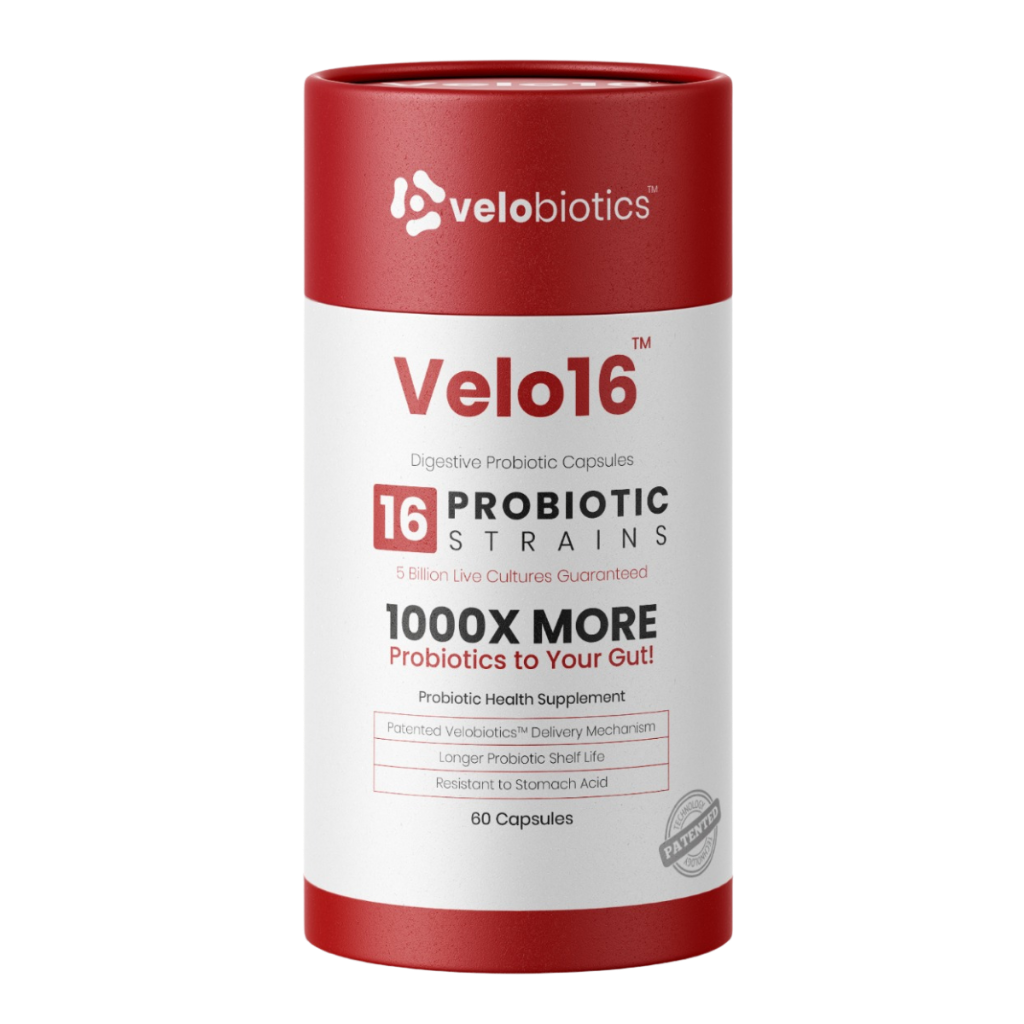
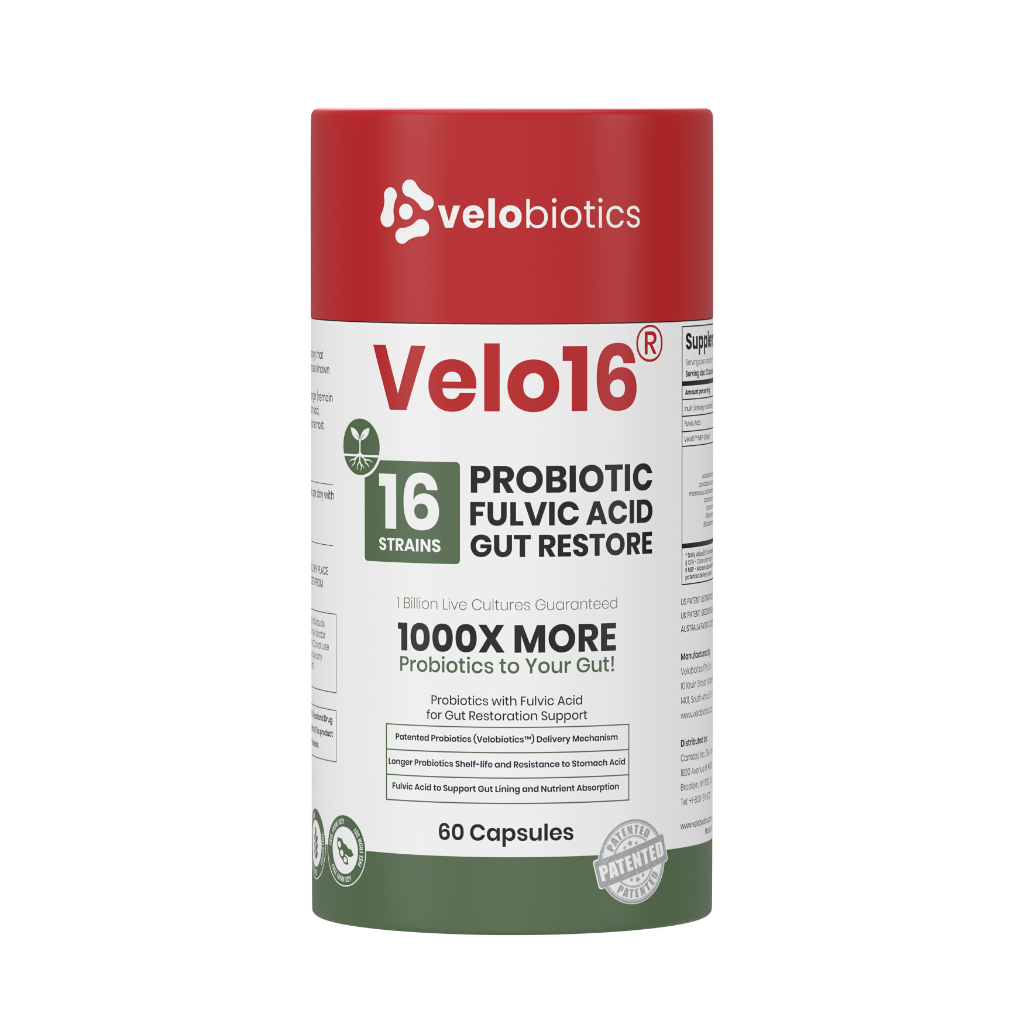
Fulvic Acid and Probiotics: The Gut Restoration Stack That's Changing Everything
By Dr. Chomba Chuma, MD | Velo16™ Health Journal
If you've been struggling with bloating, irregular digestion, skin breakouts, brain fog, or that persistent low-grade fatigue that no amount of sleep seems to fix — your gut may be trying to tell you something. In clinical practice, I see this pattern daily: patients who have tried every elimination diet, every probiotic off a pharmacy shelf, and every fibre supplement on the market, yet still feel like their gut is working against them rather than for them.
The missing piece, more often than not, is not what they're supplementing — it's how effectively those supplements are being absorbed and utilised at a cellular level. That is precisely where the conversation about fulvic acid gut health becomes transformative.
Today, I want to walk you through the science behind combining fulvic acid with probiotics — a synergistic pairing that is rapidly gaining traction in functional medicine circles worldwide, and one that forms the foundation of our Velo16™ Gut Health Collection. This is not a trend. This is emerging science meeting practical, results-driven supplementation.
Understanding the Gut Crisis: Why So Many South Africans Are Struggling
The statistics are sobering. According to the World Health Organization, non-communicable diseases — many of which are linked to gut dysbiosis and systemic inflammation — are on the rise globally, and South Africa is no exception. Our modern lifestyle is waging a daily war on our digestive systems.
The Modern Gut Under Siege
Consider what the average South African adult encounters on a regular basis:
- Repeated antibiotic courses for common infections, which devastate microbial diversity
- Ultra-processed foods high in refined sugars, seed oils, and synthetic additives
- Chronic psychological stress, which directly alters the gut-brain axis
- Environmental toxin exposure — pesticides, heavy metals, and air pollutants
- Mineral-depleted soils producing nutrient-poor food, even when we eat "healthily"
- Overuse of NSAIDs, proton pump inhibitors, and other medications that compromise gut lining integrity
Each of these factors contributes to a state known as gut dysbiosis — an imbalance in the microbial ecosystem of the gut — and more alarmingly, to leaky gut (intestinal hyperpermeability), where the tight junctions of the gut lining become compromised, allowing undigested food particles, toxins, and pathogens to pass into the bloodstream.
The Consequences of a Compromised Gut Barrier
Research published in the Journal of Clinical Gastroenterology has consistently linked gut barrier integrity disruption to a wide spectrum of conditions beyond digestive discomfort, including autoimmune disease, mood disorders, metabolic syndrome, chronic skin conditions, and food sensitivities.
"Intestinal permeability is not a disease itself — it is a gateway condition. Address the gut lining, restore the microbiome, and you often see a cascade of systemic improvements that no single medication could achieve." — Dr. Chomba Chuma, MD, Founder of Velo16™
The question becomes: how do we most effectively restore gut barrier integrity, rebuild microbial diversity, and enhance nutrient absorption simultaneously? The answer lies in understanding how fulvic acid and probiotics work — and crucially, how they work better together.
What Is Fulvic Acid? The Ancient Compound Science Is Rediscovering
Fulvic acid is a naturally occurring organic compound formed over millions of years through the microbial decomposition of organic matter in soil. It belongs to a broader group of compounds called humic substances and is found in particularly high concentrations in ancient, mineral-rich deposits known as shilajit or leonardite.
The fulvic acid benefits that are now being validated by modern research were long recognised in traditional Ayurvedic and African healing systems. But it's the emerging peer-reviewed science that is truly compelling.
The Molecular Magic of Fulvic Acid
What makes fulvic acid uniquely powerful is its extraordinary molecular structure. With a low molecular weight and numerous oxygen-containing functional groups, fulvic acid acts as nature's most efficient biological transporter. It can:
- Penetrate cell membranes with exceptional ease, delivering nutrients directly into cells
- Chelate (bind) minerals and heavy metals, making beneficial minerals bioavailable while aiding in the removal of toxic metals
- Act as a potent antioxidant, neutralising free radicals that damage gut tissue
- Modulate inflammatory pathways, reducing the chronic low-grade inflammation that underlies gut permeability
- Directly support tight junction protein expression, which is critical for maintaining gut barrier integrity
A landmark study on PubMed demonstrated that fulvic acid exhibits significant anti-inflammatory properties by inhibiting NF-κB signalling pathways — the same pathways implicated in inflammatory bowel conditions and leaky gut syndrome. You can review relevant research through PubMed/NCBI.
Fulvic Acid and Mineral Absorption: A Critical Link
One of the most underappreciated aspects of gut health is the role of minerals — particularly zinc, magnesium, and selenium — in maintaining gut lining integrity and immune function. Yet even a nutrient-dense diet can fail to deliver adequate minerals if gut permeability is compromised and absorption capacity is diminished.
Fulvic acid fundamentally changes this equation. By acting as a natural chelator and electrolyte carrier, it dramatically improves the bioavailability of dietary and supplemental minerals. Research published through Harvard Health Publishing supports the broader principle that mineral deficiencies — particularly zinc — are deeply intertwined with gut barrier dysfunction and immune dysregulation.
In practical terms: fulvic acid doesn't just help you absorb more minerals — it helps those minerals get to where they're needed most, at the cellular level.
The Probiotic Piece: More Than Just "Good Bacteria"
The term "probiotic" has been so liberally applied to everything from yoghurt to gummy bears that it has, for many people, lost its clinical meaning. Let me be precise: not all probiotics are created equal, and most commercial probiotic products on South African pharmacy shelves are significantly under-dosed, poorly formulated, or contain strains with limited evidence for specific therapeutic outcomes.
What Evidence-Based Probiotics Actually Do
According to Nature Microbiology, the human gut microbiome comprises an estimated 38 trillion microbial cells, outnumbering human cells in the body. This ecosystem performs functions that are absolutely foundational to health:
- Immune modulation — approximately 70–80% of the immune system is located in the gut, and the microbiome is its primary educator
- Neurotransmitter synthesis — over 90% of serotonin is produced in the gut, directly influencing mood, sleep, and cognitive function
- Short-chain fatty acid (SCFA) production — particularly butyrate, which is the primary fuel source for colonocytes (gut lining cells) and a critical regulator of gut barrier function
- Vitamin synthesis — including B vitamins and vitamin K2
- Pathogen defence — through competitive exclusion and bacteriocin production
The Post-Antibiotic Gut: A Restoration Emergency
If there is one scenario that demands an aggressive, targeted gut restore protocol, it is the post-antibiotic period. Antibiotics are often clinically necessary and life-saving — but their collateral damage to the microbiome is well-documented and, without intervention, can persist for months to years.
Studies indexed on PubMed/NCBI have shown that a single course of broad-spectrum antibiotics can reduce microbial diversity by up to 30%, with some species not recovering to baseline levels even 12 months later. This microbial vacuum creates conditions for opportunistic pathogens like Clostridioides difficile and Candida species to proliferate.
This is precisely why the choice of probiotic strains matters enormously post-antibiotics. Strains with demonstrated colonisation resistance, mucus layer adhesion, and immune-modulating properties — such as Lactobacillus rhamnosus GG, Bifidobacterium longum, and Saccharomyces boulardii — are the clinical standard, not generic "multi-strain" blends with undisclosed CFU counts.
Explore the evidence behind our formulations at The Velo16™ Science.
[INFOGRAPHIC_PLACEHOLDER: "The Fulvic Acid + Probiotic Synergy Map — How Each Component Supports Gut Restoration at the Cellular Level. Include: Gut Lining Repair → Fulvic Acid (tight junctions) + Butyrate-producing bacteria; Mineral Absorption → Fulvic Acid chelation + healthy epithelial cells; Microbial Diversity → Probiotic seeding + Fulvic Acid prebiotic effect; Inflammation Reduction → NF-κB inhibition (Fulvic Acid) + Immune modulation (Probiotics)"]
The Synergy Explained: Why Fulvic Acid and Probiotics Work Better Together
Now we arrive at the heart of this article — and the clinical insight that underpins our formulation philosophy at Velo16™. Fulvic acid and probiotics do not merely coexist in a supplement stack. They create a genuinely synergistic relationship, each amplifying the therapeutic effect of the other in ways that neither achieves alone.
Fulvic Acid as a Prebiotic Modulator
Emerging research suggests that fulvic acid may function as what some scientists are calling a "prebiotic modulator" — not a traditional prebiotic fibre, but a compound that creates a more favourable gut environment for beneficial bacteria to colonise and thrive. By modulating gut pH, reducing inflammatory cytokines that create hostile conditions for probiotic organisms, and neutralising toxins that would otherwise inhibit bacterial growth, fulvic acid effectively prepares the terrain for probiotics to do their work.
Think of it this way: if your gut lining is inflamed, your tight junctions are compromised, and your gut environment is dominated by inflammation and oxidative stress, introducing probiotics is like planting seeds in burnt soil. The seeds may be excellent quality, but the conditions for germination are hostile. Fulvic acid is the process of rehabilitating that soil.
Tight Junction Reinforcement: The Leaky Gut Connection
One of the most direct mechanisms by which this stack addresses leaky gut is through the combined effect on tight junction proteins — specifically claudin, occludin, and zonula occludens-1 (ZO-1). These proteins are the molecular "zippers" that hold gut epithelial cells together, preventing unwanted passage into the bloodstream.
Research indicates that fulvic acid upregulates the expression of these tight junction proteins, while specific probiotic strains — particularly Lactobacillus plantarum and Bifidobacterium infantis — also independently promote tight junction integrity through butyrate production and direct epithelial interaction. The combined effect on gut barrier integrity is additive and, in some models, synergistic.
Enhanced Probiotic Viability and Efficacy
Here's a clinical reality that most supplement marketing glosses over: the majority of probiotic organisms in a capsule are dead before they reach the colon. Gastric acid, bile salts, and the harsh upper gastrointestinal environment are formidable barriers. Survival rates for many commercial probiotic strains through this journey can be as low as 1–10%.
Fulvic acid's role here is remarkable. Its antioxidant properties help protect probiotic organisms from oxidative damage during transit. Its ability to modulate pH and bind protective organic molecules creates a more hospitable transit environment. Several formulation scientists have noted that fulvic acid may function as a natural delivery matrix for probiotic organisms, improving their colonic delivery and subsequent colonisation rates.
The Mineral-Microbiome Feedback Loop
Perhaps the most underexplored dimension of this synergy is the mineral-microbiome feedback loop. Specific minerals — zinc, magnesium, iron, and selenium — are not only essential for gut epithelial cell repair and immune function; they are also critical cofactors for probiotic metabolic activity. Many probiotic enzymatic processes require these minerals to function optimally.
When fulvic acid significantly enhances the bioavailability of these minerals, it simultaneously provides better substrate conditions for the probiotic organisms themselves, creating a positive feedback loop: healthier bacteria produce more SCFAs, which improve gut lining integrity, which further improves mineral absorption, which supports more robust probiotic activity.
This is the systems-biology approach to gut restore supplementation — addressing the gut not as a single organ but as an interconnected ecosystem.
The Velo16™ Approach: Formulation Philosophy and Who Benefits Most
At Velo16™, we do not formulate supplements based on what's trending. We formulate based on clinical need, mechanistic evidence, and the specific health challenges we observe in our South African patient population. The probiotics fulvic acid South Africa market has, until recently, been dominated by single-ingredient products that address only one piece of the gut health puzzle.
Who Should Consider a Fulvic Acid + Probiotic Protocol?
Based on clinical presentation and the evidence base, this combination is particularly indicated for:
- Post-antibiotic recovery — anyone who has completed a course of antibiotics in the past 12 months
- Diagnosed or suspected leaky gut — characterised by food sensitivities, chronic bloating, and systemic inflammation
- IBS and functional gut disorders — where microbiome dysbiosis is a documented contributing factor
- Chronic skin conditions — including adult acne, eczema, and rosacea, which often have gut-immune axis origins (learn more by taking our Take the Clear Skin Quiz)
- Persistent fatigue and brain fog — linked to impaired gut-brain axis signalling and nutrient malabsorption
- Those on plant-based or calorie-restricted diets — where mineral depletion and microbiome diversity may be concerns
- Anyone managing chronic stress — stress-induced gut permeability is a real and well-documented phenomenon
What to Expect: A Realistic Clinical Timeline
One of the most important conversations I have with patients beginning a gut restore protocol is around expectations and timeline. The gut microbiome is dynamic but not instantaneous in its response to intervention. Here is a general clinical framework:
- Weeks 1–2: Initial reduction in bloating and digestive discomfort as inflammation begins to subside and probiotic organisms begin to colonise
- Weeks 3–4: Improvement in stool consistency and frequency; early improvements in energy levels and sleep quality
- Months 2–3: More significant improvements in skin clarity, mood stability, and cognitive function as the gut-brain axis responds to restored microbiome balance
- Months 3–6: Sustained improvements in food tolerance, reduced systemic inflammation markers, and enhanced immune resilience
Consistency is non-negotiable. The microbiome responds to sustained intervention, not sporadic supplementation.
Browse our full range of evidence-based formulations at Shop All Velo16™ Products, or dive deeper into the research foundation at the The Velo16™ Science page.
Practical Guidance: Getting the Most From Your Gut Restore Stack
Supplementation is a lever — but it works within a broader lifestyle context. Here are the evidence-informed practices I recommend to maximise the efficacy of a fulvic acid and probiotic protocol:
Dietary Foundations
- Prioritise diverse plant foods — aim for 30+ different plant species per week to support microbiome diversity, as recommended in landmark microbiome research
- Include fermented foods daily: kefir, sauerkraut, kimchi, and unsweetened yoghurt all contribute living organisms and postbiotics
- Reduce ultra-processed foods, refined sugars, and alcohol — all documented disruptors of gut barrier integrity
- Ensure adequate fibre intake (25–38g daily) to fuel SCFA-producing bacteria
Supplement Timing and Practical Tips
- Take probiotics on an empty stomach or 30 minutes before meals for optimal gastric transit and colonisation
- Fulvic acid can be taken with meals to enhance mineral absorption from food
- Stay well hydrated — fulvic acid's cellular transport function is optimised in a well-hydrated system
- Avoid taking probiotics simultaneously with antibiotics — space them by at least 2 hours
Lifestyle Factors That Directly Impact Gut Restoration
- Manage chronic stress through evidence-based practices: mindfulness, breathwork, regular exercise, and adequate sleep all directly modulate gut permeability and microbiome composition
- Aim for 7–9 hours of quality sleep — gut repair processes are predominantly nocturnal
- Regular moderate exercise has been shown to increase microbial diversity and SCFA production
For more evidence-based health guidance, explore the Velo16™ Health Journal, where I regularly publish clinically-grounded insights on gut health, microbiome science, and functional medicine.
Frequently Asked Questions
Can I take fulvic acid and probiotics together at the same time?
Yes, and in fact, their concurrent use appears to offer synergistic benefits. Fulvic acid may help protect probiotic organisms during gastrointestinal transit and creates a more favourable gut environment for colonisation. However, for practical scheduling, some clinicians recommend taking probiotics on an empty stomach and fulvic acid with meals. Follow the specific dosing guidance on your Velo16™ Gut Restore product.
How long does it take to see results from a gut restore supplement protocol?
Most individuals notice initial improvements in bloating, digestive comfort, and energy within 2–4 weeks. More significant and systemic improvements — including skin clarity, mood stability, and food tolerance — typically become apparent between months 2 and 4. The gut microbiome responds to sustained, consistent intervention rather than short-term supplementation. A minimum 90-day commitment is the standard clinical recommendation.
Is fulvic acid safe for long-term use?
Fulvic acid has a long history of use in traditional medicine systems and an emerging safety profile in modern research. At therapeutic doses, it is generally well-tolerated. It should be sourced from reputable, independently tested suppliers to ensure freedom from heavy metal contamination — a quality standard that Velo16™ holds to rigorously. Individuals who are pregnant, breastfeeding, or on immunosuppressive medications should consult their physician before beginning any new supplement protocol.
What makes Velo16™ Gut Restore different from other probiotic supplements available in South Africa?
Most probiotic products on the South African market address only one dimension of gut health — microbial replenishment. The Velo16™ formulation philosophy recognises that sustainable gut restoration requires a multi-mechanism approach: reinforcing the gut barrier, restoring microbial diversity with evidence-backed strains at clinically relevant doses, and optimising the cellular environment for nutrient absorption. The inclusion of pharmaceutical-grade fulvic acid in our gut restore formulation is specifically designed to address all three simultaneously. Explore the full evidence base at The Velo16™ Science.
Can gut health supplementation help with skin conditions like acne and eczema?
The gut-skin axis is one of the most robustly evidenced connections in functional medicine. Intestinal permeability allows inflammatory mediators and lipopolysaccharides (LPS) to enter systemic circulation, triggering immune responses that manifest as skin inflammation, acne, eczema, and rosacea. Restoring gut barrier integrity and microbial balance has been shown in multiple studies to reduce systemic inflammatory load and improve skin conditions. If you're experiencing persistent skin issues alongside digestive complaints, I strongly encourage you to Take the Clear Skin Quiz for personalised guidance.
Ready to Restore Your Gut from the Inside Out?
The science is clear: lasting gut health is not achieved by a single intervention. It requires a comprehensive, synergistic approach that addresses gut barrier integrity, microbial diversity, and cellular nutrient delivery simultaneously. That is exactly what the Velo16™ Probiotics + Fulvic Acid Gut Restore formulation is designed to deliver.
Whether you're recovering from antibiotics, managing a gut condition, or simply committed to optimising your health from the foundation up — this is the stack that makes a measurable difference.
- ✔ Evidence-based strains at clinically relevant doses
- ✔ Pharmaceutical-grade fulvic acid, independently tested
- ✔ Formulated by a functional medicine physician for the South African health context
- ✔ Designed for sustained, systemic gut restoration