

Magnesium and Your Gut: The Mineral Most South Africans Are Deficient In
By Dr. Chomba Chuma, MD — Founder, Velo16™ | Velo16™ Health Journal
If you struggle to fall asleep, feel wired but exhausted most evenings, experience unexplained muscle cramps, or notice your anxiety creeping up without an obvious cause — there is a very real chance your body is running low on one of its most critical minerals. Magnesium deficiency is not a rare clinical curiosity. It is, by most functional medicine standards, one of the most widespread and systematically overlooked nutritional shortfalls in the modern world — and South Africa is no exception.
What makes this conversation more interesting, and more urgent, is the role your gut plays in this story. Your intestinal microbiome — the vast ecosystem of bacteria, fungi, and other microorganisms lining your digestive tract — does not merely process food. It actively governs how much magnesium your body can absorb, retain, and use. When your gut is compromised, even a magnesium-rich diet may not be enough to protect you from the downstream consequences: disrupted sleep, heightened anxiety, chronic fatigue, and systemic inflammation.
In this article, I want to walk you through the science in plain language — why magnesium depletion is so common in South Africa, how gut dysbiosis directly impairs mineral absorption, and why pairing magnesium glycinate with a high-quality probiotic is the most clinically intelligent approach to restoring this critical mineral and reclaiming your sleep and stress resilience.
Why Magnesium Deficiency Is So Prevalent in South Africa
Magnesium is the fourth most abundant mineral in the human body and is involved in over 300 enzymatic reactions — from DNA synthesis and protein production to nerve conduction, blood sugar regulation, and the activation of vitamin D. Yet despite this biological importance, large portions of the global population — and South Africans specifically — are chronically under-supplied.
Soil Depletion and the Farming Factor
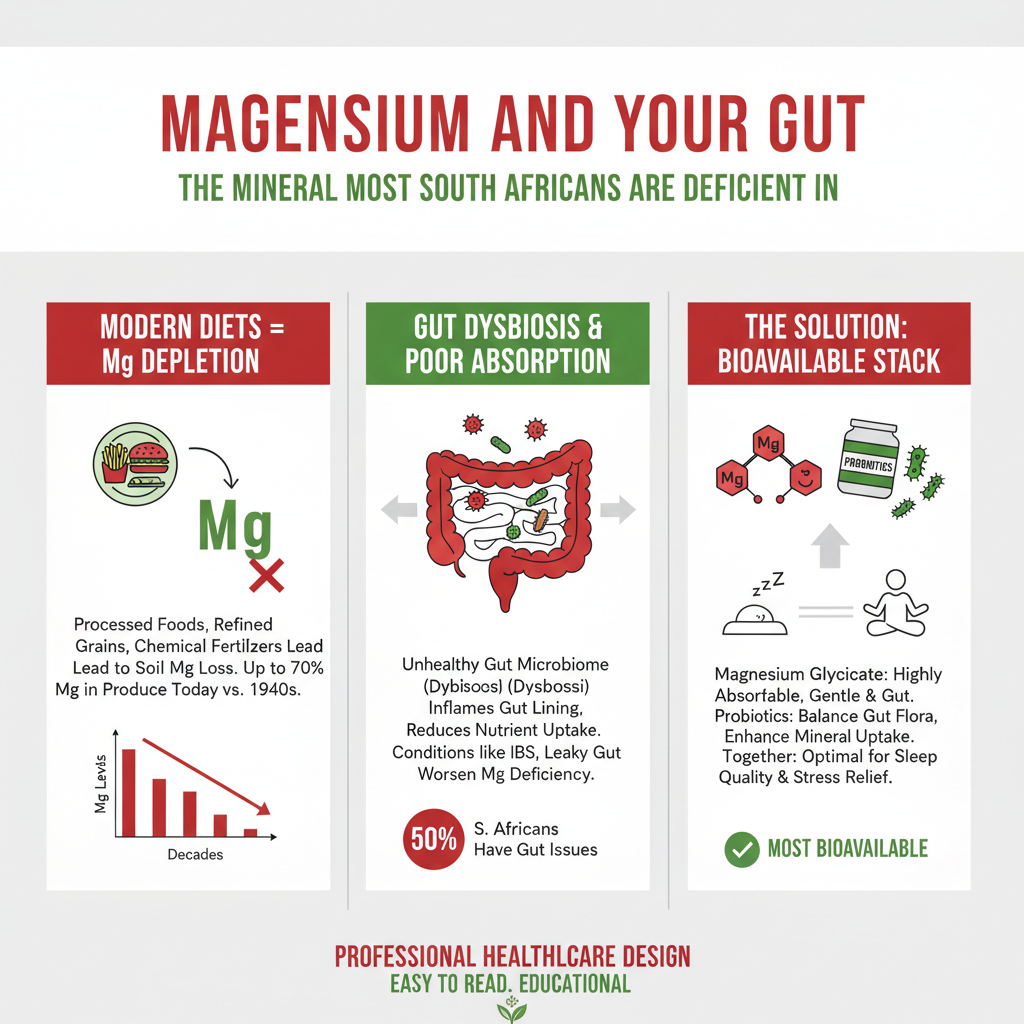
South Africa's agricultural soils, particularly in high-yield commercial farming regions, have been significantly depleted of trace minerals over decades of intensive monocropping and chemical fertilisation. A landmark review published in the Journal of Crop Science and Biotechnology confirmed that modern intensive agriculture consistently reduces the micronutrient density of crops — magnesium included. Put simply: the spinach, nuts, and legumes on your plate today contain meaningfully less magnesium than the same foods did fifty years ago.
The Processed Food Problem
South Africa's urban dietary patterns have shifted dramatically toward ultra-processed foods — refined grains, packaged snacks, fast food, and sugar-sweetened beverages. The refining process strips grains of their magnesium-rich germ and bran layers. White bread, white rice, and most breakfast cereals contain a fraction of the magnesium found in their whole-food counterparts. According to the World Health Organisation, diets high in processed foods are a leading driver of micronutrient deficiencies across low- and middle-income countries.
The Stress-Magnesium Drain Cycle
Here is a vicious cycle that functional medicine practitioners see constantly: stress depletes magnesium, and magnesium deficiency amplifies the stress response. When cortisol rises — during work pressure, financial stress, or poor sleep — the kidneys excrete more magnesium in the urine. This is not a pathological response; it is a physiological one. But in a population already running on low magnesium stores, this cortisol-driven urinary loss accelerates depletion rapidly.
"An estimated 50–60% of people in developed and developing nations do not meet the recommended daily intake of magnesium from dietary sources alone." — Nutrients Journal, NCBI, 2017
Add to this the widespread use of proton pump inhibitors (PPIs) for acid reflux — one of South Africa's most commonly prescribed drug classes — and the picture becomes even more concerning. PPIs are well-documented to impair magnesium absorption in the gut, and long-term use carries a formal FDA warning for hypomagnesaemia. Other common culprits include diuretics, antibiotics, and excessive alcohol consumption.
How Much Magnesium Do You Actually Need?
- Adult men: 400–420 mg per day
- Adult women: 310–320 mg per day
- Pregnant women: 350–360 mg per day
- Most South Africans consuming a standard urban diet get approximately 150–250 mg per day — well below optimal
Recognising Magnesium Deficiency: Symptoms Beyond Muscle Cramps
Most people associate magnesium deficiency with muscle cramps or twitching — and yes, those are classic signs. But the clinical picture of magnesium deficiency South Africa patients present with in functional medicine practice is far broader and more nuanced.
Sleep Disruption
Magnesium plays a direct role in regulating the nervous system's transition from sympathetic (fight-or-flight) to parasympathetic (rest-and-digest) activity. It binds to GABA receptors in the brain — the same receptors targeted by sleep medications — promoting neurological calm. It also regulates the body's production and release of melatonin, the hormone that governs your circadian rhythm. Low magnesium levels disrupt both of these pathways, leading to difficulty falling asleep, frequent night waking, and non-restorative sleep. The connection between magnesium sleep quality and adequate magnesium status is supported by multiple randomised controlled trials, including a widely cited study published in the Journal of Research in Medical Sciences.
Anxiety and Mood Dysregulation
The relationship between magnesium anxiety and deficiency is increasingly well-supported in the literature. Magnesium modulates the hypothalamic-pituitary-adrenal (HPA) axis — the body's central stress response system. Without adequate magnesium, the HPA axis becomes hyperreactive, flooding the body with cortisol and adrenaline in response to stimuli that would otherwise be manageable. A 2017 systematic review published in Nutrients (NCBI) concluded that magnesium supplementation showed consistent benefits in subjective anxiety measures, particularly in individuals with low baseline magnesium status.
Other Common Signs of Magnesium Depletion
- Persistent fatigue despite adequate sleep
- Headaches and migraines
- Constipation and irregular bowel movements
- Heart palpitations
- Elevated fasting blood glucose
- PMS and menstrual cramping in women
- Difficulty concentrating ("brain fog")
- Increased sensitivity to noise and light
If three or more of these symptoms resonate with you, exploring magnesium status — either through a red blood cell (RBC) magnesium test or through a therapeutic supplementation trial — is a clinically reasonable first step.
The Gut-Magnesium Connection: Why Your Microbiome Controls What You Absorb
This is where functional medicine diverges most sharply from conventional dietary advice. We do not simply ask, "Are you eating enough magnesium?" We ask, "Is your gut capable of absorbing the magnesium you are consuming?" These are profoundly different questions — and the answer to the second one changes everything.
Where and How Magnesium Is Absorbed
Magnesium absorption primarily occurs in the small intestine, with a secondary site of absorption in the colon. Two distinct mechanisms are involved: a saturable transcellular pathway (active transport via TRPM6 and TRPM7 channels) and a paracellular pathway (passive diffusion driven by concentration gradients). The transcellular pathway is particularly sensitive to the health of the intestinal epithelium — the single-cell-thick lining of your gut wall. When this lining is compromised, magnesium absorption efficiency drops significantly.
How Dysbiosis Impairs Mineral Absorption
Gut dysbiosis — an imbalance in the composition and diversity of the intestinal microbiome — has wide-ranging consequences for nutrient absorption. Research published in Nature Microbiology has shown that specific bacterial communities in the gut actively regulate mineral transport and intestinal permeability. When beneficial bacterial populations are depleted — as occurs with antibiotic use, high-sugar diets, chronic stress, or excessive alcohol consumption — several absorption-impairing mechanisms are triggered simultaneously:
- Increased intestinal permeability ("leaky gut"): Tight junctions between epithelial cells loosen, disrupting the paracellular magnesium absorption pathway
- Reduced short-chain fatty acid (SCFA) production: Beneficial bacteria ferment fibre into SCFAs like butyrate, which lower luminal pH and enhance magnesium solubility and uptake. Without adequate SCFA production, colonic magnesium absorption falls
- Elevated intestinal inflammation: Dysbiosis-driven immune activation damages absorptive enterocytes and downregulates TRPM6/7 channel expression
- Altered bile acid metabolism: A dysbiotic microbiome disrupts bile acid recycling, impairing the fat-soluble cofactors that support magnesium-dependent enzymatic reactions
"The gut microbiota regulates intestinal mineral absorption through multiple mechanisms, including modulation of epithelial barrier function, pH regulation, and SCFA-mediated transporter expression. Dysbiosis meaningfully impairs this regulatory capacity." — Journal of Clinical Gastroenterology, Microbiome & Mineral Absorption Review
The Probiotic-Magnesium Synergy
This is the core clinical insight that informs the Velo16™ approach to gut health supplementation. Restoring the microbiome with clinically validated probiotic strains creates the intestinal conditions necessary for optimal gut magnesium absorption. Specifically, strains from the Lactobacillus and Bifidobacterium families have been shown to:
- Strengthen tight junction proteins (ZO-1, occludin, claudin), restoring epithelial barrier integrity
- Increase SCFA production, lowering colonic pH and enhancing divalent mineral solubility
- Reduce pro-inflammatory cytokines (TNF-α, IL-6) that damage magnesium-transporting enterocytes
- Produce organic acids that chelate magnesium into more bioavailable forms within the gut lumen
The implication is direct: taking magnesium without addressing gut dysbiosis is like filling a bucket with holes. You need both the mineral and the gut environment capable of absorbing it efficiently.
Why Magnesium Glycinate Is the Superior Form for Sleep and Stress
Not all magnesium supplements are created equal. The form of magnesium determines its bioavailability, its rate of absorption, and the specific tissues it preferentially reaches. This distinction matters enormously in clinical practice.
The Forms Worth Knowing
- Magnesium oxide: The most common and cheapest form. Only 4% bioavailability. Primarily acts as a laxative. Poorly suited for addressing tissue deficiency
- Magnesium citrate: Better absorbed (~30%), with mild laxative effects at higher doses. Useful for constipation but not optimal for neurological benefits
- Magnesium chloride: Reasonable absorption but can cause digestive upset
- Magnesium glycinate (bisglycinate): Magnesium bound to the amino acid glycine. Highly bioavailable (~80%), gentle on the gut, and with distinctive advantages for sleep and anxiety — making it the gold standard for neuromuscular and neurological applications
The Glycine Advantage
The genius of magnesium glycinate lies in its dual action. When absorbed, the magnesium component supports GABA receptor activity, HPA axis regulation, and melatonin synthesis. Simultaneously, glycine — the amino acid chelate carrier — exerts its own independent neurological effects. Glycine is an inhibitory neurotransmitter in its own right, shown in clinical research to reduce core body temperature during sleep onset, improve sleep quality scores, and reduce daytime fatigue. A landmark study published by Frontiers in Neurology (NCBI) demonstrated that glycine supplementation significantly improved subjective sleep quality, sleep onset latency, and next-day cognitive performance.
The magnesium glycinate benefits for sleep and stress are therefore not just about magnesium alone — they represent a synergistic dual-compound benefit within a single molecule.
Magnesium Glycinate and Gut Tolerance
One of the most common reasons patients abandon magnesium supplementation is digestive discomfort — the loose stools, bloating, and urgency associated with magnesium oxide and, to a lesser extent, magnesium citrate. Magnesium glycinate is absorbed primarily in the small intestine via amino acid transport channels, meaning very little unabsorbed magnesium reaches the colon to exert an osmotic laxative effect. For patients with irritable bowel syndrome (IBS), inflammatory bowel disease (IBD), or existing gut sensitivity — a significant proportion of South African adults — this tolerability advantage is clinically significant.
To explore the full formulation rationale behind our product development, visit The Velo16™ Science page where we detail the evidence base for each ingredient we include and exclude.
The Velo16™ Approach: Probiotics + Magnesium Glycinate as a Combined Protocol
In functional medicine, we rarely view supplements in isolation. The body operates as an interconnected system, and supporting one pathway almost always requires supporting the upstream and downstream variables that govern it. The pairing of a multi-strain probiotic with magnesium glycinate represents exactly this kind of systems-level thinking.
Step 1: Restore the Gut Environment
Velo16™ Probiotics contain clinically validated strains selected specifically for their ability to restore intestinal barrier integrity, reduce gut inflammation, and upregulate SCFA-producing bacterial populations. Before the body can effectively absorb and utilise supplemental magnesium, the absorptive surface — the gut lining — needs to be in optimal condition. This is not a theoretical concern; it is a measurable clinical reality that the Journal of Clinical Gastroenterology has consistently highlighted in its reviews of micronutrient malabsorption syndromes.
Step 2: Deliver the Most Bioavailable Magnesium Form
Once the gut environment is primed, magnesium glycinate delivers elemental magnesium directly to the tissues that need it most: neuronal tissue (for sleep and anxiety regulation), smooth and skeletal muscle (for relaxation and cramp prevention), and the adrenal glands (for cortisol modulation). The glycine component further enhances the neurological calming effect, making this stack particularly effective when taken 60–90 minutes before sleep.
Step 3: Sustain the Protocol
Meaningful improvements in sleep quality, stress resilience, and gut health are rarely achieved overnight. Clinical experience and the research literature both suggest that consistent supplementation over a minimum of 4–8 weeks is required to replete depleted tissue stores and allow probiotic-mediated microbiome remodelling to take effect. The good news: most patients report improvements in sleep onset and morning waking within the first two weeks — early positive feedback that supports protocol adherence.
For South Africans looking to begin this protocol, our Velo16™ Sleep & Stress Collection was developed specifically with this combined gut-mineral approach in mind. Every formulation decision was made with the South African dietary context, common gut health challenges, and the published clinical evidence base at the forefront.
Lifestyle Factors That Amplify Results
- Increase dietary magnesium sources: Dark leafy greens (spinach, Swiss chard), pumpkin seeds, almonds, black beans, avocado, and dark chocolate (70%+ cacao) are excellent whole-food sources available in South Africa
- Reduce alcohol consumption: Even moderate alcohol intake significantly increases urinary magnesium excretion
- Filter drinking water: Reverse osmosis and some municipal water treatments remove naturally occurring magnesium from tap water
- Manage stress actively: Mindfulness practice, exercise, and adequate sleep hygiene reduce cortisol-driven magnesium excretion
- Review medications with your doctor: PPIs, diuretics, and certain antibiotics — discuss magnesium monitoring with your healthcare provider if you use these long-term
You can read more evidence-based health and gut wellness content across all our topic areas in the Velo16™ Health Journal — our ongoing resource for South Africans committed to proactive, functional health.
Frequently Asked Questions
What are the main magnesium glycinate benefits compared to other forms of magnesium?
Magnesium glycinate (also called magnesium bisglycinate) offers approximately 80% bioavailability — significantly higher than magnesium oxide (~4%) or magnesium citrate (~30%). Because it is chelated to the amino acid glycine, it is absorbed via amino acid transport channels rather than competing with other minerals for absorption. This also means it is far gentler on the digestive system, with minimal laxative effect. The glycine component provides additional neurological benefits independent of the magnesium itself, including improved sleep onset and reduced core body temperature — making magnesium glycinate the preferred form specifically for sleep and stress applications.
How does magnesium deficiency specifically affect sleep quality?
Magnesium plays several direct roles in sleep physiology. It binds to and activates GABA (gamma-aminobutyric acid) receptors in the brain, promoting neural inhibition and the subjective sense of calm that precedes sleep. It is also required for the enzymatic conversion of tryptophan to serotonin and subsequently to melatonin — the hormone that governs your sleep-wake cycle. Additionally, magnesium regulates the HPA stress axis, helping to reduce evening cortisol levels that would otherwise delay sleep onset. Multiple randomised controlled trials, including research published on NCBI, have demonstrated that magnesium supplementation improves sleep onset latency, sleep efficiency, and early-morning awakening, particularly in older adults and those with confirmed low magnesium status.
Can gut dysbiosis really prevent magnesium from being absorbed even if I eat enough?
Yes — and this is one of the most underappreciated aspects of micronutrient deficiency. Gut dysbiosis damages the intestinal epithelium, loosens tight junctions, reduces SCFA production, and creates an inflammatory environment that impairs the specific magnesium transport channels (TRPM6 and TRPM7) needed for active absorption. Research published in Nature Microbiology has demonstrated that the composition of the gut microbiome directly regulates intestinal mineral transport efficiency. This is why addressing gut health — through a quality probiotic — is a critical first step in resolving magnesium deficiency, not just increasing dietary or supplemental magnesium intake.
How long does it take for magnesium glycinate supplementation to show results for anxiety and sleep?
Most people notice initial improvements in sleep quality — particularly reduced nighttime waking and easier sleep onset — within 1–2 weeks of consistent use. More robust improvements in anxiety resilience, daytime energy, and mood typically become apparent after 4–8 weeks of consistent supplementation, which corresponds to the time required to meaningfully replete depleted intracellular magnesium stores. Pairing magnesium glycinate with a probiotic may accelerate results by improving gut absorption efficiency from the outset. As with all supplements, consistency is more important than dose — daily use at the recommended amount consistently outperforms higher occasional doses.
Is magnesium supplementation safe, and are there any contraindications?
Magnesium glycinate is considered very safe for the vast majority of healthy adults when taken at recommended doses (typically 200–400 mg elemental magnesium per day). The most common side effect at excessive doses is loose stools — though this is far less common with glycinate than with oxide or citrate forms. The primary contraindications are kidney disease (the kidneys regulate magnesium excretion; impaired renal function can lead to accumulation) and the concurrent use of certain antibiotics (tetracyclines, fluoroquinolones) or bisphosphonates, as magnesium can reduce their absorption. If you are pregnant, breastfeeding, or managing a chronic health condition, please consult your healthcare provider before beginning any new supplement protocol.
Ready to Support Your Sleep, Stress, and Gut Health?
Magnesium deficiency is not a rare condition — it is the predictable consequence of modern food systems, high-stress lifestyles, and compromised gut health. The good news is that it is both measurable and addressable, and the science supporting targeted supplementation with the right form of magnesium, paired with gut microbiome restoration, is robust and growing.
At Velo16™, our formulations begin with the clinical evidence and the specific nutritional challenges facing South African adults. Our probiotics and magnesium glycinate are not generic supplements — they are deliberately paired tools designed to work together, addressing both the root causes of mineral depletion and the absorptive capacity that determines whether any intervention actually works at the cellular level.
- 🛒 Explore our Velo16™ Sleep & Stress Collection — formulated specifically for magnesium repletion, sleep quality, and stress resilience
- 🔬 Read the evidence behind every ingredient at The Velo16™ Science
- 🛍️ Browse the full Velo16™ range at our Shop All Velo16™ Products page
- ✨ Not sure where to start? Take the Clear Skin Quiz to discover whether gut imbalance may be driving your skin and health concerns
Your gut is the foundation of your health. Give it what it needs to work for you — starting tonight.