
Probiotics for Women: Hormones, Vaginal Health and the Gut Connection
By Dr. Chomba Chuma, MD | Velo16™ Health Journal
If you have ever felt that your hormones, your digestion, and your overall wellbeing are all tangled together in ways that no single doctor has fully explained to you, you are not imagining it. The science of probiotics women's health has advanced dramatically over the past decade, revealing a sophisticated biological web connecting your gut bacteria to your oestrogen levels, your vaginal microbiome, your menstrual cycle, and even your mood. As a functional medicine physician, I spend much of my clinical practice helping women in South Africa untangle exactly this web — and the answers consistently lead back to the gut.
This article is your comprehensive guide to understanding how the gut microbiome governs hormonal health in women, why the vaginal microbiome deserves as much attention as the gut microbiome, and how the right probiotic formulation can be a genuinely transformative tool for women's health at every stage of life. We will explore the cutting-edge science of the oestrobolome, the gut-vaginal axis, and the clinical evidence supporting targeted probiotic supplementation — and I will show you exactly what to look for when choosing a probiotic as a woman.
The Oestrobolome: Your Gut's Hormone Control Centre
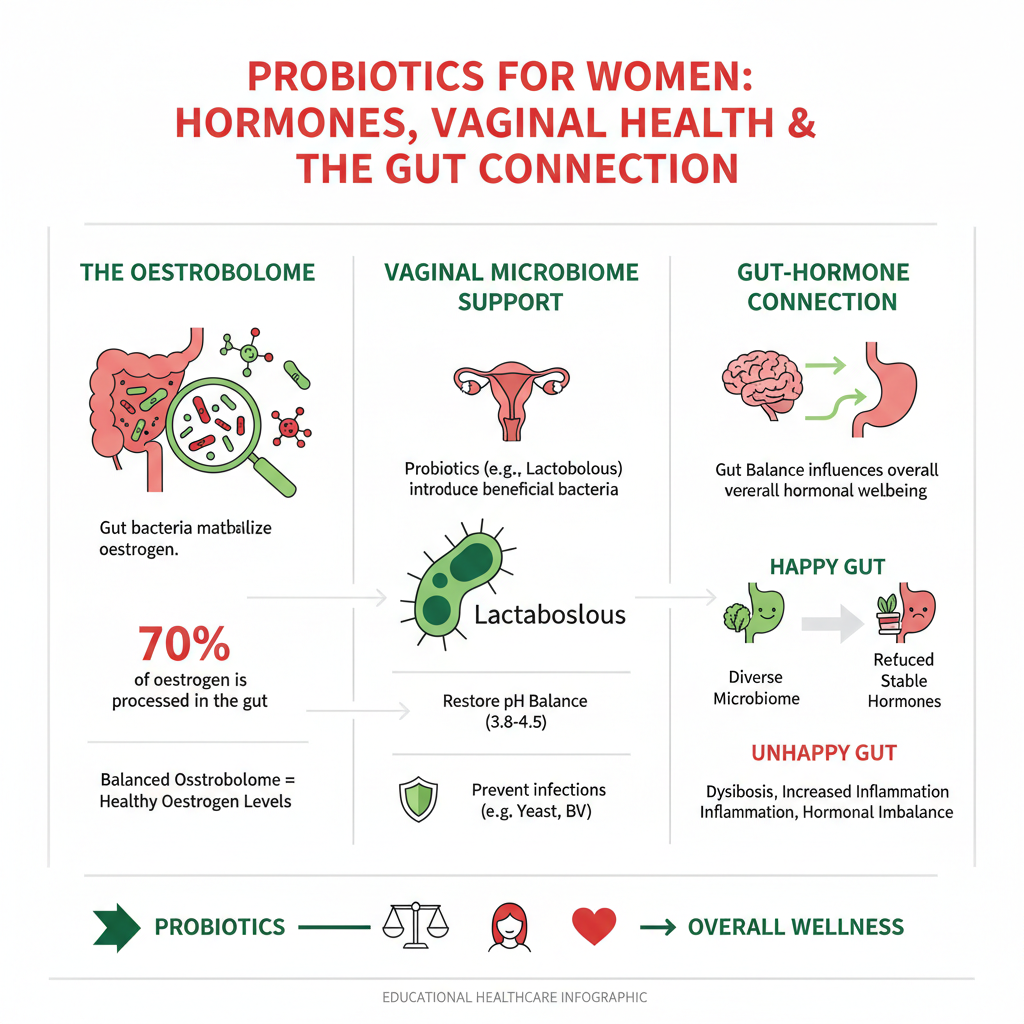
Most women are surprised to learn that a specialised community of gut bacteria — collectively called the oestrobolome — plays a central role in regulating circulating oestrogen levels in the body. This is not a fringe concept. Research published in Nature Microbiology and peer-reviewed gastroenterology journals has firmly established that the composition of your gut microbiome directly influences how oestrogen is processed, recycled, and excreted.
How Oestrogen Circulates Through the Gut
Here is how the cycle works: oestrogen produced by the ovaries (and, after menopause, by fat tissue and the adrenal glands) is metabolised in the liver, conjugated — essentially packaged for excretion — and sent to the gut via bile. Under normal circumstances, a proportion of this conjugated oestrogen is deconjugated by an enzyme called beta-glucuronidase, produced by specific gut bacteria. This deconjugated oestrogen is then reabsorbed into circulation through a process called enterohepatic recirculation.
The critical insight here is that the level of beta-glucuronidase activity in your gut — and therefore the amount of oestrogen that gets recycled back into your bloodstream — is directly governed by the species diversity and composition of your gut microbiome. A dysbiotic gut (one with an imbalanced bacterial community) can either dramatically increase oestrogen recirculation, contributing to oestrogen dominance, or decrease it, accelerating symptoms of oestrogen deficiency.
"The gut microbiome acts as a second endocrine organ in women — its influence on oestrogen metabolism rivals that of the liver itself."
— Baker JM, et al. "Estrogen-gut microbiome axis: Physiological and clinical implications." Maturitas, 2017. PubMed
What Happens When the Oestrobolome Is Disrupted?
When the oestrobolome is disrupted — by antibiotic use, a poor diet, chronic stress, or illness — the consequences for women's hormonal health can be wide-ranging and significant. Research has linked gut hormones women imbalances arising from a disrupted oestrobolome to:
- Polycystic ovarian syndrome (PCOS)
- Endometriosis
- Oestrogen-receptor positive breast cancer risk
- Perimenopausal and menopausal symptom severity
- Premenstrual syndrome (PMS) and premenstrual dysphoric disorder (PMDD)
- Irregular or painful menstrual cycles
- Reduced bone density
- Mood disturbances, anxiety, and depression
A landmark 2019 study published in the Journal of Clinical Gastroenterology found that women with higher microbial diversity in the gut demonstrated more stable oestrogen metabolite profiles and reported fewer severe PMS symptoms compared to women with lower gut diversity. This is precisely why probiotics hormonal balance is no longer a wellness buzzword — it is a clinically relevant therapeutic target.
Probiotics and Menstrual Health: What the Research Shows
The relationship between probiotics menstrual health and gut bacteria is an area of rapidly expanding clinical research. For many women, the menstrual cycle is a monthly barometer of hormonal health — and when things go wrong, the gut is increasingly implicated.
PMS, PMDD and Gut Inflammation
Premenstrual syndrome affects an estimated 75% of menstruating women to some degree, with the more severe PMDD affecting between 3–8%, according to the World Health Organization. While progesterone fluctuations are the traditionally cited driver of PMS, emerging evidence suggests that gut-derived inflammation and serotonin production play equally important roles.
Approximately 90% of the body's serotonin is produced in the gut — not the brain. Serotonin fluctuations across the menstrual cycle are well-documented contributors to mood-related PMS symptoms. Gut bacteria, particularly species of Lactobacillus and Bifidobacterium, directly support intestinal serotonin production by influencing enterochromaffin cells in the gut lining. A disrupted microbiome therefore means disrupted serotonin — which translates directly into the irritability, anxiety, and low mood that characterise PMS.
Clinical Insight: A 2021 randomised controlled trial published on PubMed/NCBI demonstrated that women taking a multi-strain Lactobacillus probiotic for 8 weeks reported statistically significant reductions in PMS severity scores, bloating, and mood disturbances compared to placebo.
Endometriosis and the Gut Microbiome
Endometriosis, which affects an estimated 1 in 10 South African women of reproductive age, is an inflammatory, oestrogen-dependent condition. Recent research has found that women with endometriosis show distinct gut microbiome profiles — characterised by reduced Lactobacillus abundance and elevated inflammatory Gram-negative bacteria — compared to women without the condition. The oestrobolome disruption in these women may contribute to elevated circulating oestrogen, which in turn feeds lesion growth. While probiotics are not a cure for endometriosis, supporting a healthy gut microbiome is emerging as an important adjunct strategy in functional medicine management of this condition.
PCOS and Insulin-Oestrogen Crosstalk
PCOS is the most common hormonal disorder in women of reproductive age, and its relationship with gut health is multifaceted. Women with PCOS tend to have significantly reduced gut microbial diversity and elevated intestinal permeability (leaky gut), which drives systemic inflammation and worsens insulin resistance — a key driver of PCOS pathology. A disrupted oestrobolome in PCOS also contributes to aberrant oestrogen and androgen metabolism. Targeted probiotic supplementation has shown promise in clinical studies for improving insulin sensitivity, reducing androgen levels, and improving menstrual regularity in women with PCOS.
To understand the full science behind how we formulate our products to address these mechanisms, visit The Velo16™ Science page.
The Vaginal Microbiome: A Separate Ecosystem That Needs Attention
Beyond the gut, women carry a second critically important microbial ecosystem: the vaginal microbiome. Unlike the gut, which thrives on bacterial diversity, the healthy vaginal microbiome is characterised by a remarkably low-diversity community dominated by Lactobacillus species — particularly Lactobacillus crispatus, L. iners, L. gasseri, and L. jensenii.
Why Lactobacillus Dominance in the Vagina Matters
These Lactobacillus species perform several essential protective functions in vaginal health:
- Lactic acid production: They produce lactic acid, maintaining the vaginal pH below 4.5 — an acidic environment that is inhospitable to pathogenic bacteria and fungi.
- Hydrogen peroxide production: Some strains produce hydrogen peroxide, which has direct antimicrobial activity against pathogens including Gardnerella vaginalis and Candida albicans.
- Bacteriocin production: These bacteria produce bacteriocins — natural antimicrobial peptides — that inhibit the growth of harmful organisms.
- Biofilm formation: Lactobacillus forms a protective biofilm on the vaginal epithelium, competitively excluding pathogens from adhering to vaginal cells.
When Lactobacillus dominance is lost — a state called vaginal dysbiosis — the consequences can be immediate and distressing. Bacterial vaginosis (BV), vulvovaginal candidiasis (thrush), aerobic vaginitis, and increased susceptibility to sexually transmitted infections (including HIV) are all associated with vaginal dysbiosis.
The Gut-Vaginal Axis
Here is where the science becomes particularly fascinating for women: there is a direct anatomical and microbiological connection between the gut microbiome and the vaginal microbiome. Research published in NCBI has demonstrated that gut-resident Lactobacillus strains can colonise the vaginal tract through perineal migration, making gut health a direct upstream determinant of vaginal microbiome health.
This means that when you take a well-formulated oral probiotic containing clinically validated Lactobacillus strains, you are not only supporting your gut — you are potentially inoculating and supporting your vaginal microbiome as well. For women who suffer from recurrent BV or thrush, this gut-vaginal axis is a game-changing therapeutic consideration.
Key Statistic: Bacterial vaginosis is the most common vaginal condition in women of reproductive age worldwide, affecting an estimated 21–33% of women globally, according to research cited by the World Health Organization. Recurrence rates after antibiotic treatment remain stubbornly high at over 50% within 12 months — highlighting the urgent need for microbiome-based approaches.
Oestrogen's Role in Vaginal Lactobacillus Colonisation
There is a deeply important bidirectional relationship between oestrogen and the vaginal microbiome. Oestrogen stimulates vaginal epithelial cells to produce glycogen, which serves as the primary food source for Lactobacillus species. As oestrogen levels decline — during perimenopause, menopause, or certain phases of the menstrual cycle — glycogen production falls, Lactobacillus populations decline, and vaginal dysbiosis risk increases. This explains why post-menopausal women commonly experience genitourinary symptoms including dryness, recurrent infections, and discomfort.
Supporting the oestrobolome through targeted probiotics therefore has a cascading positive effect on vaginal health by helping to maintain healthy oestrogen levels — which in turn maintain the glycogen-rich environment that Lactobacillus needs to thrive.
Choosing the Right Probiotic as a Woman: Strains, Doses and Delivery
Not all probiotics are created equal — and when it comes to women's probiotic South Africa formulations, the difference between an effective product and a mediocre one comes down to strain specificity, colony-forming unit (CFU) count, and the vehicle of delivery. As a clinician, I see far too many women spending money on generic, poorly formulated probiotics and wondering why they see no results.
The Strains That Matter for Women
When evaluating a probiotic for women's hormonal and vaginal health, look for clinical evidence behind specific strains:
- Lactobacillus crispatus: The gold-standard vaginal coloniser. Associated with the most protective vaginal microbiome profiles and lowest BV recurrence rates.
- Lactobacillus rhamnosus GR-1® and Lactobacillus reuteri RC-14®: The most extensively studied oral probiotic strains for vaginal health. Over 25 randomised controlled trials support their efficacy in reducing BV recurrence, restoring vaginal pH, and preventing thrush.
- Lactobacillus acidophilus: Supports gut Lactobacillus populations, lactic acid production, and has demonstrated benefits in oestrogen metabolism and reducing BV-related symptoms.
- Bifidobacterium longum and B. lactis: Key gut species for reducing systemic inflammation, supporting intestinal barrier integrity, and modulating the oestrobolome.
- Lactobacillus plantarum: Supports gut health, reduces bloating, and has demonstrated anti-inflammatory effects relevant to both PMS and endometriosis.
CFU Count and Survivability
Clinical trials supporting vaginal and hormonal benefits of probiotics have typically used doses ranging from 1 billion to 50 billion CFU daily. Higher is not always better — strain survivability through the gastrointestinal tract is equally important. Look for products that use microencapsulation technology or are formulated for acid and bile resistance, ensuring the bacteria reach the colon alive. At Velo16™, our formulations are engineered for maximum survivability and clinical relevance — you can learn more about our approach at The Velo16™ Science.
Supporting Nutrients That Amplify Probiotic Efficacy
The best women's probiotic formulations combine probiotics with evidence-backed supporting nutrients:
- Prebiotics (such as inulin and FOS) to nourish probiotic bacteria and support their colonisation
- Cranberry extract — supports urinary and vaginal tract health by inhibiting pathogen adhesion
- Vitamin D3 — plays a role in vaginal immune defence and has been associated with healthier vaginal microbiome profiles
- Folate (5-MTHF) — essential for women of reproductive age and supports gut epithelial cell renewal
Our Velo16™ Women's Health Collection has been formulated with precisely these evidence-based synergies in mind — combining clinically validated probiotic strains with targeted co-factors designed specifically for the hormonal and microbiome needs of women.
Practical Guidance: Integrating Probiotics Into a Women's Health Protocol
Understanding the science is one thing — knowing how to apply it practically is another. Here is how I advise women in my functional medicine practice to approach probiotic supplementation for hormonal and vaginal health.
When to Start and What to Expect
The gut and vaginal microbiome can begin to shift within 2–4 weeks of consistent probiotic supplementation, but meaningful, sustained changes typically take 8–12 weeks. Women taking probiotics for the first time — particularly those with a history of antibiotic use, a Western diet, or chronic gut issues — may experience mild bloating or changes in bowel habits in the first 1–2 weeks as their microbiome adjusts. This is normal and typically self-resolving.
Lifestyle Factors That Support Your Microbiome
- Fibre-rich diet: Feed your probiotic bacteria with diverse plant fibres — aim for 30+ different plant foods per week. This is one of the most powerful levers for improving oestrobolome health.
- Limit refined sugars: Sugar feeds pathogenic bacteria and Candida, undermining both gut and vaginal microbiome balance.
- Be judicious with antibiotics: Always use antibiotics when genuinely necessary, but support your microbiome aggressively during and after any course.
- Manage stress: Chronic cortisol elevation directly suppresses beneficial gut bacteria. Mind-body practices — yoga, meditation, adequate sleep — are not optional extras; they are microbiome medicine.
- Avoid unnecessary vaginal douching: This disrupts the vaginal microbiome's delicate balance and should be avoided entirely.
- Choose gentle personal care products: Fragranced soaps and intimate washes alter vaginal pH and can disrupt Lactobacillus populations.
Who Benefits Most from Women's Probiotics?
Based on clinical evidence and my practice experience, women who are likely to see the most significant benefits from targeted probiotic supplementation include:
- Women with recurrent BV or vulvovaginal candidiasis (thrush)
- Women with PCOS, endometriosis, or PMS/PMDD
- Perimenopausal and post-menopausal women
- Women on or recently off hormonal contraceptives
- Women who have taken repeated courses of antibiotics
- Women experiencing IBS, bloating, or chronic gut inflammation
- Women with skin concerns linked to gut dysbiosis — if this resonates with you, I also encourage you to Take the Clear Skin Quiz to understand your skin-gut connection
The Velo16™ Health Journal is regularly updated with new research and clinical insights on women's microbiome health — bookmark it as your ongoing resource. And if you are ready to explore our full product range, you can Shop All Velo16™ Products and find the formulation that fits your health goals.
Frequently Asked Questions
Can probiotics replace my hormonal medication or contraceptive pill?
No. Probiotics are a powerful adjunct to women's hormonal health but are not a replacement for prescribed hormonal medications, contraceptives, or treatments for conditions like PCOS or endometriosis. They work best as part of a comprehensive, integrated health strategy. Always consult your doctor before making changes to prescribed medications. That said, supporting your gut microbiome while on hormonal contraceptives is highly recommended, as the pill has been shown to alter gut microbiome composition over time.
How long does it take for probiotics to improve vaginal health?
Most clinical trials showing benefits for vaginal microbiome health used supplementation periods of 4–12 weeks. Some women notice improvements in vaginal pH, discharge, and reduced irritation within 4 weeks, while others — particularly those with longstanding dysbiosis or recurrent BV — may need the full 12-week protocol to see sustained results. Consistency is key: missing doses significantly reduces the colonisation benefit of probiotic strains.
Is it safe to take probiotics during pregnancy?
Evidence from multiple systematic reviews suggests that Lactobacillus and Bifidobacterium species are generally safe during pregnancy and may offer benefits including reduced risk of gestational diabetes, Group B Streptococcus colonisation, and preterm birth. However, you should always consult your obstetrician or midwife before starting any new supplement during pregnancy. Some specific strains and higher doses may not be appropriate in all pregnancy contexts.
What makes Velo16™ Women's Formula different from a generic pharmacy probiotic?
The critical difference lies in strain specificity, CFU viability, and formulation synergy. Generic probiotics often use strains with little to no clinical evidence for women's hormonal or vaginal health outcomes. Velo16™ Women's Formula is built around clinically validated Lactobacillus strains with documented evidence for vaginal microbiome restoration and oestrobolome support, combined with synergistic prebiotics and co-factors. Our manufacturing standards also ensure survivability through the GI tract — meaning you receive live, active bacteria where they are needed most.
Can probiotics help with menopausal symptoms?
Emerging evidence is genuinely encouraging. A healthy oestrobolome supports healthier enterohepatic recirculation of oestrogen, which may help moderate the severity of oestrogen deficiency symptoms during perimenopause and menopause, including hot flushes, mood changes, vaginal dryness, and sleep disturbances. Additionally, Bifidobacterium species have been shown to support bone density markers relevant to post-menopausal osteoporosis risk. While probiotics are not a hormone replacement therapy, they represent an important microbiome-centred strategy in peri- and post-menopausal women's health.
Ready to Support Your Hormonal Health From the Inside Out?
At Velo16™, we have designed a women's probiotic formulation rooted in the science described in this article — because we believe that South African women deserve access to world-class, evidence-based supplementation that speaks directly to their biology. The Velo16™ Women's Health Collection brings together the most clinically validated probiotic strains for gut-hormonal-vaginal microbiome health, in a formulation engineered for real-world efficacy.
Whether you are managing PMS, navigating perimenopause, recovering from recurrent BV, or simply investing proactively in your long-term hormonal wellbeing, there is a Velo16™ formulation for where you are right now.
Shop All Velo16™ Products today and take the first step towards a healthier, better-balanced you — from the gut outward.
```