
Probiotics for Women: Hormones, Vaginal Health and the Gut Connection
By Dr. Chomba Chuma, MD | Velo16™ Health Journal
If you have ever wondered why your mood, energy, skin, and digestion all seem to shift in sync with your menstrual cycle, the answer may lie deeper than your hormones alone. Emerging science is revealing a profound, bidirectional relationship between the gut microbiome and female hormonal health — one that most women, and frankly many clinicians, are only beginning to understand. As a functional medicine physician, I have spent years exploring how the trillions of microorganisms living in and on the female body influence everything from oestrogen metabolism to vaginal pH. The findings are nothing short of transformative.
In this article, I want to walk you through the science of probiotics women's health in a way that is both evidence-based and genuinely useful for your daily life. We will explore the oestrobolome — the gut bacteria responsible for metabolising oestrogen — unpack the critical importance of the vaginal microbiome, and explain why supporting your gut with the right probiotic strains may be one of the most impactful things you can do for your hormonal wellbeing. If you are curious about the research behind our formulations, visit The Velo16™ Science page for a deeper dive into our evidence-based approach.
Understanding the Female Microbiome: More Than Just Digestion
Most people think of the gut microbiome primarily in terms of digestion — bloating, constipation, or irritable bowel. But in women, the microbiome plays a far more expansive biological role. The female body hosts not one but multiple distinct microbial ecosystems: the gut microbiome, the vaginal microbiome, the oral microbiome, and even a skin microbiome. These communities do not operate in isolation. They communicate, influence one another, and collectively shape immune function, hormonal signalling, mental health, and reproductive outcomes.
A landmark 2019 paper published in Nature Microbiology demonstrated that microbial diversity and composition in women are significantly influenced by hormonal fluctuations across the menstrual cycle, pregnancy, and menopause. This is not coincidental. Oestrogen receptors are found throughout the gastrointestinal tract, and gut bacteria actively participate in oestrogen metabolism and recycling. Understanding this connection is the first step toward taking meaningful action.
The Gut-Hormone Axis: A Two-Way Street
Hormones influence your gut, but your gut also influences your hormones. This bidirectional relationship, often referred to as the gut-hormone axis, means that disruptions in gut health can have measurable effects on oestrogen, progesterone, cortisol, and even thyroid hormone levels. Dysbiosis — an imbalance in the gut microbial community — has been associated with conditions including polycystic ovary syndrome (PCOS), endometriosis, premenstrual syndrome (PMS), and perimenopausal symptoms.
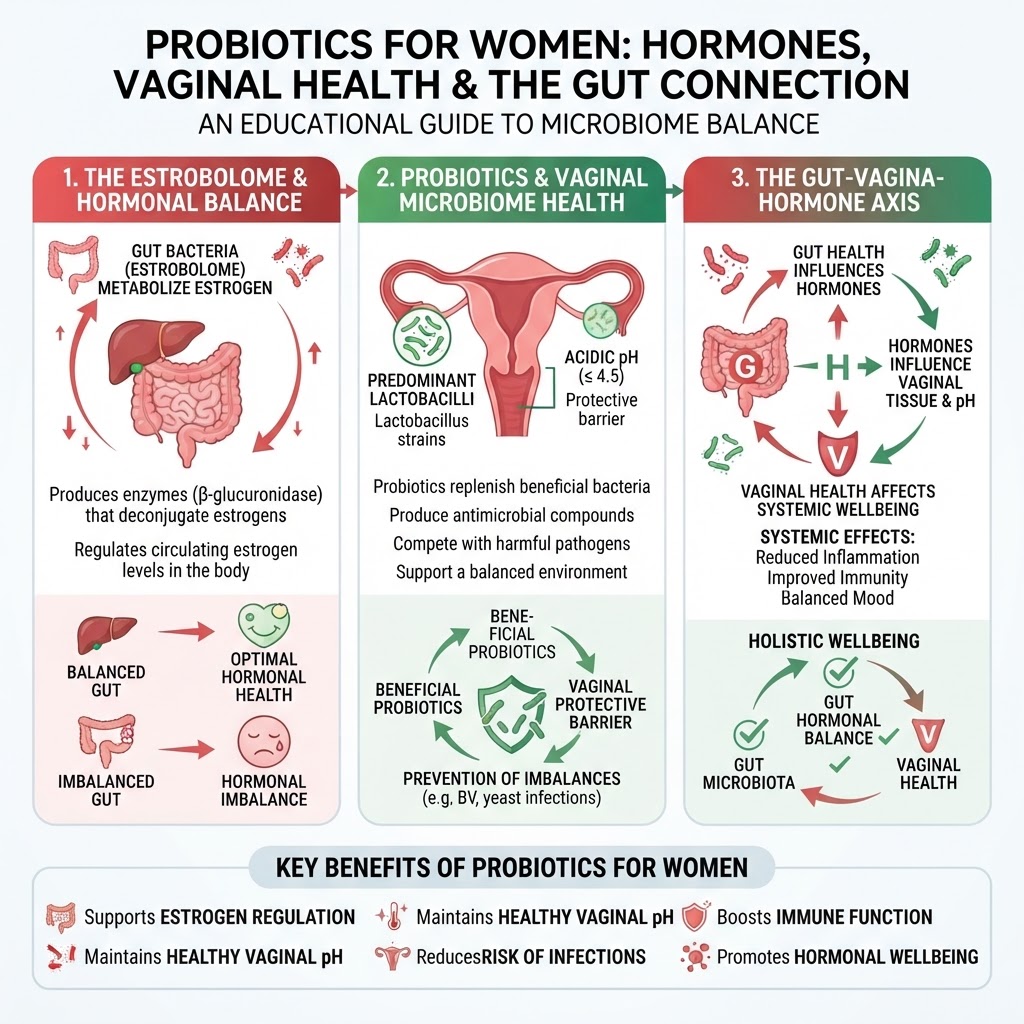
Research published in the Journal of Clinical Gastroenterology highlights that specific bacterial species in the gut produce enzymes — most notably beta-glucuronidase — that directly affect how oestrogen is processed and reabsorbed into the bloodstream. This is where the concept of the oestrobolome becomes critically important for women's health.
The Oestrobolome: Your Gut's Hidden Hormonal Control Centre
The term oestrobolome refers to the collection of gut bacteria that possess the genetic capacity to metabolise oestrogens. This concept, first formally described by researchers Plottel and Blaser in 2011, has since become a cornerstone of functional medicine's approach to probiotics hormonal balance in women.
Here is how it works: the liver conjugates (deactivates) oestrogen and sends it to the gut via bile for excretion. In a healthy gut with balanced microbial diversity, this conjugated oestrogen is excreted safely in the stool. However, certain gut bacteria produce beta-glucuronidase, an enzyme that deconjugates oestrogen — effectively reactivating it and allowing it to be reabsorbed into circulation through the gut wall. When beta-glucuronidase activity is too high (as seen in dysbiosis), excess oestrogen recirculates in the body, contributing to a state of oestrogen dominance.
"The oestrobolome represents a paradigm shift in how we think about hormonal health. It tells us that the gut is not just a digestive organ — it is an active participant in endocrine regulation."
— Plottel CS, Blaser MJ. Cell Host & Microbe, 2011. PubMed reference
What Does Oestrogen Dominance Look Like?
Oestrogen dominance — where oestrogen is disproportionately high relative to progesterone — is implicated in a wide range of symptoms that many women normalise as "just part of being female." These include:
- Heavy, painful, or irregular periods affecting probiotics menstrual health
- Bloating and water retention in the week before menstruation
- Breast tenderness and fibrocystic changes
- Mood swings, irritability, and anxiety
- Fatigue and brain fog
- Weight gain, particularly around the hips and thighs
- Increased risk of oestrogen-sensitive conditions such as fibroids and endometriosis
Conversely, a depleted oestrobolome — where too little oestrogen is being recycled — can contribute to oestrogen deficiency symptoms, including the vaginal dryness, hot flushes, and bone density loss associated with menopause. The oestrobolome is not simply about having more or less oestrogen; it is about maintaining precise, dynamic oestrogen balance throughout the hormonal lifecycle.
How Probiotics Restore Oestrobolome Balance
Specific probiotic strains have been shown to modulate beta-glucuronidase activity and support healthier oestrogen metabolism. Lactobacillus acidophilus, Bifidobacterium longum, and Lactobacillus rhamnosus are among the best-studied strains for this purpose. A 2022 study indexed on PubMed/NCBI demonstrated that probiotic supplementation significantly reduced beta-glucuronidase activity in women with oestrogen dominance symptoms, supporting the case for targeted probiotic use as part of a hormonal wellness protocol.
This is precisely why the Velo16™ Women's Formula includes a carefully selected multi-strain probiotic blend designed to support oestrobolome function. You can learn more about how we approach women's hormonal health through our Velo16™ Women's Health Collection.
The Vaginal Microbiome: Why Balance Is Everything
The vaginal microbiome is one of the most unique microbial ecosystems in the human body. Unlike the gut, which thrives on diversity, a healthy vaginal microbiome is characterised by low diversity and high dominance of Lactobacillus species — particularly Lactobacillus crispatus, Lactobacillus iners, Lactobacillus gasseri, and Lactobacillus jensenii. These bacteria maintain a vaginal pH of approximately 3.8–4.5, creating an acidic environment that is inhospitable to pathogenic bacteria, fungi, and viruses.
According to the World Health Organization, reproductive tract infections — including bacterial vaginosis (BV) and vulvovaginal candidiasis (VVC) — are among the most common reasons women seek gynaecological care globally. In South Africa, studies suggest BV prevalence among women of reproductive age may be as high as 40–50%, significantly above global averages, making women's probiotic South Africa solutions particularly relevant for our context.
Bacterial Vaginosis and the Lactobacillus Deficit
Bacterial vaginosis occurs when the protective Lactobacillus-dominant environment is disrupted and replaced by a polymicrobial overgrowth of anaerobic bacteria including Gardnerella vaginalis, Prevotella species, and Mobiluncus. The result is an elevated vaginal pH, characteristic discharge, and an unpleasant odour. Beyond the immediate discomfort, untreated or recurrent BV is associated with increased susceptibility to sexually transmitted infections, preterm labour, and pelvic inflammatory disease.
Conventional antibiotic treatment (most commonly metronidazole) effectively resolves acute BV in the short term, but recurrence rates within three to twelve months approach 50–70%. This high recurrence rate reflects a fundamental problem: antibiotics eliminate the pathogenic bacteria but do not restore the Lactobacillus dominance needed to maintain a healthy vaginal environment long term.
Key Statistic: A systematic review published on PubMed/NCBI found that adjunctive probiotic therapy with Lactobacillus rhamnosus GR-1 and Lactobacillus reuteri RC-14 significantly increased cure rates for BV and reduced recurrence compared to antibiotic therapy alone.
Probiotics and Yeast Infections
Vulvovaginal candidiasis — commonly known as a yeast infection — affects up to 75% of women at least once in their lifetime, with approximately 40–45% experiencing recurrent episodes. The overgrowth of Candida albicans is facilitated by conditions that disrupt the vaginal microbial balance: antibiotic use, high sugar intake, chronic stress, hormonal contraceptives, and immune dysregulation.
Research published in Harvard Health Publishing supports the use of specific probiotic strains — particularly Lactobacillus acidophilus and Lactobacillus rhamnosus — to competitively inhibit Candida colonisation, restore acidic vaginal pH, and reduce the frequency of recurrent yeast infections. This competitive exclusion mechanism means that robust Lactobacillus populations physically and chemically prevent pathogenic overgrowth, offering a sustainable, non-antibiotic strategy for long-term vaginal health.
The Gut-Vagina Axis: How Your Gut Seeds Your Vaginal Microbiome
Here is a connection that surprises most women: your vaginal microbiome is significantly influenced by the composition of your gut microbiome. Researchers have identified what is now termed the gut-vagina axis — the mechanism by which bacteria from the gastrointestinal tract colonise and shape the vaginal microbial environment through the perineal region and systemic immune signalling.
This means that when your gut microbiome is dysbiotic — depleted in beneficial Lactobacillus and Bifidobacterium species — your vaginal microbiome is also more vulnerable to dysbiosis. It is not enough to treat vaginal infections topically if the root cause lies in the gut. This is a central principle of the functional medicine approach to women's health: treat the whole system, not just the local symptom.
Gut Hormones, Women's Mental Health, and the Menstrual Cycle
The relationship between gut hormones women experience and mental wellbeing is mediated in large part by the gut-brain axis — a bidirectional communication network involving the vagus nerve, the enteric nervous system, and neuroendocrine signalling. Approximately 90–95% of the body's serotonin is produced in the gut, and gut bacteria play a direct role in its synthesis and availability.
For women, this has profound implications. The mood disruptions associated with PMS, premenstrual dysphoric disorder (PMDD), and perimenopause are not simply "hormonal" in the traditional sense — they are partly gut-mediated. Declining oestrogen in the luteal phase and perimenopause reduces gut Lactobacillus populations, increases intestinal permeability ("leaky gut"), and promotes systemic inflammation — all of which negatively impact serotonin production and mood regulation.
Probiotics and PMS Symptom Relief
A 2021 randomised controlled trial available through PubMed/NCBI found that women taking a multi-strain probiotic supplement for three consecutive menstrual cycles reported statistically significant reductions in PMS symptom severity — including bloating, cramping, mood swings, and fatigue — compared to the placebo group. The researchers attributed these improvements to reductions in systemic inflammation, improved oestrogen metabolism, and enhanced serotonin precursor availability.
Supporting probiotics menstrual health is not merely about symptom management — it is about addressing the underlying microbial imbalances that amplify hormonal sensitivity and inflammatory cascades. Regular probiotic use may therefore represent a meaningful, evidence-supported strategy for women seeking to reduce menstrual-related distress without relying solely on pharmaceutical interventions.
Menopause, Bone Health, and the Microbiome
The menopausal transition brings some of the most dramatic shifts in the female microbiome. As oestrogen declines, the gut microbiome loses diversity, and the vaginal microbiome often transitions from Lactobacillus-dominant to a more mixed, potentially dysbiotic state — contributing to genitourinary syndrome of menopause (GSM), characterised by vaginal dryness, urinary urgency, and recurrent UTIs.
Emerging research also connects gut microbiome health to bone density in postmenopausal women. Specific gut bacteria influence the absorption of calcium and the production of short-chain fatty acids (SCFAs) that regulate bone resorption. A diverse, well-nourished gut microbiome may therefore serve as an adjunct strategy for supporting bone health during and after menopause — an area of active research that holds significant promise for functional medicine practitioners working with this demographic.
Choosing the Right Probiotic: What Women Should Look For
Not all probiotics are created equal, and this is particularly true when it comes to women's health. Many commercially available probiotic supplements contain strains with no meaningful evidence for gynaecological or hormonal applications. When selecting a probiotic for women's health, evidence-based strain selection is non-negotiable.
Evidence-Based Strains for Women's Health
- Lactobacillus crispatus — The dominant species in a healthy vaginal microbiome, producing lactic acid and hydrogen peroxide to maintain acidic pH.
- Lactobacillus rhamnosus GR-1 — Extensively studied for vaginal health; shown to reduce BV and yeast infection recurrence.
- Lactobacillus reuteri RC-14 — Works synergistically with GR-1; demonstrated efficacy in restoring vaginal Lactobacillus dominance.
- Lactobacillus acidophilus — Supports gut oestrobolome function and competitive inhibition of Candida.
- Bifidobacterium longum — Modulates immune responses, reduces systemic inflammation, and supports oestrogen metabolism.
- Lactobacillus plantarum — Associated with reduced bloating and improved gut barrier integrity, particularly relevant during the luteal phase.
CFU Count, Delivery, and Consistency
Colony-forming unit (CFU) count matters less than strain specificity and viability at the point of consumption. A probiotic delivering 10–50 billion CFU of well-researched strains will outperform a 100-billion CFU product containing poorly characterised or non-viable organisms. Look for products that guarantee viability through to expiry — not just at time of manufacture — and that use delivery mechanisms (such as delayed-release capsules) designed to protect strains through the acidic gastric environment.
The Velo16™ Women's Formula has been developed with these exact principles in mind. You can explore the full range through our Shop All Velo16™ Products page, where you will find detailed strain information and quality certification for every product we offer.
Lifestyle Factors That Support Probiotic Efficacy
Probiotics work best as part of a broader lifestyle approach. To maximise the benefits of probiotic supplementation for hormonal and vaginal health, consider the following supporting strategies:
- Prioritise dietary fibre — Prebiotic fibres from vegetables, legumes, and whole grains feed beneficial gut bacteria and enhance probiotic colonisation.
- Reduce added sugar and ultra-processed foods — These feed pathogenic bacteria and Candida, undermining probiotic efforts.
- Manage chronic stress — Cortisol directly disrupts gut barrier integrity and reduces Lactobacillus populations.
- Use antibiotics judiciously — When antibiotics are necessary, start a high-quality probiotic alongside and continue for at least four weeks post-course.
- Avoid harsh vaginal hygiene products — Scented soaps, douches, and synthetic underwear disrupt the vaginal microbiome's natural pH balance.
- Prioritise sleep — Deep sleep is when the gut performs critical repair and microbial rebalancing functions.
If you are also concerned about how gut and hormonal health intersect with your skin, I encourage you to Take the Clear Skin Quiz — hormonal acne is one of the most telling signs of underlying gut-oestrogen imbalance, and our personalised approach can help you identify the right protocol for your specific needs.
Frequently Asked Questions
Can probiotics really help with hormonal imbalances in women?
Yes — through the oestrobolome, specific probiotic strains can modulate beta-glucuronidase activity in the gut, which directly influences how oestrogen is metabolised and excreted. By restoring a healthier balance of gut bacteria, probiotics can help reduce oestrogen dominance symptoms (such as heavy periods, bloating, and mood swings) or support oestrogen availability in women experiencing deficiency symptoms. This is an area of rapidly growing clinical evidence, and while probiotics are not a standalone hormonal therapy, they are a meaningful adjunct to a broader functional medicine approach.
How long does it take for probiotics to improve vaginal microbiome health?
Most clinical trials examining vaginal microbiome changes with probiotic supplementation show measurable improvements within four to eight weeks of consistent daily use. However, the timeline varies depending on the severity of dysbiosis, antibiotic history, dietary habits, and which strains are being used. For women with recurrent BV or yeast infections, a minimum three-month commitment to high-quality probiotic supplementation — alongside dietary and lifestyle support — is typically recommended before assessing outcomes.
Should I take a separate vaginal probiotic or will an oral probiotic work?
Oral probiotics containing evidence-based strains such as Lactobacillus rhamnosus GR-1 and Lactobacillus reuteri RC-14 have been demonstrated in clinical studies to reach the vaginal microbiome when taken orally — colonising the gut, then migrating via the perineal route to the vaginal environment. This means a well-formulated oral probiotic can provide systemic benefit to both the gut microbiome and vaginal microbiome simultaneously. Vaginal suppositories or pessaries may offer faster localised benefit for acute infections, but oral probiotics with the right strains are the sustainable long-term strategy.
Are probiotics safe to take during pregnancy and breastfeeding?
The existing body of evidence generally supports the safety of well-characterised probiotic strains (Lactobacillus and Bifidobacterium species) during pregnancy and breastfeeding. The World Health Organization notes that Lactobacillus-based probiotics have a long history of safe use in food contexts. However, as with any supplement during pregnancy, it is important to consult your healthcare provider or obstetrician before starting a new probiotic regimen, particularly if you have immune-compromising conditions or complications.
What makes Velo16™ Women's Formula different from standard probiotics?
The Velo16™ Women's Formula is specifically designed around the biological needs of the female microbiome — incorporating strains clinically validated for vaginal health, oestrobolome support, and hormonal wellbeing, rather than generic digestive health strains. Each capsule is formulated with guaranteed viability at expiry (not just manufacture), delayed-release technology for optimal gut delivery, and complementary prebiotic support to enhance colonisation. For a full breakdown of our formulation philosophy and the research behind it, visit The Velo16™ Science.
Ready to Support Your Hormonal Health From the Inside Out?
Your hormones, your vaginal microbiome, and your gut are in constant conversation. When that conversation breaks down, the symptoms are hard to ignore — but so is the potential for restoration when you give your body the right microbial support. The Velo16™ Women's Formula has been formulated by a functional medicine physician with one goal in mind: to give South African women a research-backed, strain-specific probiotic solution designed for the full complexity of female biology.
Explore the Velo16™ Women's Health Collection to learn more about our Women's Formula and the science behind every strain we selected. Ready to get started? Shop All Velo16™ Products and find the right protocol for your health goals.
For more evidence-based articles on gut health, hormonal wellness, and the microbiome, explore the Velo16™ Health Journal — your trusted resource for functional medicine insights grounded in real science.