

Raising Healthy Kids: Why the First 1000 Days of Gut Health Set the Foundation for Life
By Dr. Chomba Chuma, MD | Velo16™ Health Journal
As a functional medicine physician, I have spent years studying the intricate relationship between the gut microbiome and long-term health. But it was not until I began seeing children in my Johannesburg practice — children struggling with recurring infections, eczema, digestive discomfort, and behavioural challenges — that I truly understood how early the story begins. The foundation of a child's health is not written at age five, or ten, or even three. It is written in the very first 1,000 days of life: from conception through to the second birthday.
This window is arguably the most important biological period a human being will ever experience. During these critical months, the gut microbiome — the vast ecosystem of bacteria, fungi, viruses, and other microorganisms living in the digestive tract — is assembled, trained, and programmed. Get it right, and you lay the groundwork for a robust immune system, healthy digestion, optimal brain development, and lifelong resilience. Disrupt it, and the consequences can ripple across decades.
Today, I want to walk you through the science of children's microbiome development, explain why modern threats like antibiotics and ultra-processed foods are undermining our children's gut health, and share what evidence-based strategies — including probiotics for kids — can do to protect and restore that foundation. Whether you are a new parent, an expectant mother, or raising school-aged children, this is information you cannot afford to miss.
For more evidence-based health content like this, visit the Velo16™ Health Journal.
---What Is the Gut Microbiome and Why Does It Matter for Children?
The human gut is home to approximately 38 trillion microbial cells — outnumbering human cells almost one-to-one. This community of microorganisms, collectively known as the gut microbiome, performs functions so critical to our survival that scientists now refer to it as a "virtual organ." It regulates immune responses, produces neurotransmitters, synthesises vitamins, protects the gut lining, and even communicates directly with the brain via the gut-brain axis.
For children specifically, the microbiome plays an outsized role. According to research published in Nature Microbiology, the early-life gut microbiome is a key regulator of immune system maturation. In the first two to three years of life, the immune system is essentially being "educated" by gut bacteria — learning which foreign substances are threats and which are harmless. Disruption during this training period is now linked to increased risk of allergies, asthma, autoimmune diseases, and inflammatory bowel conditions later in life.
The Microbiome Begins Before Birth
For a long time, scientists believed babies were born with sterile guts. We now know this is not entirely true. Research has demonstrated that microbial transfer begins in utero, with low-level bacterial communities found in the placenta, amniotic fluid, and umbilical cord blood. A mother's own gut microbiome health during pregnancy directly influences this early seeding.
The most dramatic microbial transfer, however, occurs at birth. Babies born vaginally are exposed to their mother's vaginal and faecal microbiota — a rich inoculation that seeds the gut with beneficial bacteria like Lactobacillus and Bifidobacterium. Babies born via caesarean section miss this exposure, instead acquiring microbiota from skin and environmental sources — a different and often less diverse starting point. Studies in the Journal of Clinical Gastroenterology confirm that C-section-born infants show altered microbiome composition for up to six months, with potentially lasting immunological implications.
Breastfeeding: Nature's Probiotic Delivery System
After birth, breastfeeding is the single most powerful intervention for establishing healthy children's microbiome development. Human breast milk is not simply nutrition — it is a bioactive liquid containing over 200 species of bacteria, human milk oligosaccharides (HMOs) that act as prebiotics, immunoglobulins, and cytokines. The World Health Organisation recommends exclusive breastfeeding for the first six months of life for this very reason.
Breast milk HMOs specifically feed Bifidobacterium infantis, a strain that dominates the healthy infant gut and is associated with reduced inflammation, better immune regulation, and enhanced gut barrier integrity. Formula-fed infants, while receiving improved formulations today, still show measurably different microbiome profiles — lower Bifidobacterium and higher potentially pathogenic species.
---The Critical Window: How the First 1000 Days Shape Lifelong Health
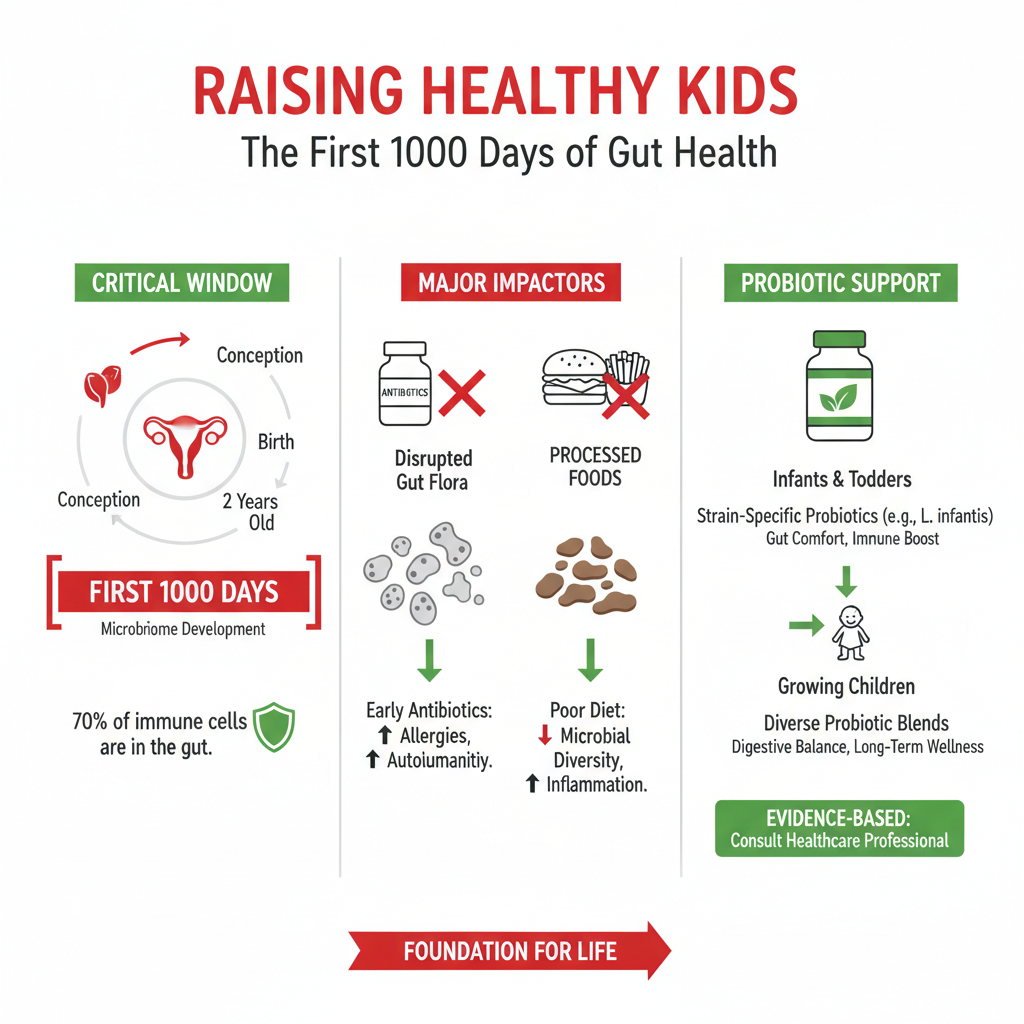
The concept of the "first 1,000 days" — from conception to age two — has gained significant traction in global health policy, but its implications for microbiome science are profound. During this window, the gut microbiome undergoes rapid diversification, moving from a relatively simple community at birth to a complex, adult-like ecosystem by around age three.
Research published on PubMed/NCBI demonstrates that microbial diversity — the number and variety of different bacterial species present — is one of the strongest predictors of long-term health outcomes. Higher diversity is consistently associated with:
- Stronger and better-regulated immune responses
- Lower rates of allergic diseases, including eczema and asthma
- Reduced risk of obesity and metabolic dysfunction
- Better cognitive development and mental health outcomes
- Greater resilience to gastrointestinal infections
The alarming reality is that microbial diversity in children across the modern world — including here in South Africa — is declining. A combination of antibiotic overuse, caesarean births, formula feeding, and ultra-processed diets is collectively impoverishing children's gut ecosystems at a time when those ecosystems are most critical.
The Gut-Immune Connection in Children
Approximately 70 to 80 percent of the immune system resides in and around the gut. For children, whose immune systems are still maturing, this connection is especially consequential. The gut-associated lymphoid tissue (GALT) uses signals from resident bacteria to calibrate immune responses — teaching T-cells to tolerate harmless antigens and mount appropriate defences against pathogens.
When the microbiome is disrupted, this calibration goes wrong. The immune system may become either over-reactive (leading to allergies and autoimmunity) or under-reactive (leading to increased susceptibility to infections). Supporting kids' immune system health, therefore, begins fundamentally in the gut.
---"The microbiome is not just a passenger in early childhood development — it is an active driver of immune, metabolic, and neurological programming. What we do in those first 1,000 days echoes for decades." — Dr. Chomba Chuma, MD, Founder of Velo16™
Modern Threats to Children's Gut Health
Understanding the importance of the early microbiome makes the threats we face all the more alarming. In clinical practice, I regularly see children whose gut health has been significantly compromised by entirely preventable factors.
Antibiotic Overuse: A Double-Edged Sword
Antibiotics are one of the greatest medical achievements of the 20th century. They save lives. But they are also profoundly disruptive to the gut microbiome — and children are the most vulnerable population. In South Africa, as across much of the world, antibiotics remain among the most commonly prescribed medications for children, often for viral infections where they have no benefit whatsoever.
A single course of broad-spectrum antibiotics can reduce gut microbial diversity by up to 30 percent. More concerning, research published on PubMed/NCBI shows that some of this diversity loss can persist for months to years, particularly when antibiotic exposure occurs in the first two years of life. Studies now link early antibiotic use to increased rates of asthma, inflammatory bowel disease, childhood obesity, and even neurodevelopmental conditions.
This does not mean antibiotics should never be used — when a child has a genuine bacterial infection, they are essential and lifesaving. But they should be used judiciously, and when they are used, microbiome recovery should be actively supported.
Ultra-Processed Foods and the South African Diet
South Africa faces a dual nutritional burden: undernutrition in some communities and over-consumption of ultra-processed foods in others. For kids' digestive health, the rise of ultra-processed food consumption is particularly worrying. These products — typically high in refined sugars, industrial seed oils, artificial additives, and low in fibre — actively disrupt the gut microbiome.
Dietary fibre is the primary fuel source for beneficial gut bacteria. Without it, populations of health-promoting bacteria like Lactobacillus, Bifidobacterium, and Faecalibacterium prausnitzii decline, while potentially harmful species thrive. Research from Harvard Health Publishing consistently shows that diet is the most modifiable determinant of microbiome composition across all age groups.
- Refined sugars feed pathogenic yeasts and bacteria, promoting dysbiosis
- Artificial sweeteners alter glucose metabolism and disrupt beneficial bacterial populations
- Emulsifiers and preservatives degrade the protective mucus layer lining the gut
- Low-fibre diets starve beneficial bacteria, reducing diversity and metabolic output
Environmental Stressors and Hygiene Hypothesis
The modern obsession with cleanliness — while important for preventing disease — has had an unintended consequence. The hygiene hypothesis proposes that reduced early-life exposure to diverse microbial environments (soil, animals, fermented foods, outdoor play) has contributed to the rise of immune-mediated diseases in affluent populations. Children need exposure to a diverse range of environmental microorganisms to train their immune systems appropriately. Over-sanitised environments and reduced outdoor play deprive them of this critical input.
Evidence-Based Probiotic Support for Children
Given the mounting threats to children's gut health, it is no surprise that interest in probiotics for kids has grown substantially. But not all probiotics are created equal, and parents deserve a clear, evidence-based picture of what probiotics can and cannot do for their children.
What Are Probiotics and How Do They Work?
Probiotics are live microorganisms that, when administered in adequate amounts, confer a health benefit on the host. For children, the most extensively studied strains include Lactobacillus rhamnosus GG, Lactobacillus acidophilus, Bifidobacterium longum, and Bifidobacterium infantis. These strains work through multiple mechanisms:
- Competitive exclusion: Beneficial bacteria compete with and displace pathogenic microorganisms
- Barrier reinforcement: Probiotics strengthen the gut epithelial lining, reducing intestinal permeability ("leaky gut")
- Immune modulation: They stimulate production of secretory IgA and regulate inflammatory cytokine production
- Short-chain fatty acid production: Beneficial bacteria ferment dietary fibre to produce butyrate and other SCFAs that nourish gut cells and regulate immunity
- Microbiome restoration: Following antibiotic treatment, appropriate probiotic strains help re-establish a healthy, diverse community
What the Research Says: Key Clinical Evidence
The evidence base for probiotic children interventions has expanded significantly over the past decade. Here is what the clinical literature tells us:
- Reducing antibiotic-associated diarrhoea: A landmark meta-analysis found that Lactobacillus rhamnosus GG significantly reduces the risk and duration of antibiotic-associated diarrhoea in children — one of the most common side effects of antibiotic treatment.
- Respiratory tract infections: Multiple randomised controlled trials demonstrate that specific probiotic strains reduce the frequency and duration of upper respiratory tract infections in daycare and school-aged children — directly relevant to parents concerned about their child's recurring colds and flu.
- Eczema prevention: Research published in PubMed/NCBI shows that probiotic supplementation during pregnancy and early infancy can reduce the incidence of atopic eczema — a condition with strong gut-immune connections.
- Colic in infants: Lactobacillus reuteri has demonstrated consistent efficacy in reducing crying time in colicky infants across multiple trials.
- Functional abdominal pain: Probiotics have shown benefit in reducing frequency and severity of functional abdominal pain in school-aged children.
Choosing the Right Probiotic for Your Child
When selecting a probiotic children South Africa parents can trust, several quality markers matter enormously. As a physician, I advise parents to look for:
- Clinically validated strains with strain-specific evidence (not just species-level)
- Adequate colony-forming units (CFUs) — typically 1–10 billion CFU for children, depending on age and indication
- Survivability — strains must survive stomach acid to reach the large intestine where they exert their effects
- Multi-strain formulations — diverse strains offer broader microbiome support
- Prebiotic inclusion — prebiotics (dietary fibres that feed probiotics) significantly enhance efficacy
- Age-appropriate formulation — dosage and strain selection should be tailored to the child's developmental stage
- Third-party testing — quality manufacturing standards and transparent testing are non-negotiable
At Velo16™, we developed our children's formulation with every one of these criteria in mind. Our Velo16™ Children's Health Collection combines clinically validated probiotic strains with prebiotic support, formulated specifically for the developmental needs of South African children. You can explore the full scientific rationale behind our formulations at The Velo16™ Science.
---Practical Strategies for Supporting Your Child's Gut Health
Probiotics are a powerful tool, but they work best as part of a comprehensive approach to children's gut health. Here are the evidence-based strategies I recommend to the parents I work with every day.
Feed the Microbiome: Diet First
No supplement can compensate for a poor diet. The foundation of children's microbiome health is a diverse, fibre-rich, whole-food diet. Practically, this means:
- Prioritising vegetables, fruits, legumes, and whole grains at every meal
- Including fermented foods where age-appropriate: plain yoghurt, kefir, small amounts of sauerkraut
- Severely limiting ultra-processed snacks, sugary beverages, and fast food
- Ensuring adequate dietary diversity — aim for 30 different plant foods per week (yes, this is achievable)
- Embracing traditional South African foods like morogo, amadumbe, and sorghum, which are rich in prebiotic fibres
Use Antibiotics Wisely
Always follow your doctor's guidance, but feel empowered to ask questions. Is this antibiotic truly necessary? Is it the narrowest-spectrum option appropriate for this infection? When antibiotics are prescribed, begin a high-quality, multi-strain probiotic simultaneously (taken a few hours apart from the antibiotic dose) and continue for at least four weeks after completing the course to support microbiome recovery.
Encourage Outdoor Play and Nature Exposure
Dirt is not always the enemy. Supervised outdoor play, contact with soil, pets, and natural environments exposes children to diverse environmental microorganisms that help train and diversify the immune system. The evidence for the "old friends" hypothesis — that exposure to ancestral microbial environments is immunoprotective — is compelling.
Manage Stress — Yours and Theirs
The gut-brain axis is bidirectional. Chronic stress — in children and in their caregivers — elevates cortisol, increases gut permeability, and alters microbiome composition. Prioritising sleep, emotional connection, and family routines are not "soft" interventions — they have measurable biological effects on children's gut health.
Supplement Strategically
A high-quality children's probiotic is particularly important during and after antibiotic treatment, in children who are frequently ill, in those with skin conditions like eczema, and in children with digestive symptoms. Explore our full range at Shop All Velo16™ Products to find the right support for your child's unique needs.
---Frequently Asked Questions
At what age can I start giving my child probiotics?
Probiotics can be given safely from birth, with certain strains specifically validated for newborns and infants (such as Lactobacillus reuteri for colic). It is important to choose an age-appropriate formulation — infant drops, toddler powders, and chewable tablets for older children are all available. Always consult your paediatrician before starting supplementation in very young infants.
How long does my child need to take probiotics?
This depends on the indication. For antibiotic-associated diarrhoea prevention, probiotics should be taken throughout the antibiotic course and for at least four weeks after. For general immune and gut health support, many children benefit from ongoing daily supplementation, particularly during high-exposure periods like the school year. For specific conditions like eczema or recurrent infections, a minimum three-month trial is typically needed to assess benefit.
Can probiotics cause any side effects in children?
Probiotics are generally very well tolerated in healthy children. Some children may experience mild bloating or changes in bowel habits in the first few days as their gut adjusts — this is typically transient. Probiotics should be used with caution in immunocompromised children or those with central venous catheters; in these cases, consult a physician before use.
Do diet and probiotics work together?
Absolutely — and the science here is clear. Probiotic bacteria need prebiotic fibres (found in plant foods) to survive and thrive in the gut. A child who takes a probiotic but eats a fibre-poor, ultra-processed diet will see significantly diminished benefits. Think of probiotics as seeds and dietary fibre as the soil — you need both for the garden to flourish.
Are Velo16™ Kids Probiotics suitable for South African children specifically?
Yes. Velo16™ Kids Probiotics have been formulated with the specific nutritional context, disease burden, and environmental factors relevant to South African children in mind. South African children face unique challenges including high rates of antibiotic use, increasing ultra-processed food consumption, and in some communities, early-life nutritional stress — all of which make microbiome support particularly important. Our formulations use clinically validated strains and undergo rigorous third-party testing to ensure quality and potency.
Give Your Child the Gut Health Foundation They Deserve
The first 1,000 days happen only once. The decisions you make during this window — about diet, about antibiotics, about supplementation — will influence your child's health for decades to come. The science is clear, the tools are available, and it is never too late to start supporting your child's gut health.
Explore the Velo16™ Children's Health Collection — developed by a South African physician, grounded in cutting-edge microbiome science, and formulated for the real-world challenges your child faces every day.
Ready to take the next step? Shop All Velo16™ Products or dive deeper into the research at The Velo16™ Science.
And if your child struggles with skin concerns alongside gut symptoms, Take the Clear Skin Quiz — because in functional medicine, we know the skin and the gut are never truly separate.