
The Gut-Brain Axis: How Your Microbiome Controls Your Mood, Focus and Memory
By Dr. Chomba Chuma, MD | Velo16™ Health Journal | Functional Medicine & Gut Health
Have you ever had a "gut feeling" about something? Felt butterflies before a big presentation, or noticed your thinking go foggy during a stressful week? These experiences are not merely metaphorical. They are the lived expression of one of the most profound and underappreciated systems in human biology: the gut-brain axis.
In my years as a functional medicine physician, I have watched patients transform their mental clarity, emotional resilience, and cognitive sharpness — not by changing their medication, but by changing what lives in their gut. The science behind this transformation is both elegant and revolutionary, and it is reshaping the way forward-thinking clinicians think about brain health entirely.
In this article, I am going to walk you through the biological highway that connects your digestive system to your brain, explain exactly how your gut bacteria manufacture the very chemicals that govern your mood, focus, and memory, and show you why combining targeted probiotics with Lion's Mane mushroom may be one of the most powerful cognitive health interventions available to us today.
1. What Is the Gut-Brain Axis? A Two-Way Conversation
The gut-brain axis is the bidirectional communication network linking the central nervous system (your brain and spinal cord) with the enteric nervous system — the intricate web of over 500 million neurons embedded in the lining of your gastrointestinal tract. Scientists now refer to this enteric nervous system as the "second brain," and for very good reason.
This axis operates through four primary channels:
- The vagus nerve — the longest cranial nerve in the body, carrying signals in both directions between the gut and brain
- The immune system — gut-associated lymphoid tissue responds to microbial changes and sends inflammatory signals upward
- The endocrine system — gut cells produce over 20 distinct hormones, including ghrelin and GLP-1
- The circulatory system — microbial metabolites enter the bloodstream and cross the blood-brain barrier
What makes this system truly remarkable is its directionality. The brain talks to the gut — but research published in Nature Reviews Neuroscience confirms that approximately 80–90% of vagus nerve fibres carry information from the gut to the brain, not the other way around. Your gut is, quite literally, briefing your brain — constantly, silently, and powerfully.
The Vagus Nerve: Your Gut's Direct Line to the Brain
The vagus nerve originates in the brainstem and travels through the neck, chest, and abdomen, innervating the heart, lungs, and the entire digestive tract. It is the superhighway of the gut-brain axis — the cable through which your microbiome transmits its most urgent dispatches.
When your gut microbiome is diverse and thriving, vagal signalling promotes calm, focus, and emotional regulation. When the microbiome is dysbiotic — imbalanced, depleted, or inflamed — this same nerve can become a conduit for anxiety, cognitive fog, and mood disruption.
"The gut microbiota communicates with the brain via neural, endocrine, and immune pathways. Dysbiosis is increasingly linked to neuropsychiatric conditions including depression, anxiety, and cognitive decline."
— Cryan JF et al., Nature Reviews Gastroenterology & Hepatology, 2019
This is why the gut mood connection is not a wellness buzzword — it is a clinical reality backed by decades of converging research across neuroscience, microbiology, and psychiatry.
2. Your Gut Bacteria Are Running a Neurotransmitter Factory
Here is the fact that stops most of my patients in their tracks: approximately 90% of the body's serotonin is produced in the gut, not the brain. Serotonin — the neurotransmitter most associated with feelings of happiness, calm, and wellbeing — is largely synthesised by enterochromaffin cells in the intestinal lining, and this process is directly regulated by your gut bacteria.
But serotonin is only the beginning. Your microbiome mental health connection runs deeper than most people realise.
Key Neurotransmitters Produced or Regulated by Gut Bacteria
- Serotonin (5-HT) — mood regulation, emotional stability, sleep quality. Produced by gut bacteria including Lactobacillus and Bifidobacterium species
- GABA (gamma-aminobutyric acid) — the brain's primary inhibitory neurotransmitter, reducing anxiety and promoting calm. Lactobacillus rhamnosus has been shown to modulate GABA receptors via the vagus nerve
- Dopamine — motivation, reward, and working memory. Gut bacteria influence dopamine synthesis through precursor production
- Acetylcholine — learning, memory consolidation, and attention. Produced by certain gut bacterial species including Lactobacillus
- Short-chain fatty acids (SCFAs) — particularly butyrate, propionate, and acetate — microbial metabolites that cross the blood-brain barrier, reduce neuroinflammation, and support the integrity of the blood-brain barrier itself
A landmark study published in Nature Microbiology identified over 500 species of gut bacteria capable of producing or metabolising neuroactive compounds. The composition of your microbiome, therefore, directly shapes the neurochemical environment of your brain — influencing your capacity for focus, emotional regulation, and memory retrieval on a daily basis.
Dysbiosis: When the Factory Breaks Down
When the balance of gut bacteria is disrupted — through poor diet, antibiotic use, chronic stress, or insufficient sleep — neurotransmitter production falters. This is what we call dysbiosis, and its neurological consequences are measurable.
Research from Harvard Health Publishing links gut dysbiosis with increased risk of depression, anxiety disorders, brain fog, poor concentration, and even accelerated cognitive decline. The World Health Organization now estimates that 1 in 8 people globally lives with a mental health disorder — a statistic that demands we look beyond the brain alone when seeking solutions.
This is where strategic probiotic supplementation becomes not just relevant, but essential. Explore the full science behind our formulation approach at The Velo16™ Science.
3. Probiotics for Focus: The Evidence for Psychobiotics
The term psychobiotics was first coined by Professor Ted Dinan and Professor John Cryan at University College Cork — pioneers in gut-brain research — to describe live bacteria that, when ingested in adequate amounts, produce measurable mental health benefits. The evidence base for this category has grown substantially.
Using probiotics for focus, mood, and cognitive performance is no longer fringe science. It is the frontier of psychiatric and neurological research.
What the Research Shows
A 2021 systematic review published in the Journal of Clinical Gastroenterology analysed 34 randomised controlled trials examining the effects of probiotic supplementation on cognitive function and psychological outcomes. The findings were consistent:
- Probiotic supplementation significantly reduced self-reported anxiety and depressive symptoms
- Subjects showed measurable improvements in cognitive flexibility, attention, and working memory
- Benefits were most pronounced in participants who also demonstrated baseline gut dysbiosis
- Multi-strain formulations outperformed single-strain products in neurological outcomes
"Psychobiotics represent a promising class of interventions for neuropsychiatric conditions, with growing evidence supporting their role in modulating the gut-brain axis through immune, endocrine, and neural mechanisms."
Specific strains have demonstrated particularly compelling effects on brain function. Lactobacillus helveticus and Bifidobacterium longum — used in a Canadian trial — reduced cortisol levels and psychological distress scores after just 30 days. Lactobacillus acidophilus has been shown to upregulate GABA receptors in the prefrontal cortex via vagal signalling in animal models.
The South African Context: Why This Matters Here
In South Africa, we face a particularly acute intersection of gut health challenges: high rates of antibiotic prescription, dietary shifts toward ultra-processed foods, chronic psychological stress related to economic and social pressures, and historically low awareness of microbiome health. These factors combine to create widespread gut dysbiosis — and with it, a quiet epidemic of mood disorders, burnout, and cognitive decline that we are only beginning to address systematically.
The good news is that targeted supplementation, dietary intervention, and lifestyle modification can restore microbiome diversity and reverse many of these effects — often within weeks to months.
Read more articles like this in the Velo16™ Health Journal.
4. Lion's Mane Mushroom Benefits: Nature's Nootropic for Neuroplasticity
If the probiotic component of our cognitive stack addresses the foundation — restoring the gut environment from which neurochemical production flows — then Lion's Mane mushroom (Hericium erinaceus) targets the brain directly with equally compelling science.
Lion's Mane mushroom benefits have been documented in traditional East Asian medicine for centuries. But it is only in the past two decades that modern neuroscience has begun to explain the mechanism — and the findings are extraordinary.
NGF Stimulation: Growing New Brain Cells
Lion's Mane contains two families of bioactive compounds unique to this fungus: hericenones (found in the fruiting body) and erinacines (found in the mycelium). Both have been shown to stimulate the synthesis of Nerve Growth Factor (NGF) — a protein essential for the growth, maintenance, and survival of neurons.
NGF plays a critical role in:
- Neurogenesis — the formation of new neurons, particularly in the hippocampus (the brain's memory centre)
- Myelination — maintaining the myelin sheath that insulates nerve fibres and accelerates signal transmission
- Synaptic plasticity — the brain's ability to form and strengthen neural connections, the biological basis of learning and memory
- Neuroprotection — defending existing neurons against oxidative damage and inflammation
A landmark Japanese clinical trial published in Phytotherapy Research (2009) — one of the first double-blind, placebo-controlled human trials on Lion's Mane — found significant improvements in cognitive function scores among older adults with mild cognitive impairment after 16 weeks of supplementation, with effects reversing upon cessation, confirming the active relationship.
Lion's Mane and the Gut-Brain Axis: A Synergistic Relationship
What makes Lion's Mane particularly relevant to our discussion of the gut-brain axis is an emerging body of research suggesting that its bioactive compounds also exert prebiotic-like effects in the gut, supporting the growth of beneficial bacterial species including Bifidobacterium and Lactobacillus.
A 2021 study published in the Journal of Nutritional Biochemistry found that Lion's Mane polysaccharides altered gut microbiota composition in ways that reduced neuroinflammatory markers and improved behavioural outcomes in animal models of cognitive decline.
This creates a powerful synergy: Lion's Mane supports the neurological infrastructure from above, while targeted probiotics restore the microbial environment from below — together producing a comprehensive approach to cognitive health supplementation that neither could achieve alone.
Additional Lion's Mane Benefits for Brain Performance
- Reduces neuroinflammation — erinacines inhibit pro-inflammatory cytokines that impair cognitive function
- Supports BDNF production — Brain-Derived Neurotrophic Factor, sometimes called "fertiliser for the brain," is upregulated by Lion's Mane compounds
- Improves mood and reduces anxiety — A 2010 clinical study in Biomedical Research found that women who consumed Lion's Mane for four weeks reported significantly reduced anxiety and irritability scores
- Enhances focus and mental clarity — NGF-mediated improvements in cholinergic function support sustained attention and executive function
- Antioxidant neuroprotection — polysaccharides in Lion's Mane scavenge free radicals that accelerate neuronal aging
Explore our full Velo16™ Cognitive Health Collection to see how we have formulated these compounds for maximum bioavailability and synergistic effect.
5. The Velo16™ Daily Stack for Peak Cognitive Performance
Understanding the science is one thing. Translating it into a practical, evidence-aligned daily protocol is where clinical expertise becomes essential. Based on both the research literature and my clinical experience working with hundreds of patients experiencing cognitive symptoms, I have developed a structured approach to using the gut-brain axis for measurable cognitive gains.
The Morning Protocol
- Velo16™ Probiotics + Lion's Mane — taken with your first meal to maximise absorption and leverage the morning cortisol peak for optimal gut motility and nutrient uptake
- Prebiotic-rich breakfast — feeds the beneficial bacteria you are cultivating. Think oats, flaxseeds, banana, or leek — all excellent prebiotic fibre sources available in South African kitchens
- Hydration — at least 500ml of filtered water before or with breakfast; the gut microbiome and mucosal lining both require adequate hydration to function optimally
- Morning sunlight exposure — 10–15 minutes of direct sunlight regulates circadian rhythms that govern both gut motility and the sleep-wake cycle critical for memory consolidation
The Evening Protocol
- Anti-inflammatory dinner — emphasising oily fish (omega-3s support neuronal membrane integrity), fermented foods like plain yoghurt or sauerkraut, and colourful vegetables rich in polyphenols
- Stress reduction practice — chronic stress elevates cortisol, which disrupts the gut epithelial barrier and reduces microbial diversity. Even 10 minutes of diaphragmatic breathing activates the vagus nerve directly
- Sleep hygiene — the gut microbiome has its own circadian rhythm. Irregular sleep patterns disrupt microbial composition. Aim for 7–9 hours with consistent sleep and wake times
Foods That Support the Gut-Brain Axis
- Fermented foods — amasi, plain yoghurt, kefir, kimchi (all widely available in South Africa)
- Prebiotic fibres — garlic, onion, leeks, asparagus, unripe banana, oats
- Polyphenols — berries, dark chocolate (≥70% cacao), green tea, olive oil
- Omega-3 fatty acids — sardines, pilchards, salmon, walnuts, flaxseed
- Choline-rich foods — eggs, liver, legumes — support acetylcholine production for memory
What to Avoid
- Ultra-processed foods high in emulsifiers (carrageenan, polysorbate-80) — shown to disrupt the mucosal gut barrier
- Excessive alcohol — reduces microbial diversity and increases intestinal permeability ("leaky gut")
- Unnecessary antibiotic use — depletes both pathogenic and beneficial bacteria indiscriminately
- Chronic non-steroidal anti-inflammatory drug (NSAID) use — damages the gut epithelial lining
- High-sugar diets — feed pathogenic bacteria and yeast while starving beneficial species
"A growing body of evidence suggests that the composition of the gut microbiota can be modified through targeted nutritional and supplementation strategies, with measurable effects on brain function and mental health outcomes."
Browse all our gut and cognitive health formulations at Shop All Velo16™ Products.
6. How Long Until You Notice Results? Setting Realistic Expectations
One of the most common questions I receive from patients beginning a probiotic and Lion's Mane protocol is: "When will I feel the difference?" This is both a reasonable and important question, because unrealistic expectations undermine adherence — and consistency is everything in microbiome medicine.
The Timeline of Gut-Brain Transformation
- Days 1–7: Initial digestive changes are common as the microbiome begins to shift. Some patients notice improved bowel regularity, reduced bloating, and occasionally a short-term increase in gas as new bacterial populations establish themselves. This is normal and transient.
- Weeks 2–4: Many patients begin reporting improved sleep quality, slightly elevated morning mood, and reduced mid-afternoon cognitive fatigue. Neurotransmitter production and vagal signalling begin to shift as the microbiome diversifies.
- Weeks 4–8: More consistent improvements in focus, emotional resilience, and mental clarity become apparent. Lion's Mane NGF stimulation begins producing measurable neuroplastic changes — supporting new neural connections and cognitive flexibility.
- Months 3–6: Sustained microbiome remodelling and ongoing neurogenesis support deeper cognitive improvements — better memory consolidation, sharper recall, and improved stress tolerance.
The most important principle I communicate to every patient: this is not a quick fix. This is a biological renovation. But unlike many pharmaceutical interventions, the benefits are cumulative, the side effects are minimal, and the mechanism addresses root cause rather than symptom.
Not sure where to start on your health journey? Consider other aspects of your wellbeing alongside cognitive health — Take the Clear Skin Quiz to discover how your gut health may also be affecting your complexion. The gut-skin axis is another fascinating dimension of microbiome medicine we explore in depth across the Velo16™ Health Journal.
Frequently Asked Questions
Can gut bacteria really affect my mood and mental health?
Yes — and this is now one of the most robustly supported findings in modern neuroscience. Your gut microbiome produces or directly regulates the production of serotonin, dopamine, GABA, and other neurotransmitters that govern mood, anxiety, and emotional regulation. Multiple clinical trials, including research published in Nature Microbiology and the Journal of Clinical Gastroenterology, confirm that changes in microbiome composition produce measurable changes in psychological and cognitive outcomes. The gut-brain axis provides the biological infrastructure for this connection, primarily through the vagus nerve, immune signalling, and the circulatory transport of microbial metabolites.
How long should I take Lion's Mane mushroom to see cognitive benefits?
Based on clinical trial data, meaningful cognitive improvements from Lion's Mane supplementation typically emerge between 4 and 16 weeks of consistent daily use. The mechanism — stimulation of Nerve Growth Factor (NGF) and Brain-Derived Neurotrophic Factor (BDNF) — requires time to produce structural neuroplastic changes. For optimal results, I recommend a minimum 90-day commitment when using Lion's Mane as part of a cognitive health protocol. Dosage matters: look for standardised extracts that include both fruiting body and mycelium to ensure you are receiving the full spectrum of hericenones and erinacines.
What is the best probiotic for focus and cognitive health?
The research consistently shows that multi-strain probiotic formulations outperform single-strain products for neurological and psychological outcomes. Key strains with the strongest evidence for cognitive and mood benefits include Lactobacillus helveticus R0052, Bifidobacterium longum R0175, Lactobacillus rhamnosus JB-1, and Bifidobacterium breve. When selecting a cognitive health probiotic, also look for adequate colony-forming units (CFUs) — typically 10–50 billion CFU for therapeutic effect — and shelf-stable, acid-resistant encapsulation to ensure delivery to the large intestine where colonisation occurs.
Is it safe to take probiotics and Lion's Mane together?
Yes — the combination is not only safe but synergistic. Probiotics work by restoring and diversifying the gut microbiome, which improves the neurochemical environment of the brain from the bottom up. Lion's Mane works by directly stimulating neurotrophin production (NGF and BDNF) in brain tissue, supporting neuroplasticity and neuroprotection from the top down. There are no known adverse interactions between these two categories of supplement, and emerging research suggests Lion's Mane polysaccharides may actually support the growth of beneficial gut bacteria, compounding the effects of probiotic supplementation. As always, if you are pregnant, breastfeeding, or on immunosuppressive medication, consult your physician before beginning any new supplement protocol.
Can improving my gut health really help with brain fog?
Brain fog — characterised by mental sluggishness, difficulty concentrating, poor memory retrieval, and cognitive fatigue — is one of the most common symptoms I see in patients with gut dysbiosis. The mechanisms are well-documented: a disrupted microbiome increases intestinal permeability, allowing lipopolysaccharides (bacterial endotoxins) to enter the bloodstream and trigger systemic low-grade inflammation. This neuroinflammation directly impairs synaptic function and neurotransmitter production — producing the subjective experience of cognitive fog. Restoring microbiome diversity through targeted probiotics, dietary fibre, and anti-inflammatory foods typically produces significant improvements in mental clarity within 4–8 weeks, in my clinical experience and in the published literature.
Ready to Unlock Your Brain's Full Potential?
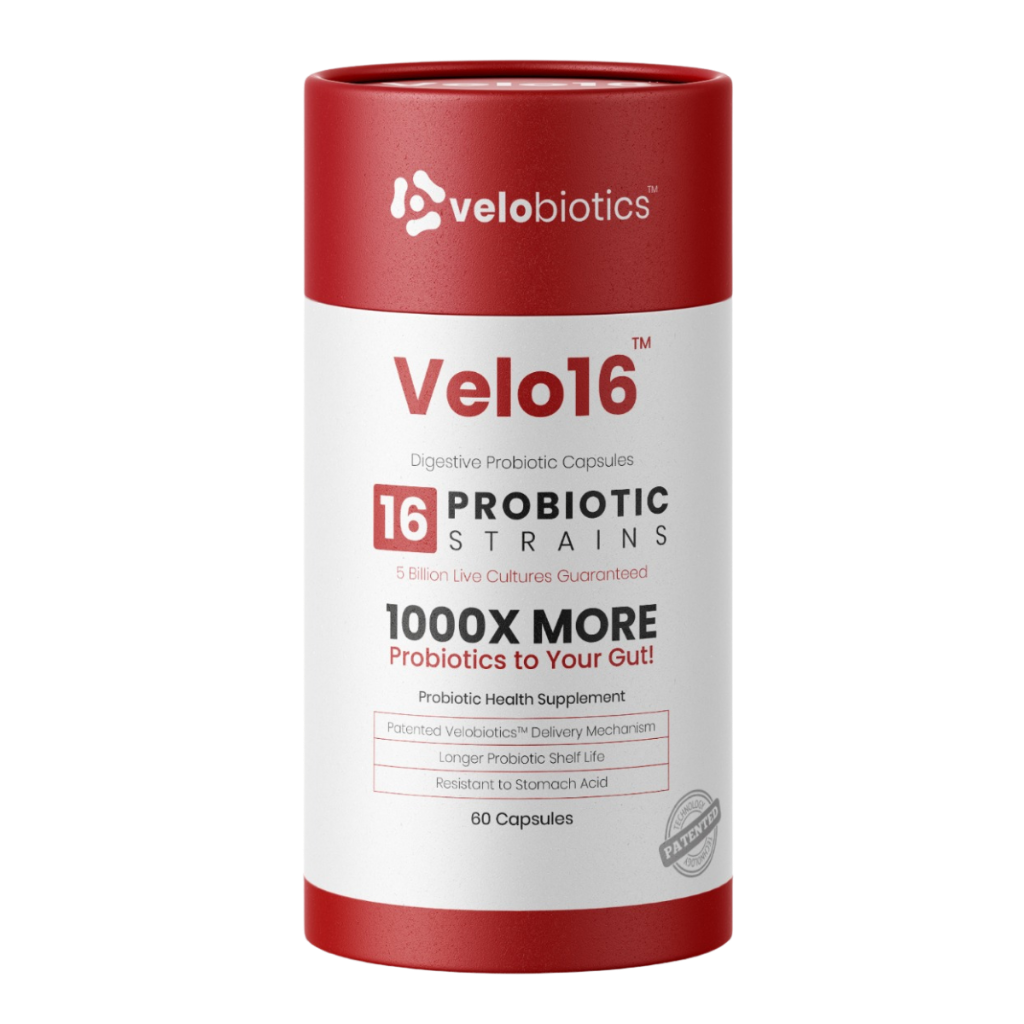
The science is clear: your cognitive performance, mood stability, and mental clarity are profoundly shaped by what is living in your gut. The Velo16™ Probiotics + Lion's Mane formulation was developed with this science at its core — combining evidence-backed probiotic strains with dual-extract Lion's Mane to create a comprehensive cognitive health supplement designed for the demands of modern life.
Whether you are battling brain fog, seeking sharper focus at work, managing mood fluctuations, or simply committed to protecting your cognitive health as you age — the gut-brain axis is your greatest untapped asset. And we have built a product worthy of the science.
- ✔ Multi-strain psychobiotic formula with clinically validated strains
- ✔ Dual-extract Lion's Mane (fruiting body + mycelium) for full-spectrum NGF support
- ✔ Acid-resistant capsule technology for guaranteed gut delivery
- ✔ Developed by a functional medicine physician with no fillers, no compromise