
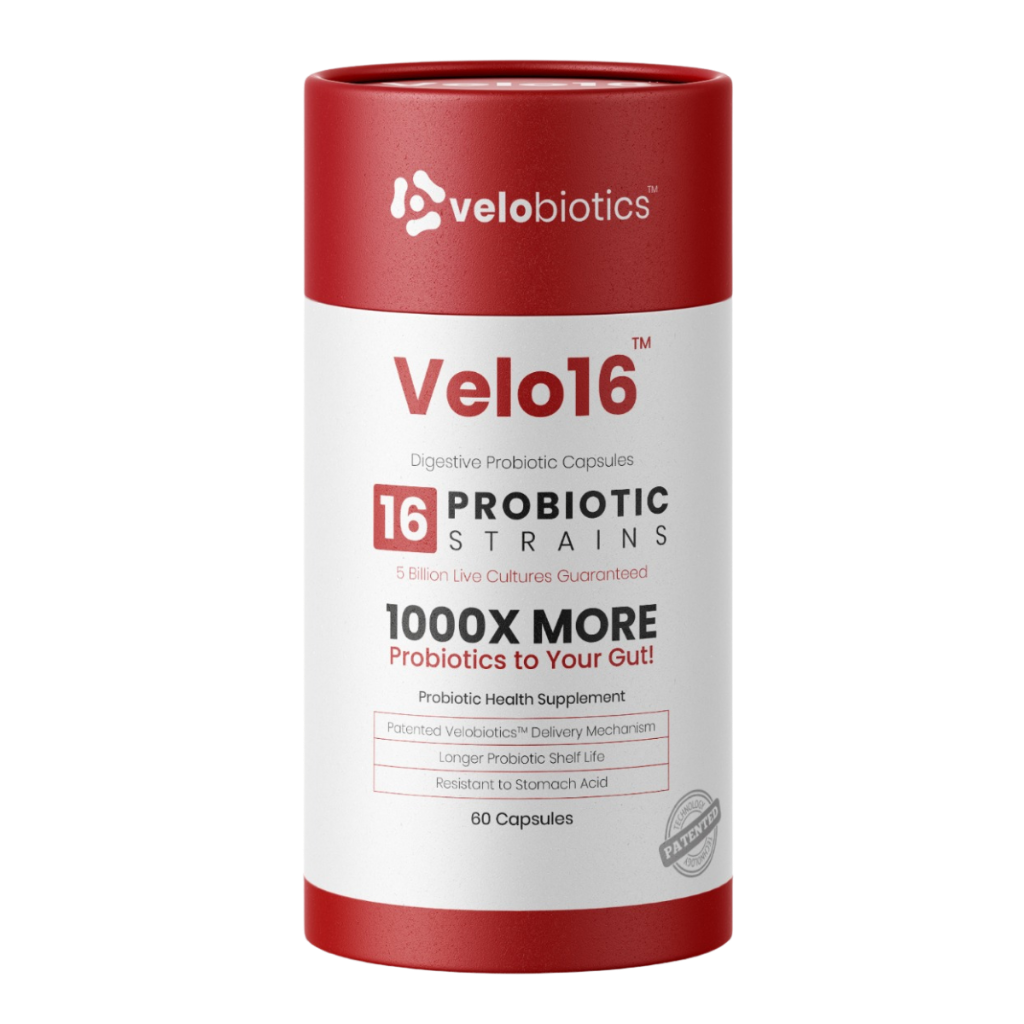
The Gut-Brain Axis: How Your Microbiome Controls Your Mood, Focus and Memory
By Dr. Chomba Chuma, MD | Velo16™ Health Journal
Have you ever had a "gut feeling" about something — a nervous stomach before a big presentation, or that unmistakable knot of anxiety that settles in your abdomen during stressful times? Most people dismiss these sensations as purely emotional responses. But as a functional medicine physician, I can tell you that what you're experiencing is far more biological, and far more fascinating, than you might imagine.
Welcome to the world of the gut-brain axis — one of the most groundbreaking areas of modern neuroscience and gastroenterology. The relationship between your digestive system and your brain is not metaphorical. It is a living, bidirectional communication network that influences your mood, your ability to focus, and even your long-term memory. And at the heart of this network sits your microbiome — the trillions of bacteria, fungi, and microorganisms that call your gut home.
In this article, I want to walk you through exactly how this system works, what happens when it breaks down, and how a targeted daily stack combining high-quality probiotics with Lion's Mane mushroom can meaningfully support your cognitive performance. This is the science I built Velo16™ Cognitive Health Collection around — and I want every one of our community members to understand it deeply.
1. What Is the Gut-Brain Axis? The Biology Behind the Buzz
The gut-brain axis refers to the complex, bidirectional communication system linking the enteric nervous system (ENS) of the gastrointestinal tract with the central nervous system (CNS), which includes your brain and spinal cord. This isn't a new discovery — researchers have been studying ENS-CNS communication for decades — but what has changed dramatically in the last 15 years is our understanding of the microbiome's central role in that dialogue.
Your gut is often called the "second brain," and with good reason. The enteric nervous system contains approximately 500 million neurons — more than the spinal cord — lining the walls of the gastrointestinal tract from oesophagus to rectum. These neurons communicate not only with the brain but with the microorganisms living in your gut, responding to what they produce, what they eat, and how they thrive.
"The microbiota-gut-brain axis includes the central nervous system, neuroendocrine and neuroimmune systems, the sympathetic and parasympathetic arms of the autonomic nervous system, the enteric nervous system, and the intestinal microbiota." — Cryan & Dinan, Nature Reviews Neuroscience, 2012
This system operates through multiple channels simultaneously: the vagus nerve, the immune system, the endocrine system, and the production of neuroactive molecules directly by gut bacteria. Understanding each of these pathways is key to understanding why what you eat — and which microbes you cultivate — has such a profound impact on how you think and feel.
The Vagus Nerve: Your Body's Information Superhighway
The vagus nerve is the longest cranial nerve in the body, running from the brainstem down through the neck, chest, and abdomen. It is the primary physical conduit of the gut-brain axis, and approximately 80–90% of its fibres carry information from the gut to the brain — not the other way around, as was historically assumed.
What this means is extraordinary: your gut is constantly sending status updates to your brain. Gut bacteria influence what those messages say. Research published in the Proceedings of the National Academy of Sciences demonstrated that specific bacterial species — particularly Lactobacillus rhamnosus — altered GABA receptor expression in the brain via the vagus nerve, producing measurable reductions in anxiety and stress behaviour in animal models. Cutting the vagus nerve eliminated these effects entirely.
This tells us something critical: the microbiome doesn't just influence mood indirectly. It is actively transmitting neurochemical signals upward through a dedicated biological highway to your brain. When that highway is congested — when the microbiome is dysbiotic (imbalanced) — the quality of those signals deteriorates, and so does your mental performance.
Gut Permeability and Neuroinflammation
A leaky gut (intestinal hyperpermeability) occurs when the tight junctions between intestinal cells break down, allowing bacterial toxins called lipopolysaccharides (LPS) to enter the bloodstream. These endotoxins trigger systemic inflammation — and that inflammation crosses the blood-brain barrier, causing neuroinflammation, which is increasingly associated with depression, brain fog, and cognitive decline.
A landmark study in the journal eClinicalMedicine found that individuals with major depressive disorder showed significantly elevated markers of intestinal permeability compared to healthy controls. This is the gut-mood connection made measurable — inflammation generated in the gut, driving psychological distress in the brain.
2. How Gut Bacteria Manufacture Your Neurotransmitters
Here is the fact that still astonishes many of my patients when I share it: approximately 95% of the body's serotonin is produced in the gut, not the brain. The same microbiome that digests your food is responsible for synthesising the very molecules that regulate your mood, your sleep, and your sense of wellbeing.
This is the foundation of the microbiome mental health connection — and the science behind it is robust and rapidly expanding.
The Neurotransmitter Production Chain
Specific families of gut bacteria are now known to produce or stimulate the production of key neuroactive compounds:
- Serotonin: Enterochromaffin cells in the gut lining produce serotonin in response to signals from gut bacteria, particularly spore-forming bacteria. Serotonin regulates mood, appetite, sleep cycles, and bowel motility.
- GABA (gamma-aminobutyric acid): Lactobacillus and Bifidobacterium species produce GABA directly. Low GABA is linked to anxiety, insomnia, and poor stress resilience.
- Dopamine precursors: Gut bacteria produce levodopa (L-DOPA), the direct precursor to dopamine — the neurotransmitter underpinning motivation, focus, and reward. Bacillus subtilis is among the species implicated.
- Short-chain fatty acids (SCFAs): When beneficial bacteria ferment dietary fibre, they produce butyrate, propionate, and acetate — SCFAs that protect the blood-brain barrier, reduce neuroinflammation, and support the health of microglia (the brain's immune cells).
- BDNF (Brain-Derived Neurotrophic Factor): Gut bacteria influence the production of BDNF — often called "fertiliser for the brain." BDNF supports neuroplasticity, the growth of new neural connections, and long-term memory consolidation.
"Gut microbiota composition is associated with altered BDNF levels and anxiety-like behaviour." — Clarke et al., Molecular Psychiatry, 2013
What this means practically is that when your microbiome is populated with diverse, health-promoting species — and supported with the right probiotic strains — you are directly influencing the neurochemical environment of your brain. This is not supplementation as symptom-masking. This is root-cause cognitive support.
Dysbiosis: When the System Breaks Down
Modern lifestyles are catastrophically disruptive to the microbiome. Chronic stress, ultra-processed foods, antibiotics, environmental toxins, sleep deprivation, and sedentary behaviour all reduce microbial diversity and eliminate beneficial species. The World Health Organization estimates that 1 in 8 people globally live with a mental health disorder — and emerging research strongly implicates gut dysbiosis as a contributing driver of this epidemic.
When beneficial bacteria decline, the gut produces fewer neurotransmitter precursors, more inflammatory compounds, and more permeable intestinal walls. The downstream result in the brain? Brain fog. Difficulty concentrating. Low motivation. Poor memory recall. Mood instability. These are not character flaws. They are frequently biological signals from a microbiome under siege.
Explore the research behind our formulations on The Velo16™ Science page for a deeper dive into the strain-specific data that informs every product we develop.
[INFOGRAPHIC_PLACEHOLDER: "The Gut-Brain Axis Communication Pathways" — Visual diagram showing the vagus nerve pathway, neurotransmitter production sites in the gut, SCFA production from fibre fermentation, and the flow of signals from gut microbiome → ENS → vagus nerve → brain, with labels for serotonin, GABA, dopamine, BDNF, and inflammatory markers.]
3. Lion's Mane Mushroom: The Cognitive Health Supplement the Brain Has Been Waiting For
If probiotics are the foundation of the gut-brain communication system, then Lion's Mane mushroom (Hericium erinaceus) is the amplifier — a functional mushroom with a body of scientific evidence behind it that is, frankly, remarkable for a natural compound.
Lion's Mane has been used in Traditional Chinese Medicine for centuries, particularly for cognitive vitality and digestive health. But it is modern neuroscience that has given us the mechanism — and validated why this mushroom deserves its place in any serious cognitive health supplement protocol.
Nerve Growth Factor (NGF) Stimulation: The Core Mechanism
Lion's Mane contains two families of unique bioactive compounds: hericenones (found in the fruiting body) and erinacines (found in the mycelium). Both are proven to stimulate the synthesis of Nerve Growth Factor (NGF) — a protein that is essential for the growth, maintenance, and survival of neurons in the brain.
NGF is particularly critical in the hippocampus and basal forebrain — regions responsible for learning, memory formation, and the spatial navigation that declines earliest in neurodegenerative conditions like Alzheimer's disease. As we age, NGF production naturally declines. Lion's Mane is one of the very few natural substances demonstrated to stimulate its production in both in vitro and human clinical studies.
"Oral administration of Hericium erinaceus... significantly improved scores on cognitive function scales compared with placebo." — Mori et al., Phytotherapy Research, 2009
In this double-blind, placebo-controlled human trial, adults aged 50–80 with mild cognitive impairment who supplemented with Lion's Mane for 16 weeks showed significantly improved scores on the Hasegawa Dementia Scale compared to placebo — with scores declining again after supplementation stopped. This is compelling evidence of a real, reversible cognitive benefit.
Lion's Mane and Neuroplasticity
Beyond NGF, Lion's Mane has demonstrated the ability to promote neurogenesis — the formation of new neurons — and enhance myelination, the process by which nerve fibres develop their protective myelin sheath, which is critical for rapid, efficient neural signal transmission. Research published in the International Journal of Molecular Sciences confirmed that erinacines from Lion's Mane mycelium promoted the differentiation of neural stem cells and enhanced hippocampal neurogenesis in animal models.
Think of it this way: probiotics optimise the gut's neurotransmitter output and reduce the inflammatory noise that interferes with cognitive clarity. Lion's Mane then provides the raw biological support for building and maintaining the neural architecture your brain uses to think, focus, and remember. Together, they address cognitive performance from two complementary directions.
Lion's Mane Benefits for Mood and Anxiety
The Lion's Mane mushroom benefits extend beyond memory and focus. A 2010 clinical trial published in the journal Biomedical Research found that women who consumed Lion's Mane cookies for four weeks reported significantly reduced scores for depression and anxiety, as well as improved sleep quality. The proposed mechanism involves both NGF-mediated hippocampal support and direct anti-inflammatory effects in the central nervous system.
For health-conscious adults managing the cognitive demands of modern professional and family life — long work hours, digital overstimulation, chronic low-grade stress — this combination of benefits is precisely what evidence-based supplementation should deliver.
4. Probiotics for Focus: Strains That Make the Difference
Not all probiotics are created equal. When I formulated the probiotic component of our cognitive stack, I was explicit in my criteria: I needed strains with peer-reviewed evidence for gut-brain axis activity — not just general digestive health. This is the distinction that separates a genuine cognitive health supplement from a generic probiotic.
The following are the strain families with the strongest evidence for brain-relevant outcomes:
- Lactobacillus helveticus R0052 and Bifidobacterium longum R0175: This combination has been studied specifically for psychological outcomes. A randomised controlled trial found significant reductions in hospital anxiety and depression scale scores, psychological distress, and urinary cortisol in healthy volunteers. (Messaoudi et al., British Journal of Nutrition, 2011)
- Lactobacillus rhamnosus JB-1: Demonstrated vagus nerve-mediated GABA receptor modulation, with reduction in corticosterone (stress hormone) responses in animal models — effects abrogated by vagotomy, confirming the gut-brain pathway.
- Bifidobacterium breve: Associated with increased BDNF expression and reduced neuroinflammation markers. Supports healthy cognitive ageing and memory consolidation.
- Lactobacillus plantarum PS128: A psychobiotic strain showing improvements in stress, sleep quality, and emotional regulation in human studies — with particular relevance for high-achieving adults under occupational pressure.
"Psychobiotics are live organisms that, when ingested in adequate amounts, produce a health benefit in patients suffering from psychiatric illness." — Dinan, Stanton & Cryan, Biological Psychiatry, 2013
The concept of psychobiotics — probiotics selected specifically for neurological and psychological benefit — is no longer fringe science. It is being studied at leading institutions including Harvard, Oxford, and APC Microbiome Ireland, and it forms the scientific backbone of our Velo16™ Cognitive Health Collection.
Prebiotics: Feeding the Right Bacteria
Probiotics function best when paired with adequate prebiotics — dietary fibres and polyphenols that feed and sustain beneficial bacterial populations. For cognitive health specifically, focus on: inulin and FOS (from garlic, onions, leeks), resistant starch (from cooled sweet potato and oats), and polyphenol-rich foods (blueberries, dark chocolate, green tea). These substrates fuel the production of SCFAs, which protect the blood-brain barrier and reduce neuroinflammation — creating the clean, low-inflammation environment in which Lion's Mane can most effectively stimulate NGF.
5. The Daily Stack for Peak Cognitive Performance
Based on the evidence, and on the clinical outcomes I observe in practice, here is the protocol I recommend for adults looking to support memory, focus, and emotional resilience through the gut-brain axis:
Morning Protocol
- Velo16™ Probiotics (with breakfast): Take with food to buffer stomach acid and maximise bacterial survival through the gastric environment. The fibre and fat in a meal also support colonisation of the colon.
- Velo16™ Lion's Mane (500–1000mg, with breakfast): Fat-soluble bioactive compounds in Lion's Mane are better absorbed with a meal containing healthy fats — avocado, eggs, nuts, or olive oil.
- Omega-3 fatty acids: DHA specifically supports neuronal membrane fluidity and enhances the brain's response to BDNF — synergising powerfully with Lion's Mane's NGF activity.
Evening Protocol
- Magnesium glycinate (before bed): Supports GABA activity, reduces cortisol, and improves sleep quality — all of which directly impact next-day cognitive performance and gut microbiome composition.
- Prebiotic fibre (with dinner): Evening consumption of prebiotic-rich foods feeds overnight bacterial fermentation and maximises SCFA production during the gut's active overnight repair cycle.
Lifestyle Foundations (Non-Negotiable)
- Sleep 7–9 hours: The glymphatic system — the brain's overnight waste-clearance mechanism — operates primarily during deep sleep and is essential for clearing neurotoxic debris including amyloid-beta.
- Daily movement: Exercise increases BDNF independently of supplementation and dramatically improves microbiome diversity. Even 30 minutes of brisk walking has measurable effects.
- Stress regulation: Chronic cortisol elevation directly damages the gut lining, reduces microbial diversity, and suppresses hippocampal neurogenesis. Breathwork, mindfulness, and nature exposure are not luxuries — they are biological interventions.
- Dietary diversity: Research from Harvard Health Publishing confirms that dietary diversity is the single strongest predictor of microbiome diversity — aim for 30+ different plant foods per week.
This is not a short-term intervention. Building a resilient, cognitively supportive gut-brain axis takes consistency over months. In my clinical experience, patients who commit to this integrated approach report meaningful improvements in mental clarity, sustained focus, mood stability, and reduced cognitive fatigue within 6–12 weeks.
Browse the complete formulation range and find what works best for your unique biology at Shop All Velo16™ Products.
6. Putting It All Together: A Systems View of Cognitive Health
The gut-brain axis is not a single pathway. It is a dynamic ecosystem of communication — microbial, neural, immune, and endocrine — that functions as an integrated whole. You cannot meaningfully optimise cognitive performance by focusing only on what happens from the neck up. The brain does not operate in isolation from the body that houses it.
What decades of reductionist medicine missed — and what functional medicine and microbiome science are now correcting — is that your mood, your focus, and your memory are downstream outcomes of systems that begin in the gut. Feed those systems well. Protect your microbiome. Reduce inflammatory insults. Support neuroplasticity directly with targeted compounds like Lion's Mane. And give the entire network time to recalibrate.
This is the philosophy behind Velo16™. Every formulation we create is designed around published mechanisms — strain-specific, dose-relevant, bioavailability-considered. Not wellness theatre. Functional medicine, applied.
Stay connected with the latest evidence-based insights by visiting the Velo16™ Health Journal regularly — we publish new research breakdowns, protocol guides, and clinical perspectives every week.
And if you're curious about how your gut health may be affecting your skin as well as your brain — the gut-skin axis is equally compelling — Take the Clear Skin Quiz for personalised insights.
Frequently Asked Questions
How long does it take for probiotics to improve focus and mood?
Most clinical studies on psychobiotics show measurable improvements in anxiety, mood, and cognitive function within 4–8 weeks of consistent daily supplementation. However, meaningful microbiome recomposition — which underpins lasting cognitive benefits — typically takes 3–6 months of sustained use alongside a diverse, fibre-rich diet. Individual results vary based on baseline microbiome composition, diet quality, stress levels, and sleep. Consistency is more important than timing.
What are the main Lion's Mane mushroom benefits for the brain?
Lion's Mane (Hericium erinaceus) stimulates the production of Nerve Growth Factor (NGF) and Brain-Derived Neurotrophic Factor (BDNF) — two proteins essential for neuron survival, growth, and repair. Clinical evidence supports its use for improving memory and cognitive function in mild cognitive impairment, reducing anxiety and depression symptoms, supporting nerve regeneration, and promoting neuroplasticity. The bioactive compounds responsible — hericenones and erinacines — are found in both the fruiting body and mycelium, which is why a full-spectrum extract is preferable.
Can the gut-brain axis explain depression and anxiety?
Increasingly, yes — though it is one contributing system among several. Research demonstrates that gut dysbiosis reduces serotonin and GABA precursor availability, increases systemic inflammation that crosses the blood-brain barrier, dysregulates the HPA (stress) axis, and alters vagal nerve signalling — all of which can manifest as depression, anxiety, or brain fog. This does not mean gut health is the only cause of mental health disorders, but the evidence strongly supports it as a modifiable contributing factor. Gut-targeted interventions are now being studied as adjunctive treatments in clinical psychiatry.
Is it safe to take probiotics and Lion's Mane together?
Yes. Probiotics and Lion's Mane have complementary rather than overlapping mechanisms, and there are no known adverse interactions between them. Probiotics support gut microbiome balance and neurotransmitter production; Lion's Mane stimulates NGF and supports neuroplasticity directly in the brain. Together they address the gut-brain axis from both ends. As with all supplements, individuals who are immunocompromised, pregnant, breastfeeding, or on prescription medications should consult their healthcare provider before starting a new supplement regimen.
What foods support the gut-brain axis naturally?
The most impactful dietary choices for the gut-brain axis include: fermented foods (kefir, sauerkraut, kimchi, yoghurt with live cultures) for natural probiotic intake; prebiotic fibre from garlic, onions, leeks, asparagus, and oats to feed beneficial bacteria; omega-3-rich foods (fatty fish, flaxseed, walnuts) for anti-neuroinflammatory effects; polyphenol-rich foods (blueberries, dark chocolate, green tea, olive oil) that function as prebiotics and antioxidants; and diverse plant foods across 30+ varieties per week to maximise microbiome diversity. Minimising ultra-processed foods, refined sugar, and alcohol is equally important, as these are the primary dietary drivers of gut dysbiosis.
Support Your Brain From the Inside Out
Your cognitive performance begins in your gut. If you're ready to address brain fog, low focus, and mood instability at the root — with evidence-based, precision-formulated supplementation — the Velo16™ Cognitive Health Collection was designed precisely for you.
- ✅ Clinically validated psychobiotic strains for neurotransmitter support
- ✅ Full-spectrum Lion's Mane extract with standardised hericenone content
- ✅ Formulated by a functional medicine physician, manufactured to pharmaceutical standards
- ✅ Designed for the demands of modern South African professional and family life
Explore the Velo16™ Cognitive Health Collection → | Shop All Velo16™ Products →