
The Gut-Skin Axis: Why Your Acne, Eczema or Dull Skin Starts in Your Intestines
By Dr. Chomba Chuma, MD — Founder, Velo16™ | Velo16™ Health Journal
You have tried every cleanser, serum and prescription cream on the pharmacy shelf. Your skincare routine is meticulous. Yet the breakouts keep coming, the eczema patches flare without warning, and no matter how much water you drink, your complexion looks tired and dull. Sound familiar?
Here is something that might change the way you think about your skin forever: the problem may not be on your face at all — it may be in your gut.
As a functional medicine physician, I see this pattern almost every single day in my Johannesburg practice. Patients arrive carrying bags of topical products, and what they actually need is a conversation about their intestinal health. The emerging science of the gut-skin axis — the bidirectional communication network linking your digestive tract to your skin — is reshaping dermatology and functional medicine in ways that are both exciting and deeply practical.
In this article, I am going to walk you through the science: what the gut-skin axis actually is, how leaky gut syndrome triggers the systemic inflammation that shows up as acne, eczema, psoriasis and premature ageing, and why a dual-action approach combining targeted probiotics with collagen support is one of the most powerful strategies available for achieving genuinely clear, radiant skin from the inside out.
Let us start at the beginning.
---1. What Is the Gut-Skin Axis? Understanding the Connection
The term "gut-skin axis" describes the complex, two-way communication pathway between the gastrointestinal tract and the skin. Just as scientists have mapped the gut-brain axis — the link between intestinal health and mental wellbeing — researchers are now building an equally compelling picture of how your gut microbiome directly regulates skin health, immune function and inflammatory responses that manifest visibly on your complexion.
The connection is not metaphorical. It is biochemical, immunological and microbial.
Your Gut Houses 70% of Your Immune System
This single fact is foundational. According to research published in Clinical & Experimental Immunology, approximately 70-80% of your body's immune cells reside in the gastrointestinal tract, particularly in gut-associated lymphoid tissue (GALT). When your gut microbiome is in balance — a state called eubiosis — your immune system responds appropriately to threats and remains calm in the face of everyday triggers.
When that balance is disrupted — a state called dysbiosis — your immune system shifts into a state of low-grade, chronic activation. The result is systemic inflammation that can express itself through joint pain, brain fog, mood changes, and perhaps most visibly, through your skin.
The Skin Has Its Own Microbiome — And It Talks to Your Gut
Your skin is not a passive barrier. It hosts its own diverse ecosystem of bacteria, fungi, viruses and mites — collectively called the skin microbiome. Research published in Nature Microbiology has demonstrated that the composition of your skin microbiome is meaningfully influenced by the diversity and health of your gut microbiome. The gut and skin communicate through shared immune signalling molecules, hormones, short-chain fatty acids, and the systemic circulation — meaning what happens in your intestines does not stay in your intestines.
"The gut microbiome acts as a remote control for skin immunity. Dysbiosis in the gut can dysregulate immune responses at distant sites — including the skin — leading to inflammatory dermatological conditions."
— Journal of Dermatological Science, 2018
A Brief History of the Gut-Skin Connection
The idea that gut health affects the skin is not new. As far back as 1930, dermatologists John H. Stokes and Donald M. Pillsbury proposed that gastrointestinal dysfunction contributed to acne through mechanisms involving altered gut flora and intestinal permeability. They were dismissed at the time. Nearly a century later, the science has caught up with their intuition — and then some.
---2. Leaky Gut: The Hidden Driver of Inflammatory Skin Conditions
If the gut-skin axis is the highway, then intestinal hyperpermeability — commonly called "leaky gut" — is the accident that brings everything to a standstill. Understanding this mechanism is key to understanding why so many skin conditions resist topical treatment.
How Leaky Gut Develops
Your intestinal lining is a remarkable structure: a single layer of epithelial cells, connected by proteins called tight junctions, that stretches approximately 7-9 metres and must simultaneously absorb nutrients, block pathogens and communicate with your immune system.
Under ideal conditions, this barrier is selectively permeable — allowing nutrients through while keeping harmful substances contained. Under the pressure of dysbiosis, chronic stress, a diet high in processed foods, antibiotic overuse, non-steroidal anti-inflammatory drugs (NSAIDs), alcohol and environmental toxins, those tight junctions can loosen. When they do, the intestinal lining becomes abnormally permeable.
Undigested food particles, bacterial endotoxins (particularly lipopolysaccharides, or LPS), and microbial metabolites begin leaking into the bloodstream. This triggers a cascade of immune activation that is documented extensively in the medical literature, including a landmark review in Gut journal (BMJ).
How Leaky Gut Manifests on Your Skin
Once LPS and other inflammatory triggers enter systemic circulation, your immune system mounts a response. Pro-inflammatory cytokines — including IL-1β, IL-6, TNF-α and IL-17 — are released. These molecules do not stay in one place; they travel through the bloodstream and reach the skin, where they can:
- Stimulate excess sebum production, clogging pores and contributing to acne vulgaris
- Activate keratinocytes (skin cells) inappropriately, driving the rapid cell turnover seen in psoriasis
- Disrupt the skin's epithelial barrier, triggering the immune overreaction characteristic of eczema (atopic dermatitis)
- Accelerate the breakdown of collagen and elastin in the dermis, contributing to premature ageing and dull, sallow complexion
- Alter sebaceous gland activity and skin microbiome composition, perpetuating inflammatory cycles
A 2018 study published in the Journal of Clinical Gastroenterology found significantly elevated markers of intestinal permeability in patients with acne rosacea compared to healthy controls — providing direct clinical evidence linking gut barrier dysfunction to a common skin condition.
The Role of the HPA Axis and Stress
The gut-skin axis is further complicated by the stress response. Cortisol — released during chronic psychological or physiological stress — directly increases intestinal permeability and simultaneously stimulates sebaceous glands in the skin. Harvard Health Publishing has highlighted the interplay between gut bacteria, the stress response and systemic inflammation as a critical area of emerging health research. This creates a vicious cycle: stress damages the gut, the gut inflames the skin, inflammatory skin conditions cause psychological stress, and the cycle continues.
---3. Probiotics for Skin: The Evidence Is Stronger Than You Think
Given what we now understand about the gut-skin axis, it follows logically that restoring microbial balance in the gut — through targeted probiotic supplementation — should have measurable effects on skin health. And the research is increasingly confirming exactly that.
Probiotics and Acne
The evidence for probiotics for acne has grown substantially over the past decade. A systematic review published in Dermatology and Therapy (PubMed) examined the relationship between the gut microbiome and acne, concluding that oral probiotics can reduce acne lesion counts and inflammatory markers through multiple mechanisms:
- Reducing intestinal permeability and limiting LPS translocation into the bloodstream
- Downregulating pro-inflammatory cytokines (particularly IL-1β and TNF-α)
- Modulating the production of insulin-like growth factor 1 (IGF-1), a hormone strongly linked to acne severity
- Producing bacteriocins that inhibit Cutibacterium acnes (formerly Propionibacterium acnes) growth on the skin
Specific strains that have shown the most promise in clinical trials include Lactobacillus acidophilus, Lactobacillus rhamnosus GG, Bifidobacterium longum and Bifidobacterium lactis.
Probiotics and Eczema
The World Health Organization recognises atopic dermatitis (eczema) as one of the most prevalent non-communicable skin conditions globally, affecting up to 20% of children and 10% of adults. The gut microbiome plays a demonstrable role in its pathogenesis.
Research published in The Journal of Allergy and Clinical Immunology (PubMed) showed that infants with reduced gut microbiome diversity had significantly higher rates of developing eczema by age two. More relevantly for adults, probiotic supplementation — particularly with Lactobacillus strains — has been shown to reduce eczema severity scores (SCORAD) in controlled trials by modulating the Th1/Th2 immune balance that drives atopic inflammation.
Probiotics, Rosacea and Skin Barrier Function
Emerging research suggests that individuals with rosacea have altered gut microbiomes and elevated rates of small intestinal bacterial overgrowth (SIBO). A study in the Journal of Clinical Gastroenterology demonstrated that treating SIBO in rosacea patients led to significant and sustained skin improvement in the majority of participants — compelling evidence that the gut-skin connection extends well beyond acne and eczema.
More broadly, a healthy, diverse gut microbiome supports the production of short-chain fatty acids (SCFAs) like butyrate, which strengthen the intestinal epithelial barrier, reduce systemic LPS levels, and have been shown in research published in Nature Microbiology to support anti-inflammatory pathways throughout the body — including in skin tissue.
To understand the full science behind our formulation approach, visit The Velo16™ Science.
--- [INFOGRAPHIC_PLACEHOLDER: "The Gut-Skin Axis Explained — From Leaky Gut to Inflammatory Skin Conditions: A visual pathway showing dysbiosis → intestinal hyperpermeability → LPS translocation → systemic inflammation → cytokine release → acne/eczema/dull skin, and the reverse pathway showing probiotics + collagen → restored gut barrier → reduced inflammation → clear, radiant skin."] ---4. Collagen and Gut Health: The Missing Piece of the Skin Puzzle
When most people think of collagen supplementation, they think of wrinkle reduction. And while the cosmetic benefits of collagen are well documented, there is a far more foundational reason why collagen gut health belongs in any serious skin health protocol.
Collagen Is the Scaffolding of Your Gut Lining
The extracellular matrix of your intestinal lining — the structural framework that supports tight junctions and epithelial cells — is rich in collagen, particularly Type I, III and IV collagen. When gut integrity is compromised, this collagen matrix degrades. Supplementing with hydrolysed collagen peptides provides the amino acid building blocks — particularly glycine, proline and hydroxyproline — that are essential for rebuilding and maintaining intestinal barrier integrity.
A clinical study published in Nutrients (PubMed) demonstrated that collagen peptide supplementation significantly reduced markers of intestinal permeability in subjects with leaky gut syndrome, including serum zonulin levels — a well-validated biomarker of tight junction dysfunction.
How Collagen Heals the Gut to Heal the Skin
The pathway is elegant in its logic:
- Collagen peptides support tight junction integrity, reducing intestinal permeability and limiting LPS entry into the bloodstream
- Reduced LPS translocation means lower systemic inflammation, which directly decreases pro-inflammatory cytokine activity at the level of the skin
- Glycine from collagen has direct anti-inflammatory properties, inhibiting NF-κB signalling — one of the master regulators of inflammatory gene expression
- Proline and hydroxyproline stimulate dermal fibroblasts to produce more endogenous collagen, improving skin elasticity, firmness and overall luminosity
- Collagen supports the gut microbiome by providing a substrate that beneficial bacteria — particularly Bifidobacterium species — can utilise, indirectly supporting probiotic efficacy
The Synergy Between Probiotics and Collagen
This is where the Velo16™ approach becomes particularly compelling. While probiotics address the microbial root cause of gut-driven skin inflammation, collagen addresses the structural damage that dysbiosis leaves behind. Together, they work on complementary mechanisms:
- Probiotics restore microbial balance, reduce dysbiosis-driven inflammation, modulate the immune response and produce beneficial metabolites like SCFAs and B vitamins
- Collagen repairs the gut barrier, provides anti-inflammatory amino acids, and directly replenishes the dermal collagen that inflammation has degraded
Think of it this way: probiotics are the gardeners tending the soil, while collagen is the structural fertiliser that allows new growth to take hold. Using one without the other leaves half the work undone.
Explore the full range at our Velo16™ Skin Health Collection.
---5. The South African Context: Why Gut Health Matters More Than Ever Here
For those of us living in South Africa, there are specific environmental and dietary factors that make gut-skin axis disruption particularly prevalent — and particularly worth addressing proactively.
Diet, Ultra-Processed Foods and the Local Gut Microbiome
The rapid urbanisation of South African dietary patterns has brought with it a significant increase in ultra-processed food consumption — foods high in refined sugars, industrial seed oils and artificial additives that research consistently links to gut dysbiosis. Harvard Health has published extensively on how dietary diversity — specifically the consumption of fermented foods, fibre-rich plants and quality protein — is the single greatest determinant of gut microbiome diversity.
The traditional South African diet, rich in fermented foods like amasi, sorghum beer and indigenous vegetables, historically supported robust gut microbiome diversity. As these foods have been replaced by westernised dietary patterns in many communities, rates of inflammatory skin conditions have followed a parallel upward trajectory.
Environmental Stressors and UV Exposure
South Africa's high UV index — we are among the highest UV-exposed populations on earth — accelerates collagen degradation in the skin and generates oxidative stress that compounds gut-driven inflammation. This makes collagen replenishment not simply a cosmetic consideration but a physiological necessity for South African adults serious about skin longevity.
Antibiotic Use and Skin Conditions
It is worth noting that acne treatment in South Africa — as globally — frequently involves prolonged courses of oral antibiotics such as doxycycline or minocycline. While these can reduce Cutibacterium acnes populations, they simultaneously devastate gut microbiome diversity. Research published on PubMed has shown that even a single course of antibiotics can alter gut microbiome composition for up to 12 months. This creates a paradox: the treatment suppresses the skin symptom while worsening the gut root cause, often leading to relapse once antibiotics are discontinued.
For South Africans seeking a clear skin supplement strategy that works alongside — or as an alternative to — antibiotic therapy, the combination of probiotics skin South Africa-formulated products and gut-targeted collagen represents a fundamentally more sustainable approach.
Not sure where to start? Take the Clear Skin Quiz for a personalised recommendation based on your specific skin concerns and gut health profile.
---6. A Practical Protocol: How to Support the Gut-Skin Axis Daily
Evidence is only useful when it translates into actionable steps. Here is the framework I recommend to patients in my practice who are addressing skin concerns through a gut-first lens.
Step 1 — Remove the Triggers
Before adding supplements, reduce the inputs that drive dysbiosis and leaky gut:
- Minimise ultra-processed foods, refined sugars and industrial seed oils for a minimum of 4-6 weeks
- Limit alcohol consumption, which directly increases intestinal permeability
- Address chronic psychological stress through evidence-based practices (sleep optimisation, mindfulness, exercise)
- Consult your physician before using NSAIDs long-term, given their documented effects on gut barrier integrity
Step 2 — Rebuild With Targeted Nutrition
- Increase dietary fibre diversity: aim for 30+ different plant foods per week
- Incorporate fermented foods: amasi, kefir, kimchi, sauerkraut, kombucha in rotation
- Prioritise quality protein sources that provide collagen precursor amino acids: bone broth, pastured meat, fish
- Ensure adequate zinc, vitamin A and omega-3 fatty acids — all critical for both gut barrier integrity and skin health
Step 3 — Supplement Strategically
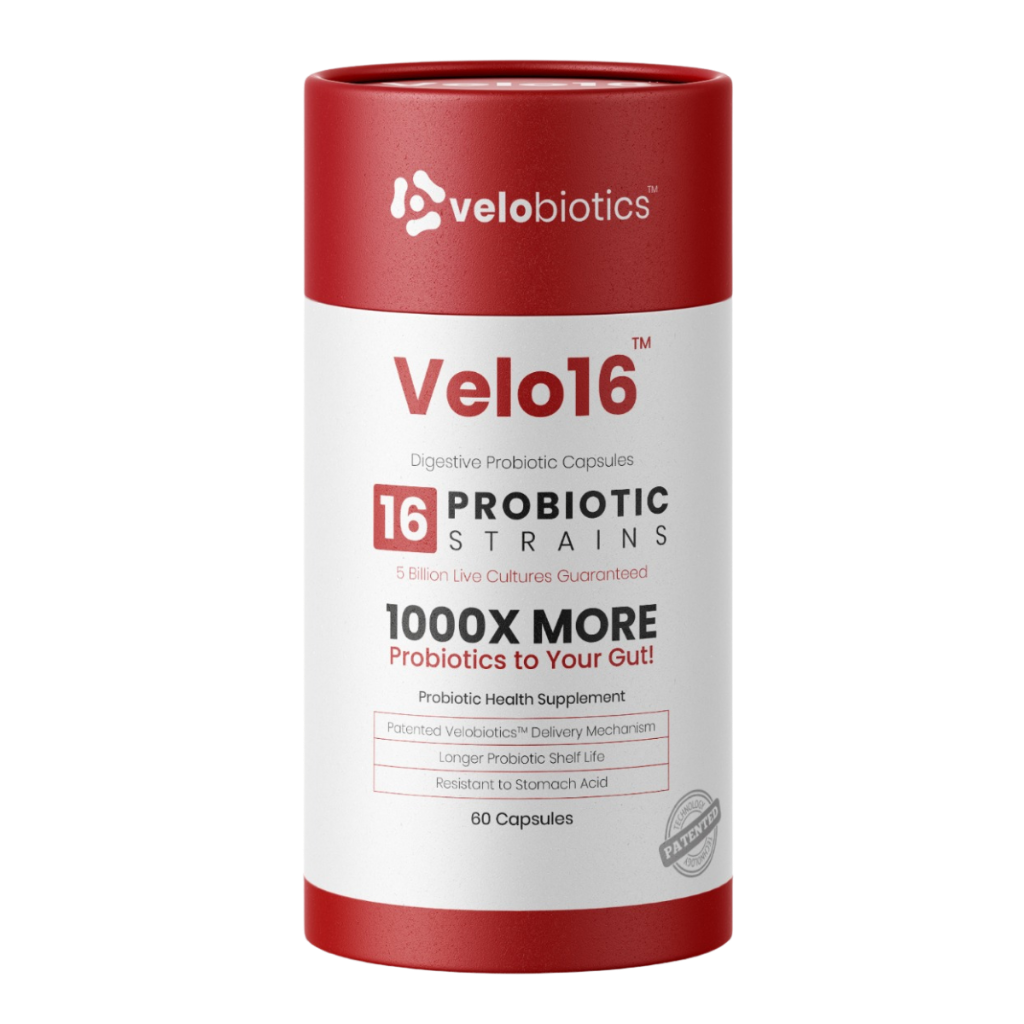
This is where Velo16™ Probiotics + Collagen enters the picture. The formulation is designed specifically to:
- Deliver clinically validated probiotic strains at therapeutic doses to restore gut microbiome balance
- Provide hydrolysed collagen peptides in a bioavailable form that supports both gut barrier repair and dermal collagen synthesis
- Combine synergistic co-factors — including vitamin C, which is essential for collagen hydroxylation — to maximise efficacy
Step 4 — Be Consistent and Track Progress
The gut-skin axis does not reset overnight. In my clinical experience, most patients begin noticing meaningful improvements in skin clarity, hydration and inflammation within 6-12 weeks of consistent supplementation alongside dietary changes. Tracking progress with photographs and journaling gut symptoms alongside skin changes is a powerful way to stay motivated and identify what is working.
Browse the complete Velo16™ range and find what suits your health goals at Shop All Velo16™ Products, or explore more evidence-based health articles in the Velo16™ Health Journal.
---Frequently Asked Questions
How long does it take for probiotics to improve skin conditions like acne or eczema?
Based on clinical research and my own practice experience, most individuals notice initial improvements in gut symptoms (bloating, regularity) within 2-4 weeks of consistent probiotic use. Skin improvements typically become apparent within 6-12 weeks, as the gut microbiome rebalances and systemic inflammation reduces. Consistency is critical — sporadic supplementation will not produce the sustained microbiome shifts necessary to meaningfully impact skin health.
Can collagen supplements really help with acne, or is that just a marketing claim?
The mechanism is indirect but scientifically grounded. Collagen peptides primarily help acne by supporting gut barrier integrity — reducing the leaky gut-driven LPS translocation and systemic inflammation that drives sebaceous gland hyperactivity and inflammatory lesion formation. Collagen also provides glycine, which has documented anti-inflammatory properties. So while collagen is not an antibiotic and does not directly kill acne-causing bacteria on the skin, its gut-healing effects can meaningfully reduce the inflammatory substrate that makes skin vulnerable to breakouts in the first place.
What is the difference between a skin probiotic and a regular probiotic?
Most probiotics on the market are formulated primarily for digestive comfort — reducing bloating, improving regularity and supporting immunity. A skin-targeted probiotic formulation prioritises strains with published evidence for modulating skin-specific inflammatory pathways, including Lactobacillus rhamnosus, Lactobacillus acidophilus and Bifidobacterium longum. The Velo16™ approach combines probiotic strain selection with collagen co-supplementation specifically because the research shows synergistic benefits for the gut-skin axis that neither provides alone.
Is leaky gut a real medical diagnosis?
Intestinal hyperpermeability is a real and measurable physiological phenomenon with extensive peer-reviewed research behind it — it is not a fringe concept. It is routinely assessed using lactulose/mannitol ratio tests and serum zonulin levels in functional medicine practice. While "leaky gut syndrome" as a standalone diagnosis is not universally recognised in conventional gastroenterology, the underlying mechanism — impaired tight junction integrity allowing translocation of endotoxins into systemic circulation — is thoroughly documented in mainstream medical journals including Gut (BMJ) and The Lancet.
Are Velo16™ products suitable for people with dairy or gluten sensitivities?
Velo16™ formulations are developed with common dietary sensitivities in mind. For specific allergen information, formulation details and suitability for your individual health circumstances, I recommend consulting the product pages directly or reaching out to our team. If you have a diagnosed inflammatory bowel condition or are immunocompromised, please consult your physician before beginning any new supplement regimen.
Ready to Address Your Skin at the Root?
If you have been fighting skin battles with topical products alone, it may be time to look deeper. The gut-skin axis science is clear: lasting skin transformation begins in the gut. The Velo16™ Probiotics + Collagen formulation is designed by a functional medicine physician to address both the microbial and structural foundations of radiant, healthy skin — from the inside out.
- ✔ Clinically validated probiotic strains at therapeutic doses
- ✔ Hydrolysed collagen peptides for gut barrier repair and dermal support
- ✔ Formulated for South African adults and their specific health environment
- ✔ Evidence-based, physician-developed, results-focused
Explore the Velo16™ Skin Health Collection →
Take the Clear Skin Quiz for a Personalised Recommendation →