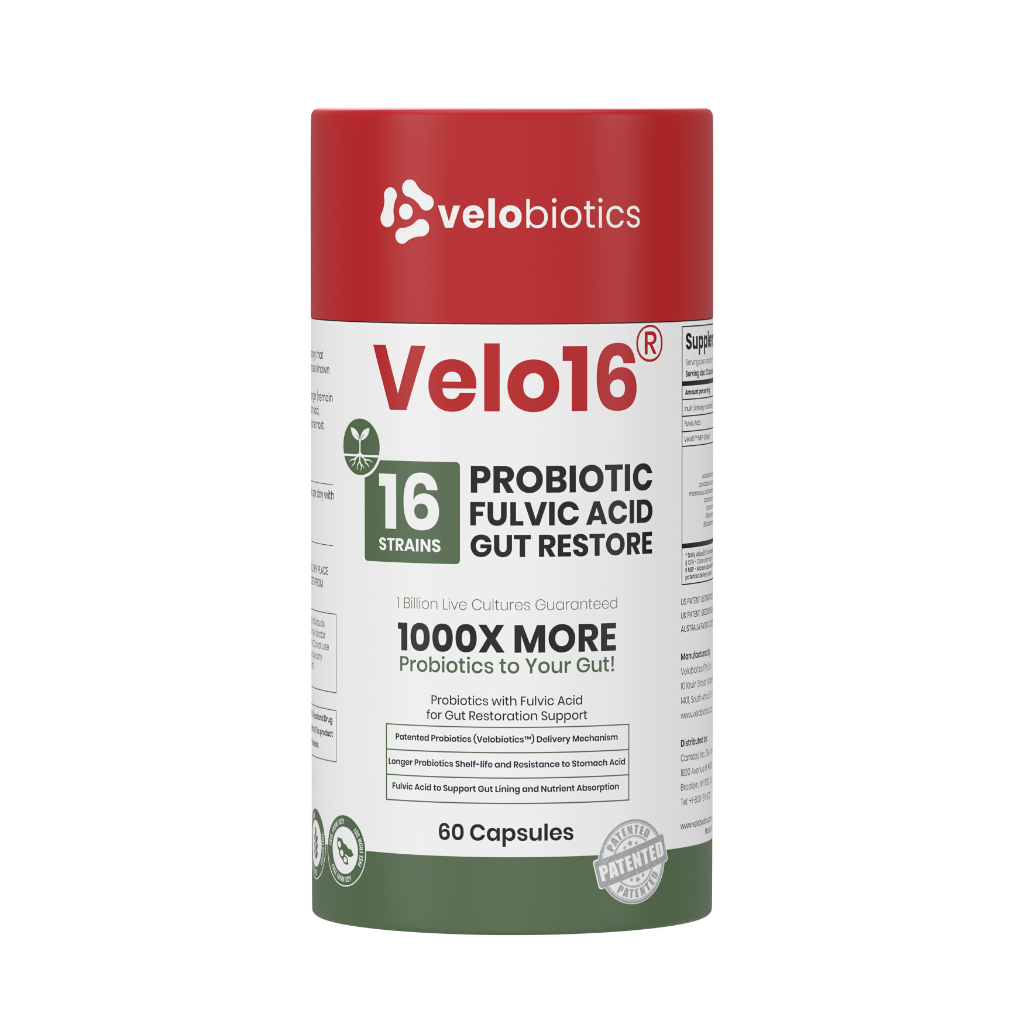
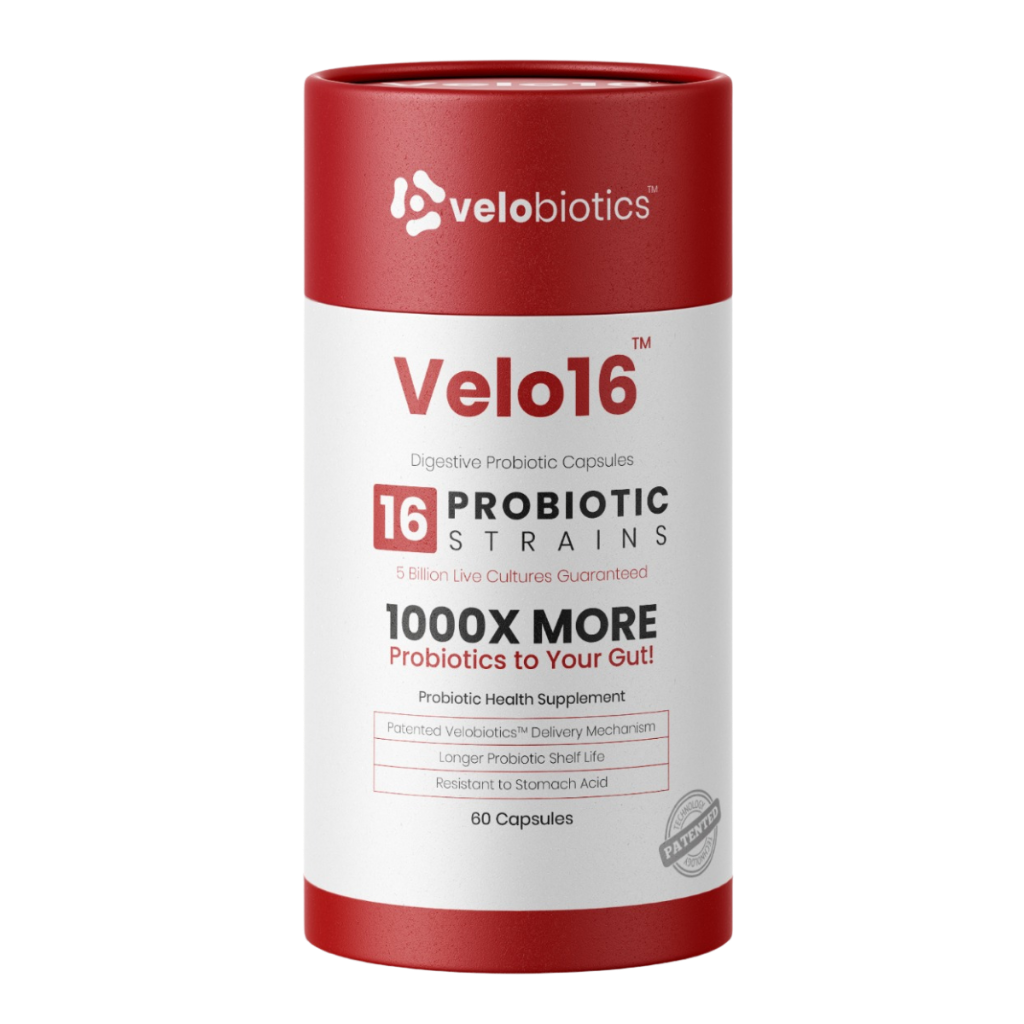
The Science of Gut Flora: How 16 Probiotic Strains Transform Your Digestive Health
By Dr. Chomba Chuma, MD — Founder, Velo16™ | Published in the Velo16™ Health Journal
Every day in my functional medicine practice in Johannesburg, I meet patients who have tried probiotic supplements and given up — convinced that probiotics simply "don't work" for them. When I dig deeper, the reason is almost always the same: they were using a single-strain or low-diversity supplement that was never equipped to address the complex ecosystem living inside their gut. The science has moved far beyond single-strain thinking, and it's time your supplement did too.
Your gut microbiome — the vast community of bacteria, fungi, viruses, and other microorganisms inhabiting your digestive tract — is one of the most complex ecosystems on Earth. It contains an estimated 38 trillion microbial cells, outnumbering your human cells almost one-to-one, according to a landmark study published in Cell (Sender et al., 2016). Managing this ecosystem with a single probiotic strain is a bit like trying to restore a rainforest by planting one type of tree. In this article, I want to walk you through the science of multi-strain probiotics, explain the critical roles played by different probiotic strains, and clarify why delivery method — not raw CFU count — determines whether a supplement actually works.
1. Understanding Gut Flora: Your Internal Ecosystem
The term gut flora refers to the community of microorganisms residing primarily in the large intestine, though your entire digestive tract hosts microbial life from your mouth to your colon. This community is not passive. It actively governs digestion, immune regulation, neurotransmitter production, inflammation levels, and even skin health.
When your gut flora is in a state of dysbiosis — an imbalance between beneficial and harmful bacteria — the downstream effects can be profound. Research published in Nature Microbiology has linked dysbiosis to conditions ranging from irritable bowel syndrome (IBS) and inflammatory bowel disease to depression, obesity, and autoimmune conditions.
The South African Gut Health Context
In South Africa, gut health challenges are particularly prevalent, yet often underdiagnosed. Dietary shifts toward ultra-processed foods, high antibiotic usage rates, chronic stress, and municipal water chlorination all contribute to microbiome disruption. A 2022 analysis examining the gut microbiome in South Africa noted significant differences in microbial diversity between urban and rural populations, with urbanised South Africans showing lower diversity — a marker consistently associated with poorer health outcomes. This makes targeted, multi-strain probiotic supplementation not a luxury but a genuine clinical priority for many South Africans.
"A diverse microbiome is a resilient microbiome. Diversity is the single most reliable biomarker of gut health we have." — Harvard Health Publishing
What Disrupts Gut Flora?
- Antibiotics: While life-saving, antibiotics indiscriminately eliminate beneficial bacteria alongside pathogens
- Processed diet: Low fibre, high sugar diets starve beneficial bacteria and feed pathogenic species
- Chronic stress: Activates the HPA axis, reducing microbial diversity through cortisol-mediated mechanisms
- Proton pump inhibitors (PPIs) and NSAIDs: Alter gut pH and intestinal permeability
- Environmental toxins: Pesticide residues, chlorinated water, and food preservatives have measurable antimicrobial effects
- Ageing: Natural reduction in Bifidobacterium populations begins in middle age
2. Single-Strain vs. Multi-Strain Probiotics: What the Research Says
For many years, the probiotic market was dominated by single-strain products — typically Lactobacillus acidophilus alone, or a basic combination of one or two strains. This approach emerged not from the science of gut ecology, but from manufacturing simplicity. Single strains are cheaper to produce and easier to stabilise.
However, the clinical evidence now strongly favours multi-strain formulations. A systematic review published in the Journal of Clinical Gastroenterology analysed 35 randomised controlled trials and found that multi-strain probiotic formulations produced significantly greater improvements in IBS symptoms, stool consistency, and gut transit time compared to single-strain products. The researchers attributed this to synergistic colonisation — different strains occupying different niches in the gut, collectively restoring a broader ecosystem.
Why Diversity Drives Results
Think of your gut like a complex urban environment. Different bacteria perform entirely different jobs: some produce short-chain fatty acids (SCFAs) that fuel colon cells; others synthesise B vitamins and vitamin K; others crowd out pathogens through competitive exclusion; still others modulate immune signalling at the intestinal wall. No single strain can do all of these jobs simultaneously. A high-quality probiotic supplement must therefore deliver a cross-functional team of microbial workers.
Studies show that multi-strain probiotics reduce IBS symptom severity scores by up to 47% more than single-strain formulations over an 8-week intervention period. — Journal of Clinical Gastroenterology, 2020
The Colony-Forming Unit (CFU) Misconception
Marketers love big CFU numbers. You've seen the labels — 50 billion CFU, 100 billion CFU. But here's what those numbers don't tell you: how many of those organisms survive the acidic environment of your stomach and reach your large intestine alive. The World Health Organization's guidelines on probiotics define a probiotic as requiring evidence of health benefit at the dose delivered — not merely the dose stated on the label. Studies show that unprotected probiotics can lose up to 90–99% of viable organisms during transit through gastric acid. A supplement delivering 5 billion CFU via an acid-resistant delivery system will consistently outperform 50 billion CFU in a standard capsule.
3. The Critical Roles of Lactobacillus and Bifidobacterium Strain Families
The two dominant genera in therapeutic probiotics are Lactobacillus and Bifidobacterium, and understanding what each family does helps explain why both are essential — and why strain selection within each family matters enormously.
The Lactobacillus Family: Frontline Defenders
Lactobacillus species are predominantly found in the small intestine and are among the most studied organisms in probiotic science. They are lactic acid producers, meaning they lower local pH — creating an environment inhospitable to pathogenic bacteria. Key strains include:
- L. acidophilus: Enhances lactose digestion, produces bacteriocins that suppress E. coli and Salmonella, and supports mucosal immune function
- L. rhamnosus (GG): One of the most clinically studied strains globally; proven to reduce antibiotic-associated diarrhoea and support intestinal barrier integrity
- L. plantarum: Exceptionally robust; survives gastric transit well and has demonstrated anti-inflammatory effects on the gut mucosa through NF-κB pathway modulation
- L. casei: Supports immune tolerance and has been studied in the context of Helicobacter pylori eradication protocols
- L. fermentum: Produces antioxidants including glutathione, offering both gut-level and systemic oxidative stress reduction
- L. salivarius: Active from the oral cavity through the intestine; particularly useful in managing small intestinal bacterial overgrowth (SIBO)
The Bifidobacterium Family: Colon Colonisers and Immune Educators
Bifidobacterium species dominate the large intestine and are particularly important for fermentation of dietary fibres into short-chain fatty acids — the primary fuel for colonocytes (cells lining the colon). These organisms are also essential immune educators, training regulatory T-cells to differentiate between harmless food antigens and genuine pathogens.
- B. longum: Reduces gut inflammation, has been linked to improved psychological wellbeing via the gut-brain axis, and degrades oxalate — reducing kidney stone risk
- B. breve: Particularly important in early life gut development; in adults, supports fat metabolism and has demonstrated anti-obesity effects in clinical trials
- B. lactis (animalis): Enhances innate immune responses and has the strongest evidence base for reducing transit time and improving stool consistency
- B. infantis: Produces indolepropionic acid (IPA), a potent neuroprotective compound; modulates inflammatory cytokine expression
- B. bifidum: Degrades mucins in the colon and supports epithelial barrier repair; particularly valuable post-antibiotic therapy
Beyond Lactobacillus and Bifidobacterium
Comprehensive multi-strain formulations also incorporate additional organisms that address specific niches. Streptococcus thermophilus produces lactase and beta-galactosidase enzymes, supporting carbohydrate digestion and reducing bloating. Lactococcus lactis produces nisin — a natural antimicrobial peptide active against a wide range of gram-positive pathogens. Including these strains alongside Lactobacillus and Bifidobacterium creates genuine functional redundancy across the entire digestive tract.
[INFOGRAPHIC_PLACEHOLDER: "The 16 Strain Ecosystem — What Each Strain Does and Where It Works in Your Gut" — Visual map of the digestive tract showing strain colonisation zones, primary functions, and clinical evidence for each of the 16 strains in Velo16™ Digestive Probiotics]
4. Why Delivery Method Matters More Than CFU Count
This is the conversation I have more than any other in my practice, and it represents perhaps the most important paradigm shift in modern probiotic science. The supplement industry has conditioned consumers to chase CFU numbers, but the meaningful metric is not how many organisms are in the capsule — it is how many viable organisms reach the target site in your colon.
The Gastric Acid Problem
Your stomach acid (gastric pH 1.5–3.5) is designed to sterilise food. It does an equally effective job on poorly protected probiotics. Research from NCBI/PubMed (Charteris et al.) has demonstrated that standard gelatine capsules offer virtually no protection from gastric acid, with viable organism counts dropping by 3–4 log units (that is, 99.9%) within 90 minutes of simulated gastric exposure.
Advanced Delivery Technologies
The solutions to this challenge are well-established in pharmaceutical science but poorly implemented in the supplement industry:
- Acid-resistant (enteric-coated) capsules: Polymer coatings such as hydroxypropyl methylcellulose phthalate (HPMCP) dissolve only above pH 5.5 — safely past the stomach and into the small intestine. Studies demonstrate up to 10-fold greater survival rates versus standard capsules.
- Microencapsulation: Individual bacterial cells are coated in protective lipid or alginate matrices before tableting, providing an additional layer of protection during both manufacturing storage and gastric transit.
- Lyophilisation (freeze-drying) at low temperatures: Preserves bacterial viability during manufacturing and prevents premature activation before consumption.
- Prebiotic matrix inclusion: Embedding probiotic organisms in a prebiotic substrate (inulin, FOS, GOS) that provides immediate nutrition upon reaching the colon, dramatically improving initial colonisation rates.
"Probiotic efficacy is not determined at manufacture. It is determined at the point of colonisation. Everything between those two moments is a survival challenge the organism must overcome." — Dr. Chomba Chuma, MD, Velo16™
This is precisely the rationale behind the formulation architecture of the Velo16™ Gut Health Collection. Rather than competing on CFU numbers, Velo16™ Digestive Probiotics employs a precision delivery matrix that ensures maximum viable organism delivery to the large intestine — where the clinical work of gut restoration actually happens.
5. The Clinical Evidence for 16-Strain Formulations
The question practitioners rightly ask is: is there a point of diminishing returns with strain number? Could 16 strains actually be too many? The evidence suggests the answer is no — provided strain selection is clinically rational rather than arbitrary.
Synergistic Colonisation and Ecological Redundancy
A compelling body of research from gut ecology demonstrates two principles that justify high-diversity formulations. First, synergistic colonisation: certain strains create environmental conditions that facilitate the survival and growth of others. L. acidophilus, for example, produces lactic acid that lowers local pH, creating conditions that B. longum preferentially colonises. Second, ecological redundancy: when multiple strains perform overlapping functions, the loss or temporary suppression of any single strain does not compromise overall ecosystem function.
Real-World Clinical Outcomes
Clinical trials using multi-strain formulations in the 8–16 strain range have documented significant improvements across multiple outcome markers:
- Reduction in bloating and flatulence severity scores (Rome IV criteria) by 38–52% at 8 weeks
- Normalisation of stool form (Bristol Stool Scale) in both constipation-predominant and diarrhoea-predominant IBS
- Significant reductions in faecal calprotectin (a marker of intestinal inflammation) in patients with subclinical gut inflammation
- Improved scores on gut-brain axis measures including anxiety, sleep quality, and mood — consistent with the growing literature on the microbiome-gut-brain axis
- Accelerated recovery of microbiome diversity post-antibiotic therapy, with diverse multi-strain probiotics outperforming both single-strain interventions and no treatment
For a deeper exploration of the evidence base underpinning Velo16™ formulation decisions, visit The Velo16™ Science page.
The Gut-Skin Connection
One area that consistently surprises my patients is the relationship between gut flora and skin health. The gut-skin axis is well-documented — dysbiosis increases intestinal permeability, allowing bacterial lipopolysaccharides (LPS) to enter systemic circulation and drive cutaneous inflammation. Conditions including acne vulgaris, eczema, rosacea, and psoriasis all have demonstrated associations with microbiome disruption. If skin health is a concern alongside digestive symptoms, I encourage you to Take the Clear Skin Quiz to identify whether a gut-first approach may be right for you.
6. How to Choose the Best Probiotic Supplement: A Clinical Checklist
Navigating the probiotic supplement market — particularly in South Africa, where regulatory oversight of supplement labelling is less stringent than pharmaceutical products — requires an informed consumer framework. Here is the checklist I give my own patients:
Strain-Level Specificity
The label must identify probiotics at the strain level, not merely the genus or species. "Lactobacillus acidophilus NCFM" tells you something meaningful. "Lactobacillus species" tells you almost nothing about clinical activity.
CFU Count at End of Shelf Life
The CFU stated should be guaranteed "at end of shelf life" — not "at time of manufacture." Organism counts decline during storage, and a product that starts with 50 billion CFU may deliver 2 billion by the time you purchase it if the manufacturer's guarantee is manufacture-date-based.
Delivery System Transparency
Look for explicit mention of enteric coating, microencapsulation, or delayed-release technology. If the label says nothing about delivery methodology, assume standard capsule delivery — and assume significant gastric loss.
Prebiotic Inclusion
The best probiotic supplement formulations include a prebiotic substrate. Prebiotics serve as fuel for newly introduced organisms, dramatically improving colonisation rates. Look for inulin, fructooligosaccharides (FOS), galactooligosaccharides (GOS), or chicory root extract on the ingredient list.
Third-Party Testing and Manufacturing Standards
In South Africa, look for products manufactured in GMP-certified facilities with Certificates of Analysis (CoAs) available on request. Third-party testing by accredited laboratories is the gold standard for strain identity and viability verification.
Velo16™ Digestive Probiotics meets every criterion on this checklist. You can review the full formulation, strain list, and delivery technology documentation on the Velo16™ Gut Health Collection page, or explore the complete product range at Shop All Velo16™ Products.
Frequently Asked Questions
How long does it take for multi-strain probiotics to improve digestive health?
Most patients notice initial improvements in bloating, gas, and stool consistency within 1–2 weeks of consistent use. However, meaningful microbiome remodelling — measurable changes in microbial diversity and population composition — typically requires 4–8 weeks of daily supplementation. For patients recovering from antibiotic therapy or with longstanding dysbiosis, a 12-week protocol is more appropriate. Consistency matters more than any single dose.
Can I take too many probiotic strains at once? Is 16 strains safe?
For healthy adults, multi-strain formulations including 10–16 strains are well-tolerated and supported by clinical evidence. The organisms selected in Velo16™ Digestive Probiotics are all Generally Recognised as Safe (GRAS) or carry EU Qualified Presumption of Safety (QPS) status. Individuals with severely compromised immune systems (e.g., post-transplant, active chemotherapy) should consult their treating physician before starting any probiotic supplement, as per WHO guidelines.
Do I need to refrigerate Velo16™ Digestive Probiotics?
Velo16™ Digestive Probiotics utilises lyophilised (freeze-dried) organisms within a moisture-controlled, oxygen-barrier packaging system, providing shelf-stable viability at room temperature (below 25°C) when stored correctly. Refrigeration is not required but extends shelf life if you live in a very warm climate. Always keep the product in a cool, dry place away from direct sunlight.
What is the best time of day to take a probiotic supplement?
The evidence consistently shows that taking probiotics with or immediately before a meal improves survival and colonisation rates. Food buffers gastric acid and slows gastric emptying, giving organisms more time to pass through into the small intestine. Morning with breakfast or evening with dinner are both appropriate. Avoid taking probiotics with hot beverages, as heat above 40°C will impair organism viability.
Can probiotics help with conditions beyond digestion, such as skin or mental health?
Yes — and this is one of the most exciting frontiers in microbiome science. The gut-brain axis (bidirectional communication between gut flora and the central nervous system) and the gut-skin axis are both well-documented in peer-reviewed literature. Emerging research published in Nature Microbiology and elsewhere links microbiome diversity to anxiety, depression, skin inflammation, and immune regulation. While probiotics are not a replacement for medical treatment of these conditions, optimising gut flora is a meaningful component of a comprehensive integrative health strategy.
Ready to Transform Your Gut Health?
If this article has helped you understand why not all probiotics are created equal, the logical next step is to experience the difference that strain diversity, clinical formulation, and intelligent delivery technology can make for your digestive health.
Velo16™ Digestive Probiotics delivers all 16 clinically selected probiotic strains in a precision delivery matrix — formulated specifically for the modern South African gut and backed by evidence-based functional medicine principles.
- ✅ 16 clinically selected probiotic strains at genus, species, and strain level
- ✅ Acid-resistant delivery technology for maximum viable cell delivery
- ✅ Prebiotic matrix for enhanced colonisation
- ✅ CFU guaranteed at end of shelf life, not manufacture date
- ✅ GMP-certified manufacturing with third-party CoA testing
Explore the Velo16™ Gut Health Collection → | Shop All Velo16™ Products → | Read The Velo16™ Science →