
Why You're Always Tired: The Hidden Gut-Energy Connection Most Doctors Miss
By Dr. Chomba Chuma, MD | Velo16™ Health Journal
You've had your blood work done. Your iron is "fine." Your thyroid is "normal." Your doctor has reassured you, perhaps more than once, that there is nothing wrong — and yet you wake up every morning feeling like you never went to sleep. You drag yourself through the day on caffeine and willpower, only to collapse into bed exhausted, and then do it all over again. If this sounds familiar, I want you to know something important: you are not imagining it, and you are not alone.
In my functional medicine practice in Johannesburg, persistent fatigue is one of the most common complaints I hear from patients between the ages of 25 and 55. And in the vast majority of cases, the root cause is something that conventional medicine almost never investigates thoroughly — the gut. Specifically, the relationship between gut dysbiosis, nutrient malabsorption, and chronic B-vitamin deficiency is a triad that silently depletes your energy at a cellular level, leaving you exhausted despite technically "normal" test results.
In this article, I am going to walk you through the science of gut health fatigue, explain why your microbiome is quite literally a manufacturing plant for the energy nutrients your body depends on, and show you how restoring gut health alongside targeted B-complex supplementation can be the missing piece in your energy recovery. This is the gut-energy connection most doctors miss — and it is time we talked about it.
The Energy Crisis Hidden in Your Gut
When most people think about energy, they think about sleep, exercise, or perhaps iron levels. What they rarely consider is that the roughly 38 trillion microorganisms living in their digestive tract — collectively called the gut microbiome — play a profound role in determining how energetic they feel on a daily basis.
A landmark review published in Nature Microbiology established that the gut microbiome is involved in hundreds of metabolic processes, including the synthesis of vitamins, the regulation of mitochondrial function, and the modulation of inflammation — all of which directly impact your energy levels. When the balance of bacteria in your gut is disrupted — a condition known as gut dysbiosis — these processes begin to break down, and fatigue is one of the earliest and most persistent symptoms.
What Is Gut Dysbiosis and Why Does It Drain Your Energy?
Gut dysbiosis refers to an imbalance in the composition of your gut microbiota, where harmful or opportunistic bacteria, yeasts, or pathogens begin to outnumber the beneficial strains. This imbalance can be triggered by a wide range of factors that are unfortunately very common in modern life:
- Prolonged or repeated antibiotic use
- A diet high in processed foods, refined sugar, and ultra-processed fats
- Chronic psychological or physiological stress
- Excessive alcohol consumption
- Environmental toxin exposure
- Sedentary lifestyle habits
- Insufficient dietary fibre and polyphenol intake
When dysbiosis takes hold, the gut lining begins to weaken. The tight junctions between intestinal cells — your gut's primary defence barrier — become compromised, a phenomenon increasingly documented in the scientific literature as increased intestinal permeability, or colloquially, "leaky gut." A 2018 review in the Journal of Clinical Gastroenterology confirmed that increased intestinal permeability is associated with systemic inflammation, immune dysregulation, and fatigue syndromes.
But here is where the energy connection becomes particularly compelling: a disrupted gut microbiome also severely impairs your ability to absorb and synthesise the very nutrients that power every cell in your body — most critically, B vitamins.
B Vitamins, Your Gut, and the Biology of Energy Production
The eight B vitamins — thiamine (B1), riboflavin (B2), niacin (B3), pantothenic acid (B5), pyridoxine (B6), biotin (B7), folate (B9), and cobalamin (B12) — are not optional micronutrients. They are the essential cofactors that your mitochondria use to convert the food you eat into adenosine triphosphate (ATP), the universal energy currency of the human body. Without adequate B vitamins, your cellular energy factories literally cannot run properly.
"B vitamins serve as coenzymes in virtually every energy-producing reaction in the human body. Deficiencies — even subclinical ones — are associated with fatigue, cognitive impairment, mood disturbances, and poor physical performance."
How Your Gut Bacteria Manufacture B Vitamins
Here is a fact that surprises most of my patients: your gut bacteria are among the primary producers of several B vitamins inside your body. Beneficial bacterial strains — particularly certain species of Lactobacillus, Bifidobacterium, and Bacteroides — synthesise meaningful quantities of B12, folate (B9), riboflavin (B2), biotin (B7), and other B vitamins as natural metabolic byproducts of their activity.
A compelling study published on PubMed/NCBI (Magnúsdóttir et al., 2015, Nature Biotechnology) used genome-scale metabolic modelling to demonstrate that gut microbiota are capable of producing the complete biosynthetic pathways for at least seven essential B vitamins. When dysbiosis disrupts these bacterial communities, this endogenous vitamin production collapses — regardless of how well you think you are eating.
Malabsorption: The Double Blow to Your Energy
Gut dysbiosis and intestinal permeability do not just reduce B-vitamin synthesis — they also impair the gut's ability to absorb the B vitamins you consume through food and supplements. The uptake of B12, for example, is a highly complex process that requires intrinsic factor (a protein produced in the stomach), an intact ileal lining, and specific transporter proteins. When gut inflammation and dysbiosis damage the intestinal mucosa, this entire system becomes less efficient.
The result is a vicious cycle that is devastatingly common in chronic fatigue gut cases:
- Dysbiosis reduces beneficial bacteria that synthesise B vitamins
- Gut inflammation impairs absorption of dietary B vitamins
- Falling B-vitamin levels impair mitochondrial energy production
- Low cellular energy worsens gut motility and immune function
- Poor gut function deepens dysbiosis further
Breaking this cycle requires a dual strategy — and that is precisely what the Velo16™ Energy & Vitality Collection was designed to address.
The Science of Probiotics and Energy: What the Research Actually Shows
The term probiotic for energy might sound like marketing language, but the emerging science is genuinely compelling. Probiotics — live beneficial microorganisms consumed in sufficient quantities to confer a health benefit — work through multiple mechanisms that are directly relevant to energy production and fatigue reduction.
Probiotics and Mitochondrial Function
A growing body of research suggests that the gut microbiome communicates with mitochondria — the powerhouses of your cells — through several signalling pathways. Beneficial gut bacteria produce short-chain fatty acids (SCFAs) such as butyrate, propionate, and acetate, which serve as important fuel substrates for colonocytes and have been shown to support mitochondrial biogenesis (the creation of new mitochondria). More mitochondria means greater cellular energy capacity.
A 2021 systematic review published on PubMed/NCBI found that probiotic supplementation in individuals with chronic fatigue was associated with statistically significant improvements in fatigue scores, quality of life, and inflammatory markers — all pointing to genuine biological mechanisms, not placebo effects.
Probiotics and Inflammation: Switching Off the Fatigue Signal
One of the most underappreciated drivers of fatigue is low-grade systemic inflammation. When the gut barrier is compromised, bacterial lipopolysaccharides (LPS) — endotoxins from the outer membrane of certain gut bacteria — can enter the bloodstream and trigger a persistent, low-level inflammatory response. This inflammatory state directly suppresses the hypothalamic-pituitary-adrenal (HPA) axis, impairs thyroid function, and creates a neurological sensation of profound tiredness that no amount of sleep seems to resolve.
The World Health Organization has acknowledged the central role of gut health in overall metabolic health, including its influence on inflammatory pathways. Specific probiotic strains — particularly Lactobacillus rhamnosus, Bifidobacterium longum, and Lactobacillus plantarum — have demonstrated measurable anti-inflammatory effects by tightening gut junctions, reducing LPS translocation, and modulating cytokine production.
The Gut-Brain Axis and Mental Fatigue
Physical fatigue is only part of the story. Many of my patients describe what they call "brain fog" — a persistent difficulty with concentration, memory, and mental clarity that accompanies their physical exhaustion. This is where the gut-brain axis becomes critically important.
The gut contains approximately 500 million neurons and produces around 95% of the body's serotonin — a neurotransmitter essential not only for mood but for regulating sleep, appetite, and cognitive processing. Gut dysbiosis disrupts serotonin synthesis, impairs the vagal nerve communication between gut and brain, and contributes directly to the mental fatigue and brain fog that patients find so debilitating.
Restoring microbiome diversity through targeted probiotic supplementation addresses this neurological component of fatigue in a way that no conventional stimulant or energy drink ever could. Explore the full evidence base on The Velo16™ Science page to understand how our formulations are built on this research.
Recognising the Signs: Is Your Gut Behind Your Fatigue?
Not every case of tiredness is gut-related, but in my clinical experience, the following cluster of symptoms is highly suggestive of chronic fatigue gut syndrome as a primary driver:
Physical Symptoms
- Persistent fatigue that does not improve with adequate sleep
- Bloating, gas, or abdominal discomfort after meals
- Irregular bowel habits — constipation, diarrhoea, or alternating both
- Food sensitivities that seem to be worsening over time
- Frequent infections or slow recovery from illness
- Muscle weakness or unexplained aches
- Tingling or numbness in the extremities (a classic B12 deficiency sign)
Cognitive and Emotional Symptoms
- Brain fog, poor concentration, and difficulty retaining information
- Low mood, irritability, or mild anxiety
- Poor stress resilience — feeling overwhelmed by situations you previously managed well
- Afternoon energy crashes, particularly after carbohydrate-heavy meals
- Cravings for sugar and refined carbohydrates (often a sign of dysbiotic bacteria "demanding" their preferred food source)
Research published on PubMed/NCBI found that approximately 52% of patients with chronic fatigue syndrome showed measurable signs of gut dysbiosis and altered intestinal permeability, compared to healthy controls — suggesting gut pathology is not a coincidental finding but a mechanistically linked cause.
Why Standard Blood Tests Miss This
Here is an important clinical reality: standard serum B12 and folate tests measure total circulating levels of these vitamins, not functional intracellular availability. It is entirely possible — and in my practice, remarkably common — for a patient to have B12 levels within the laboratory reference range but still be functionally deficient at the cellular level. This is because absorption inefficiency, conversion enzyme defects (such as the MTHFR gene variant), and mitochondrial dysfunction mean that the vitamin circulating in the blood is not necessarily getting into the cells where it is needed.
Similarly, no standard blood panel will assess your microbiome composition, SCFA production, or gut permeability. This is why so many fatigue patients are told everything is "normal" — the right questions simply aren't being asked.
The Velo16™ Dual-Action Approach: Restoring the Foundation of Energy
Understanding the gut-energy connection is one thing. Doing something evidence-based and effective about it is another. At Velo16™, we have built our energy supplement formulations on the same scientific principles I have outlined in this article — addressing both the root cause (gut dysbiosis and barrier dysfunction) and the downstream consequence (B-vitamin deficiency and mitochondrial impairment) simultaneously.
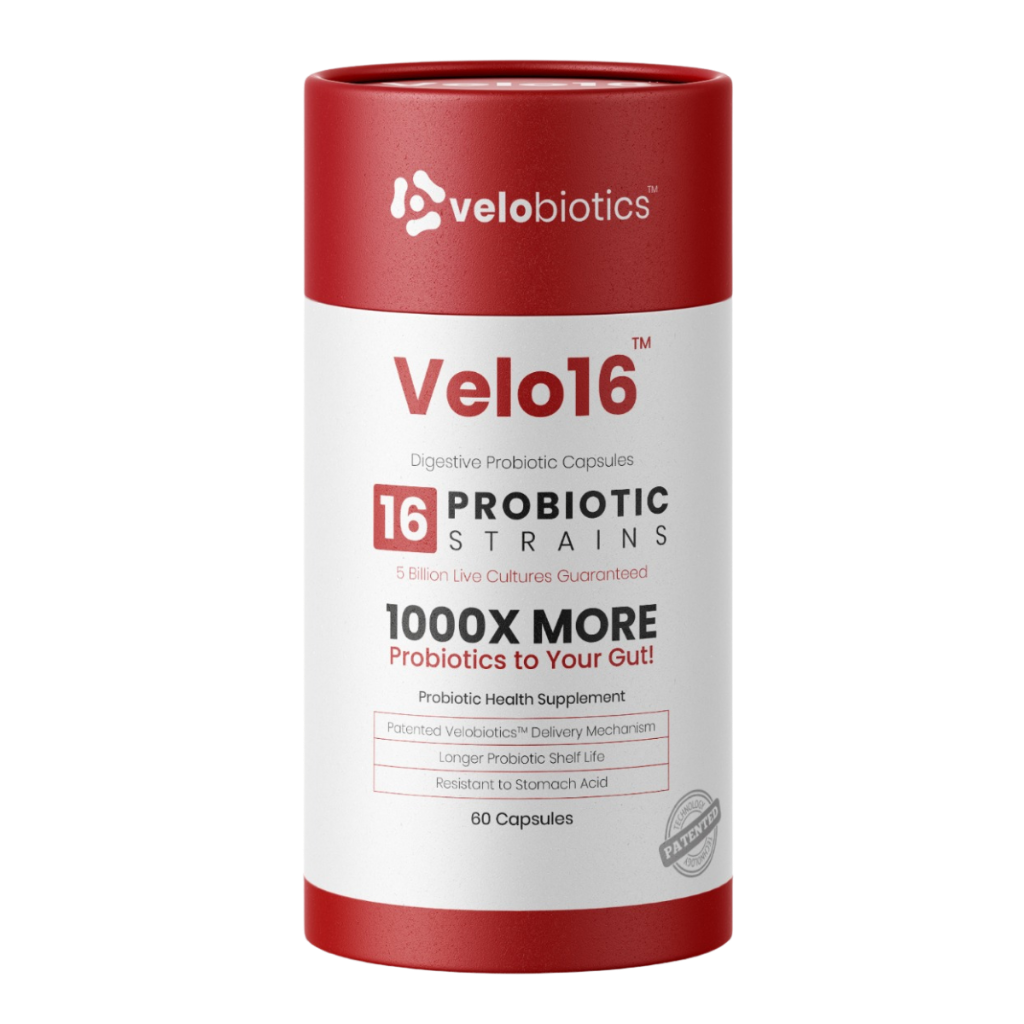
Velo16™ Probiotics: Rebuilding Your Microbiome
Our probiotic formulation is not a one-size-fits-all blend. It has been developed with specific attention to strains that are clinically validated for energy and vitality outcomes:
- Lactobacillus rhamnosus GG — The most extensively studied probiotic strain globally, shown to reduce intestinal permeability, modulate immune function, and decrease inflammatory cytokines associated with fatigue.
- Bifidobacterium longum — A key producer of folate (B9) and shown to reduce systemic inflammation via the gut-brain axis, with specific research in cognitive fatigue and mood.
- Lactobacillus plantarum — Demonstrated to increase SCFA production (supporting mitochondrial function) and shown to improve energy levels and reduce fatigue markers in clinical trials.
- Lactobacillus acidophilus — Supports the intestinal mucosa integrity, enhancing B-vitamin absorption by restoring the health of the absorptive surface area of the small intestine.
Every capsule delivers a guaranteed minimum colony forming unit (CFU) count at the time of consumption — not at the time of manufacture — ensuring that the bacteria you swallow are alive, viable, and ready to colonise.
Velo16™ B-Complex Energy: Fuelling Your Cells Directly
While the probiotics work to restore your gut's capacity to synthesise and absorb B vitamins over time, our B-complex supplement delivers the complete spectrum of all eight B vitamins in their most bioavailable, activated forms:
- Methylcobalamin (B12) — The active, neurologically-ready form of B12, bypassing the conversion steps that are impaired in many individuals, particularly those with MTHFR variants.
- Methylfolate (B9) — The pre-activated form of folate, ready for immediate use in DNA synthesis, neurotransmitter production, and red blood cell formation.
- Pyridoxal-5-phosphate (P5P / B6) — The active coenzyme form of B6, critical for amino acid metabolism, serotonin and dopamine synthesis, and immune function.
- Riboflavin-5-phosphate (B2) — The activated form essential for the electron transport chain — the final step of cellular energy production in your mitochondria.
- Thiamine (B1), Niacin (B3), Pantothenic Acid (B5), and Biotin (B7) — All included in their optimal forms to complete the full coenzyme support matrix for ATP synthesis.
This is not the cheap, poorly absorbed cyanocobalamin and folic acid you find in most drugstore supplements. This is pharmaceutical-grade, activated B-complex designed specifically for individuals with compromised gut absorption — which, as I have explained, is far more common than most people realise.
As one of the leading energy supplements in South Africa, the Velo16™ B-Complex Energy formula bridges the gap while your probiotics rebuild the long-term infrastructure. Together, they create a comprehensive, root-cause solution to fatigue. Browse the full range at our Shop All Velo16™ Products page.
A Practical Protocol: What to Expect and How to Optimise Results
Restoring gut health is not an overnight process. I always counsel my patients to think in terms of a 90-day programme rather than expecting instant results. Here is a general framework for what to expect:
Weeks 1–4: The Foundation Phase
During the first four weeks, the primary goal is reintroducing beneficial bacteria and beginning to reduce gut inflammation. Some patients notice initial improvements in digestion, bloating, and stool regularity within the first two weeks. Mild initial symptoms (temporary bloating or changes in bowel habits) are normal as the microbiome begins to shift. The B-Complex Energy supplement begins providing direct cellular fuel from day one — many patients report noticing improved mental clarity and afternoon energy within the first 7–14 days.
Weeks 5–8: The Restoration Phase
By weeks five through eight, gut barrier integrity begins to improve measurably. Inflammatory markers tend to start declining, absorption efficiency improves, and the seeding bacterial strains begin establishing meaningful colonisation. Physical energy improvements become more consistent and sustained during this phase.
Weeks 9–12: The Optimisation Phase
By the third month, patients who follow the protocol consistently — supported by dietary improvements (increasing fibre, reducing ultra-processed foods, limiting alcohol) — typically report substantial improvements in energy, cognitive function, sleep quality, and overall resilience. This is when the gut is genuinely rebuilding its capacity to synthesise and absorb B vitamins independently.
For best results, pair the supplementation protocol with:
- A diverse, plant-rich diet with at least 30 different plant foods per week
- Daily prebiotic fibre (found in garlic, onions, leeks, bananas, asparagus, and oats)
- Stress management practices — chronic cortisol elevation is a primary driver of dysbiosis
- Consistent, moderate physical activity
- Prioritising 7–9 hours of sleep per night
For more evidence-based health content, visit the Velo16™ Health Journal where we publish regular research updates, patient case studies, and practical health guides.
Frequently Asked Questions
How long does it take for probiotics to improve energy levels?
Most patients notice initial improvements in digestion and mental clarity within 2–4 weeks of consistent probiotic use. Meaningful, sustained improvements in physical energy typically become apparent between weeks 4 and 8. Full microbiome restoration and its associated energy benefits are best assessed at the 90-day mark. Results vary depending on the severity of dysbiosis, dietary habits, stress levels, and individual microbiome composition.
Can I take the Velo16™ B-Complex and Probiotics together?
Absolutely — in fact, this is the recommended approach. The B-Complex Energy supplement provides immediate cellular fuel while the probiotics work on the underlying gut infrastructure. For optimal absorption, take the probiotic with your first meal of the day and the B-Complex in the morning with breakfast. B vitamins are water-soluble and work best taken with food to support absorption and prevent any gastric sensitivity.
My doctor says my B12 is normal. Could I still be deficient?
Yes — this is one of the most important clinical nuances in energy medicine. Standard serum B12 tests measure total circulating B12, not functional intracellular availability. Functional B12 deficiency can exist with "normal" serum levels, particularly in individuals with MTHFR gene variants, gut absorption issues, or high homocysteine levels. If you suspect functional deficiency, request a methylmalonic acid (MMA) and homocysteine test from your doctor, as these are far more sensitive markers of cellular B12 status.
Are there specific foods I should eat to support my microbiome during the protocol?
Yes. Focus on increasing your dietary diversity with prebiotic-rich foods (garlic, onions, leeks, asparagus, legumes, oats, and unripe bananas), fermented foods (plain yoghurt, kefir, kimchi, sauerkraut, and kombucha), and polyphenol-rich plant foods (berries, dark leafy greens, green tea, and extra-virgin olive oil). Simultaneously, reduce ultra-processed foods, refined sugar, and excessive alcohol, all of which actively promote dysbiosis and undermine your probiotic investment.
Is the Velo16™ B-Complex Energy supplement suitable for vegetarians and vegans?
Yes. Velo16™ products are formulated with vegetarian and vegan suitability in mind. Our B12 is provided as methylcobalamin — the same bioavailable form found in quality plant-based supplements — and our capsule shells are plant-derived. This makes our B-Complex particularly relevant for plant-based eaters in South Africa, who are at significantly higher risk of B12 and B2 deficiency due to the near-exclusive animal food sourcing of these vitamins in nature.
Ready to Reclaim Your Energy? Start at the Root.
If you have recognised yourself in this article — if you are tired of being tired despite normal blood tests and well-meaning reassurances — it is time to look where most doctors don't: your gut.
The Velo16™ Energy & Vitality Collection brings together clinically validated probiotic strains and pharmaceutical-grade activated B vitamins in a dual-action system designed specifically to break the gut-energy fatigue cycle from the inside out.
This is not another temporary energy fix. This is root-cause medicine in a capsule — built on the same evidence base I use with my patients every day.
- ✅ Clinically validated probiotic strains for gut restoration and energy
- ✅ Activated B-vitamin forms for superior bioavailability
- ✅ Formulated for individuals with compromised gut absorption
- ✅ Proudly available as a leading energy supplement in South Africa
Shop All Velo16™ Products and begin your 90-day energy transformation today. Questions about which product is right for your specific needs? Explore The Velo16™ Science or take our Take the Clear Skin Quiz to discover your personalised health starting point.
Your energy is not gone. It has simply been waiting for the right foundation.