

Zinc Picolinate Meets 16-Strain Probiotics: The Immunity Stack South Africans Are Ordering Before Cold Season Hits
Every year, as the first cold snaps roll in across Johannesburg, Cape Town and Durban, the same thing happens: offices get quieter, tissues disappear from shelves, and everyone suddenly remembers they meant to "sort out their immune system" months ago. If that sounds familiar, you are not alone, and you are not too late.
Two ingredients have quietly become the most searched-for combination in South African wellness circles this season: zinc picolinate and 16-strain probiotics. Separately, each has a solid body of research behind it. Together, they target two different, complementary parts of how your body responds to everyday seasonal pressure.
Why Immunity Feels Harder to Maintain During South African Winters
Shorter days, indoor crowding, travel over school holidays and temperature swings between a hot office and a cold commute all place extra demand on the body. None of this "causes" illness on its own, but it does create more opportunities for your system to feel the strain.
Sleep often suffers in winter too, and sleep quality is closely tied to how well your immune system functions day to day. If you have already read our piece on the hidden gut-energy connection, you will know that fatigue and immune resilience are more connected than most people realise.
"Nutritional status, including adequate intake of micronutrients such as zinc, plays a supportive role in normal immune system function."
- World Health Organization, Nutrition and Immunity guidance
This is where people start asking a very practical question: what can I actually add to my routine, right now, that is backed by real evidence rather than hype?
The Zinc Picolinate Difference: What the Research Actually Shows
Zinc is an essential trace mineral involved in dozens of enzymatic processes, including normal immune cell development and communication. A well-known meta-analysis of zinc lozenge trials found that zinc, taken soon after the onset of cold symptoms, was associated with a shorter average duration of those symptoms in adults.
According to a widely cited analysis published via PubMed, higher daily doses of zinc were linked to more noticeable reductions in cold duration compared to lower doses. This does not mean zinc stops a cold from occurring, but it does suggest a meaningful supportive role once your body is already under seasonal pressure.
Why Form Matters: Picolinate vs Other Zinc Compounds
Not all zinc supplements are absorbed equally well. Zinc picolinate is bound to picolinic acid, a compound your body produces naturally to help transport minerals across the gut wall. Several comparative absorption studies have pointed to picolinate as one of the more bioavailable zinc forms compared to zinc oxide or zinc sulphate.
- Zinc picolinate is generally gentler on the stomach than zinc sulphate
- Absorption appears less affected by food interactions
- It is commonly recommended in professional supplement guidance for this reason
The Mayo Clinic's zinc supplement overview notes that zinc is involved in wound response, taste and smell function, and immune cell activity, while also cautioning that more is not always better. Staying within recommended daily ranges matters more than mega-dosing.
Your Gut Is Immune Command Central
Zinc does not work in isolation. Roughly 70 percent of your immune tissue is located in and around the gut lining, which is exactly why gut health and seasonal resilience are so tightly linked. We explored this relationship in depth in our earlier feature on activating gut-based immunity, and the research has only grown stronger since.
A Cochrane-affiliated review looking at probiotics and respiratory tract infections found that probiotic supplementation was associated with a modest reduction in the number of acute respiratory infection episodes reported by participants, compared with placebo groups.
"Probiotics may be more beneficial than placebo in reducing the number of participants experiencing episodes of acute upper respiratory tract infections."
- Hao et al., Cochrane Database of Systematic Reviews, summarised via PubMed
You can view the full review on PubMed for the detailed methodology and strain breakdown used across the included trials.
How 16 Strains Work Together
Single-strain probiotics can only influence a narrow slice of your gut ecosystem. A 16-strain formulation, like the one used in Velo16's micro-encapsulated capsules, is designed to support a broader, more diverse range of gut bacteria populations at once.
- Different strains tend to favour different regions of the digestive tract
- Diversity is consistently associated with healthier gut-immune signalling
- Micro-encapsulation helps more live bacteria survive stomach acid before reaching the gut
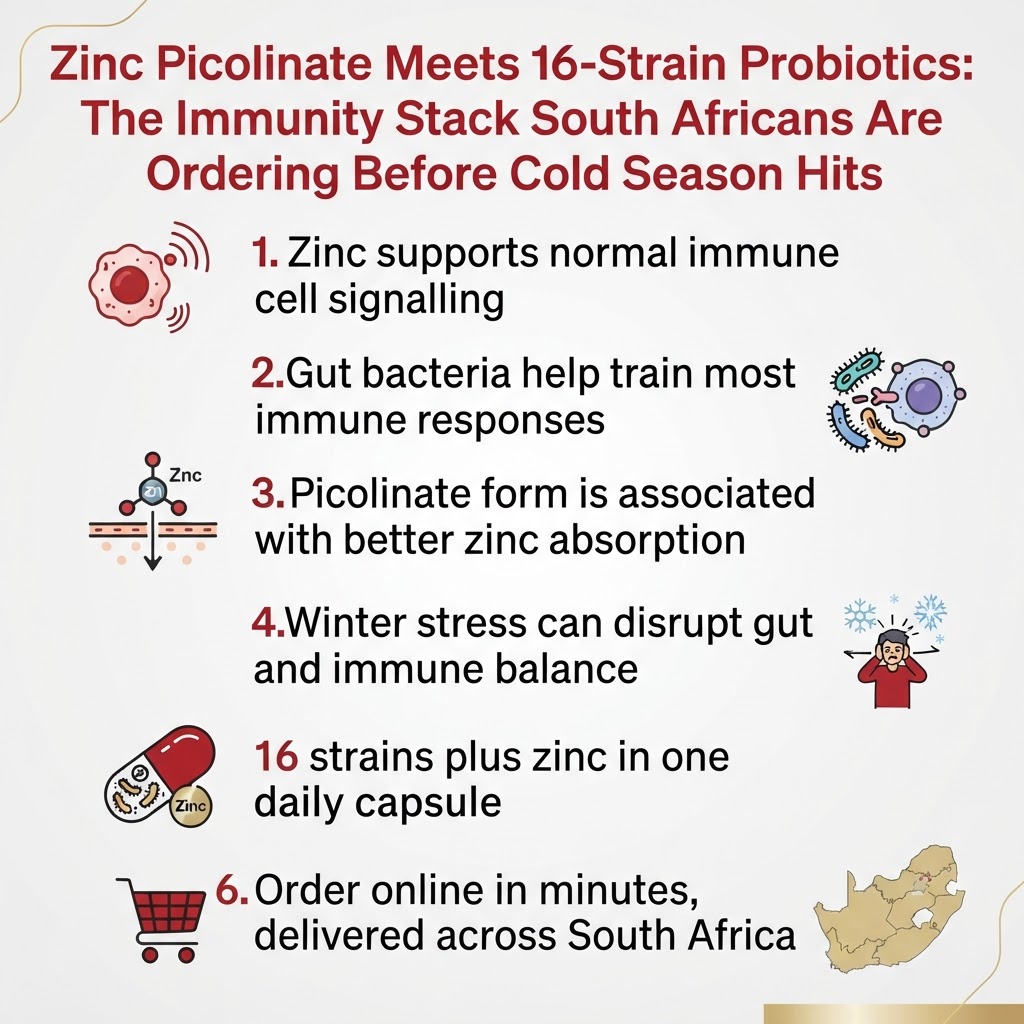
Zinc + Probiotics: A Smarter Combined Approach
Pairing a gut-support ingredient with a micronutrient like zinc picolinate addresses two separate mechanisms rather than relying on one. Zinc supports the immune cells themselves, while a diverse probiotic population supports the gut environment where much of that immune activity is coordinated.
This layered approach is part of why so many South Africans search for combination formulas rather than buying zinc and probiotics as two unrelated products. Convenience matters too — one daily capsule routine is far easier to maintain through a busy winter than juggling multiple bottles.
Who Benefits Most From This Stack
This combination tends to appeal most to people navigating higher seasonal exposure or recovery periods.
- Frequent flyers and commuters moving through shared, indoor spaces
- Parents managing school-age children during flu season
- Adults recovering gut balance after a course of antibiotics
- Anyone who has noticed their energy and resilience dip every winter
If you are rebuilding gut balance after antibiotics specifically, it is worth reading our guide on choosing a digestive enzyme and probiotic complex for additional context on what to prioritise.
What to Check Before You Buy Zinc and Probiotic Supplements Online
Not every product sold online in South Africa is created equally, and label-reading matters more than marketing claims.
- Confirm the zinc form listed is picolinate, not just "zinc" generically
- Check the probiotic strain count and whether CFU counts are guaranteed through expiry
- Look for micro-encapsulation or delayed-release technology for better survival through stomach acid
- Check for South African stock availability and realistic delivery timelines
- Review third-party testing or manufacturing transparency where available
We cover pricing and label transparency in more detail in our Velo16 price breakdown and reviews article, which is worth a read before comparing options.
A Simple Daily Routine to Support Winter Resilience
You do not need a complicated protocol. Consistency matters far more than complexity.
- Take your zinc picolinate and probiotic capsule at a consistent time, ideally with a meal
- Prioritise seven to eight hours of sleep where possible
- Stay hydrated, especially if you are drinking more coffee or tea in colder months
- Keep moving — even light daily activity is associated with better immune regulation
Small, repeatable habits tend to outperform occasional bursts of "being healthy" for a week and then stopping.
Your Next Step: Order Velo16 Today
If you have been meaning to get ahead of cold season instead of reacting to it, the simplest first step is choosing a single, well-formulated daily capsule rather than juggling separate bottles. You can browse the full Velo16 range online here and have it delivered before the next cold snap arrives.
Prefer to stay informed first? Subscribe to the Velo16 newsletter for practical, research-backed gut and immune health updates delivered straight to your inbox.